the post
No I didn't do it. 11 years later I have done it, but it is slow and not euphoric for me. It takes time to let go when you are no enlightened, but its just the way the road goes. Some days strong, other days can't go on. It seems we must suffer sometimes, and in ways we never imagined possible. We make it worse for ourselves when we try to escape this pain, holding on to youthful ideas that somehow I am a good person and somehow I don't deserve to suffer. If there is a grim reaper of souls, there is a grim sower of sorrows and we feel sometimes that they got the wrong person... but this is the greatest sorrow to think this. All sorrow is mine, and something I must shoulder. It can't last forever, but it can last for many years... not a continuous uniform sorrow but waves on a stormy sea. Sometimes we go under, but wait and we come up again. Eventually the storm subsides. Eventually a day comes when you find that you don't think of her. Then you claw back your addiction, you feel guilty, you feel the emptiness of loss and would rather have pain than nothing. It is a long journey to eventually sit in the sun again, and just feel what you feel without fear and struggle. To just feel sad without feeling you sit on the edge of a void of despair and disaster, to feel happy without trying or needing to. I imagine the enlightened or like this even when someone truly close dies. They courageously just feel sad and loss without struggling, brave enough to just be what they are in despair, not trying to shake it off, not trying to bring back the Past, not pretending to be anything but what they are which is sad, lonely and depressed. This is what humans do, it is how we are made. But seeking to be someone different, to pretend to be strong, to want happiness so much that we can't be sad, to be afraid of suffering and to fear the void and emptiness of being lonely and sad... to struggle against all these things is the real pain. And like a fly in a spiders web the more we struggle the more the fangs of suffering stick in. Take it on the chin: you got hurt, it went wrong, you are infallible, you are feeling empty, you failed, you aren't as awesome as you thought. Your true friends won't abandon you, the world most certainly won't abandon you (its been here 5 billions years - a lot longer than you), but most importantly you won't abandon you. Its a painful journey, but one that must be walked either willingly or kicking and screaming it doesn't matter. The sun is always shining, we just can't always see it behind the clouds. So no I didn't do it then, but I have done a lot better since.
Sunday, 4 November 2018


Nephron data processing
Have no idea what this is called in real computer science but giving it this name for now.
An app faced with the problem of caching data that is retrieved from a source has 2 choices.
(1) They can create a model that reflects the data to be stored. A dynamic approach.
(2) Or they can pick the data they want according to a static model and ignore the rest (to urine exactly like the nephrons of the kidney).
(1) has the advantage that the designer doesn't need to actually code the model. A list of data in the cache can be produced generically so that at no point does the coder ever need to know the details of the model. This is wonderful if the model is likely to change in the future. However it also means that all garbage also gets processed by the system, and introducing malicious contents is easy (once encryption security on the data channel has been compromised).
(2) A static model makes more work for the coder, and it makes the app more rigid and inflexible. Changes to the model will not be shown up in the app and will require a new version. But it has the great advantage that the end user is better protected from garbage and malicious intent. Any data the consumer doesn't expect is sent to urine, like a toxin in the blood stream.
I just opted for nephron data processing myself hence the post.
An app faced with the problem of caching data that is retrieved from a source has 2 choices.
(1) They can create a model that reflects the data to be stored. A dynamic approach.
(2) Or they can pick the data they want according to a static model and ignore the rest (to urine exactly like the nephrons of the kidney).
(1) has the advantage that the designer doesn't need to actually code the model. A list of data in the cache can be produced generically so that at no point does the coder ever need to know the details of the model. This is wonderful if the model is likely to change in the future. However it also means that all garbage also gets processed by the system, and introducing malicious contents is easy (once encryption security on the data channel has been compromised).
(2) A static model makes more work for the coder, and it makes the app more rigid and inflexible. Changes to the model will not be shown up in the app and will require a new version. But it has the great advantage that the end user is better protected from garbage and malicious intent. Any data the consumer doesn't expect is sent to urine, like a toxin in the blood stream.
I just opted for nephron data processing myself hence the post.
Wednesday, 31 October 2018
Where does Wealth come from?
Awesome video. Capitalism is usually associated with the growth of wealth. But it seems much more likely that it was the explosion in machines in the 1700s that changed human productivity.
Capitalism then rode on the back of this huge explosion in productivity and wealth. But wouldn't you expect the opposite? When wealth is scarce you would expect individuals to fight for control of it. But when wealth suddenly becomes plentiful you would expect control to be relaxed.
Wrong! Control is about class. The most significant thing about the explosion in wealth wasn't that it provided plenty, it was that it challenged the social order. Class is about getting access to resources. This is true in animals where "top dogs" get to eat first, or lower dogs eat the scraps from under the table (see Jewish culture in Bible and Prayer of Humble Access). When machines started to create abundance this ancient social order threatened to crumble. So Capitalism was invented to ensure that wealth all flowed to the establishment, who then handed it back in controlled wages. And the vast surplus was free to circulate in banks and stock markets and essentially within the ranks of what had been the landed gentry, that is aristocracy, of the previous system.
So why do Socialist countries fail and people in Capitalist countries enjoy such lavish life styles. One thing to observe is that the West is politically stable. Its revolutions were in the 17th and 18th centuries. It has also commanded a global empire for several centuries. Meanwhile the "socialist" countries are in most cases not even a century old, and in the case of Russia, Vietnam and Germany were utterly devastated by wars when they were trying to get established - the West doesn't tolerate competition! I keep hearing that Hitler had planned a truce after pushing back the borders of the Versailles treaty. There is little doubt WW2 could have peacefully ended in 1942 before any serious fighting and before the Holocaust - but the Imperial West would have struggled with sharing power with a powerful neighbour. Israel would have been formed as it was anyway and 80 million people could have kept their lives. But the West doesn't do deals with those who get in its way - most recently there was Hussein. Never-the-less all these "socialist" countries made spectacular transitions from feudalism to modern machine productivity in just a generation. While compared to the West--which is hundreds of years further down the line--they look impoverished, for the common man, compared to what he had before, things are stratospheric. And why did the Soviet Union fail? Pretty much the same reason that the European Union will fail: people want freedom from bureaucracy. This is nothing to do with economics and wealth.
I would suggest that any system which adopts machines to replace human labour will prosper. Machines are cheaper to run and fix (no salaries, insurance, health costs, no unions), machines are more precise, more reliable and more uniform. For a growing number of tasks they are easier to train. They are easier to reproduce - once you have a blue print you can mass produce machines.
The problem that emerges for economics is then how to get this productivity into peoples' hands. You can't just give it because that would overturn the human class system of privilege. At the moment a system of employment and salary keeps the owners of capital in control and at a distance from the non-owners.
Capitalism isn't all bad. Its great contribution is in "information" flow. When you buy something money finds its way back to the capitalist who made it. This encourages more production. The system has a feed back mechanism that ensures that the system makes the right things. Well "right" from the perspective of the consumer... but the main consumers are the wealthy who are the owners of capital. It may take a smart business man to create a business empire, but he borrows from a bank and it them that own him and who truly prosper. A businessman may declare bankruptcy, which is ultimately covered by the tax payer, but a bank as we have seen will be supported by the tax payer to a far greater extent.
In this modern age of information machines however, where every mouse move and every letter I am typing is being streamed through computers in google and the intelligence services there is no need for markets any more. People know already what the public are thinking and wanting before they even get out of bed. If free-markets were a machine themselves to manage the flow of information about what people could afford to buy, that machine has now been replaced by the internet... and the battle of who takes control of that (whether by a ruling class, whether egalitarian or other) is being fought as I write.
Certainly though it is machines that have caused the sudden massive growth in human productivity and wealth.
Saturday, 27 October 2018
SRH thought experiments
Some progress at last with SRH.
Let us invent an "intelligent agent" an IA. Put them in a sealed box with a letter box to feed information. Load this onto a truck and drive it somewhere, before setting it down again.
Imagine this box is in a field. Take a photo of the box in the field and post through the letter box.
The IA receiving the photo, and wanting to know where they are, may assume that the box in the photo is their box. They may then deduce that they are in a field. But this only works on the assumption that the box in the photo refers to the box they are in. They do not actually know for sure whether this is not just a photo of another box. However this illustrates the basic SRH argument that a "structure" that contains an isomorphism with itself (a picture of itself) also contains an isomorphism of what is not itself, and what is therefore greater than itself (the field in which the box lies). So if we complete the identity and make the correspondence between the entity and its isomorphism, then we can make this deduction.
Note that the process of making this correspondence lies outside the "structure." A structure cannot represent itself and the iso-morphism between itself and its representation. Suppose the box was transparent and the photo was really a tablet so that the image from the camera was being sent wirelessly in real time to the IA. They would see an IA looking at a tablet in the box, and on the face of the tablet would be the image they were looking at. They might also recognise the IA as themselves. It seems like the correspondence between the box and the image of the box on the tablet is being encoded within the image. However you could create this image like a fractal and really the box is on a beach. So even if the IA realised that indeed they are looking at a tablet on which is a picture of themselves in a field in a transparent box looking at a tablet, they cannot reliably deduce that they are really in a field. Indeed in the style of the film "Matrix" they might even be having this image transmitted to their brain and they are not even in box and looking at a tablet.
Matrix Caveat: however Matrix is wrong about one thing: you would remember the world in which you learned to speak and live. If indeed you learned to live and speak in the Matrix then actually the Matrix is reality, and the red pill actually takes you into a new reality. Matrix tries to suggest the true reality is the world of people being farmed by machines. For this to be true peoples' upbringing would have to be done in this world, and they would have a memory and legend of being captured by machines and plugged into the Matrix. You cannot just rewrite the whole of history because our very language and thought processes are historical. This is the weakness of this type of thinking.
But once the identity is made either by machine or by the mind it is recursive. Because looking at the photo of the box the IA understands that inside it is itself looking at the photo. This enters an infinite regress like when a camera outputs to the screen it is pointing at.
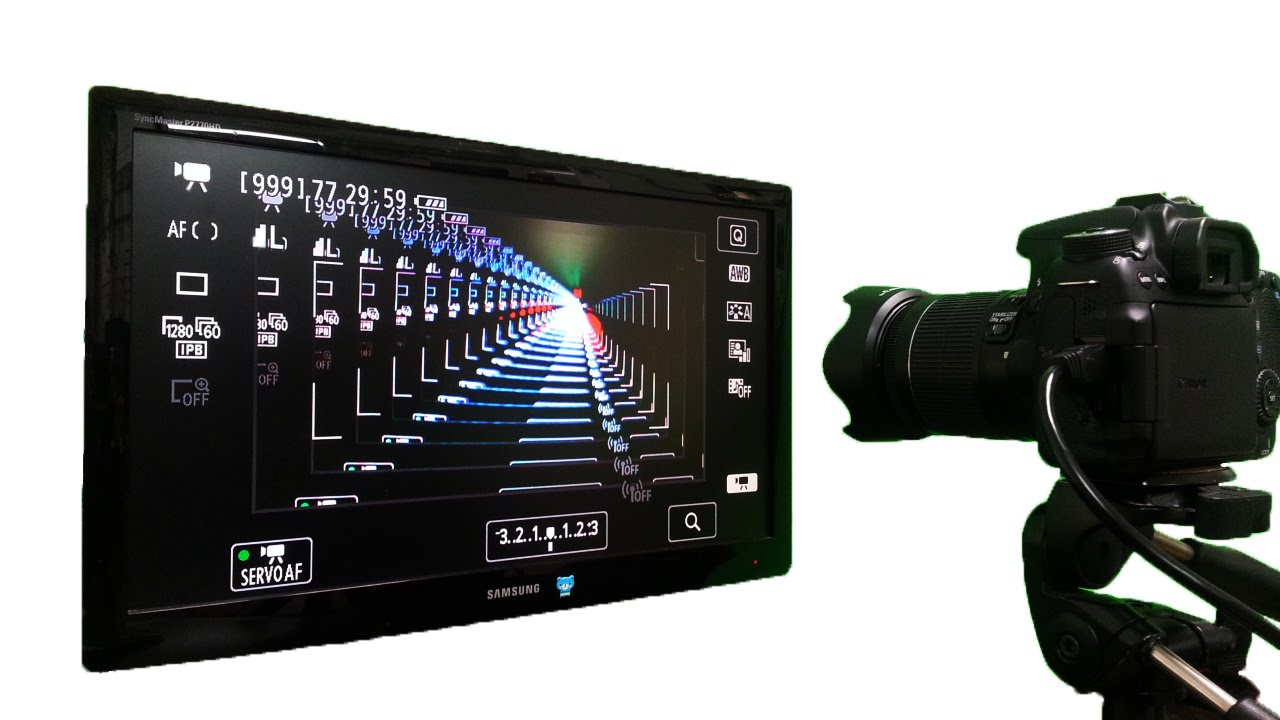
In theory this regress is also an infinite progression going the other way. But in the real world there is a time delay to process and display the image so to go backwards would involve going back in time.
This raises questions about what "reality" is in fact. A computer can simulate itself. You can emulate anything. So if an Intel chip emulates itself, it can run programs that were written for the chip, on the software, which is running on the chip. So you can load the emulator, into an emulator. You can do this to any depth. Once you have some depth you can unpick it, this is running on a emulator, which is running on an emulator.. all the way up to this is running on a real chip and then the progression stops. Why? What is the difference between a simulation and the real thing? In this case the emulator only emulates the chip logic, it doesn't emulate the electronics. The emulator can run on the chip, but the chip cannot run on the emulator. Instead the chip is run on physics with cleverly designed electronic circuits that simulate logic. You could write a physics simulator to simulate the chip. Then you run the physics simulator on the simulated chip. But in reality physics starts to become very non-discrete as you get into more detail. Before long you would be simulating quantum processes using a random number generator. Indeed perhaps the quantum world has to be non-discrete in order to close off the possibly of infinite progress. So sooner of later in the logical world you must have a top to the simulator stack: a mother machine on which things ultimately run.
So identity is impossible to prove in information theory. You can never be 100% sure that the accused really did the crime. It might always be someone else who is either protected, or who very cleverly set up the defendant. But in physical systems you can do this. Consider a crane lifting a large metal plate. The system works. But now move the crane so that it stands on the metal plate and try and lift it. Suddenly the crane's motor is not longer using the crane structure to fight against the force of gravity, instead the crane motor is fighting the cranes structure: the crane is fighting itself. Probably either the motor will fail or the structure will fail, but we can be 100% sure the plate will not lift. The reason is to do with SRH. What the crane does is take its stable foundation and transfer that rigidity to the plate which is only linked to the ground by gravity and so it lifts it. However once the plate is connected to the crane they share the same stable foundation so there is nothing to transfer. A system relies upon what it is not in order to work. If it relies upon itself it will achieve nothing. This in spiritual terms in the problem with the ego. It is a mental construct which believes it can rely upon itself. Just like the crane lifting its own plinth, the ego can never achieve anything, and worse in trying to achieve things it puts the structure of the self under enormous strain. Worse still when things do happen, as they always must, the ego tries to claim that the source of the change came from within. All change comes from what is not, that is to say: what is outside the self. The self can only ever be just itself, it cannot change, it is impotent. But since it is not separate from the world, the world will change it whether it accepts this or not.
I have other things to do now but some progress. The SRH may not be able to prove God now, given that the proof relies upon a 100% certain identity between the things and themselves. But there are physical systems that certain do seem to have 100% correlation between themselves and themselves. So while the IA in the box looking at the tablet can never be quite sure whether this is a clever dynamic simulation of an IA in a box in a field, looking at a tablet, there is 100% no way that a crane can lift itself.
And, obviously in logic we can just define identity. This makes logic a different world from reality. When Godel numbers the statements in predicate calculus there is no doubt that each statement has a number associated with it, and the "computer" (in Turing's usage of human thinker) thinking through the proof can make certain correspondence and identity between numbers and statements. Though I note again: the original 2007 statement of the SRH was this: that the "computer" of a logical proof cannot be themselves the subject of the proof. Just like a crane lifting itself, were the proof itself to embody the "correspondence" then we would have no solid platform on which to make the identity between systems that is required for self-reference. In other words self-reference cannot be based on itself. There must be a system outside the proof (the computer for Turing) that thinks through the proof and upon which correspondence (identity) is formed. Without this Godel's Numbers are just ordinary numbers and have no correspondence with statements at all.
n ∈ K ≡ ~(Bew [R(n); n])
Only works if we, the Computer, interpret R(n) ... and I need read that proof again to be sure this is correct.
Let us invent an "intelligent agent" an IA. Put them in a sealed box with a letter box to feed information. Load this onto a truck and drive it somewhere, before setting it down again.
Imagine this box is in a field. Take a photo of the box in the field and post through the letter box.
The IA receiving the photo, and wanting to know where they are, may assume that the box in the photo is their box. They may then deduce that they are in a field. But this only works on the assumption that the box in the photo refers to the box they are in. They do not actually know for sure whether this is not just a photo of another box. However this illustrates the basic SRH argument that a "structure" that contains an isomorphism with itself (a picture of itself) also contains an isomorphism of what is not itself, and what is therefore greater than itself (the field in which the box lies). So if we complete the identity and make the correspondence between the entity and its isomorphism, then we can make this deduction.
Note that the process of making this correspondence lies outside the "structure." A structure cannot represent itself and the iso-morphism between itself and its representation. Suppose the box was transparent and the photo was really a tablet so that the image from the camera was being sent wirelessly in real time to the IA. They would see an IA looking at a tablet in the box, and on the face of the tablet would be the image they were looking at. They might also recognise the IA as themselves. It seems like the correspondence between the box and the image of the box on the tablet is being encoded within the image. However you could create this image like a fractal and really the box is on a beach. So even if the IA realised that indeed they are looking at a tablet on which is a picture of themselves in a field in a transparent box looking at a tablet, they cannot reliably deduce that they are really in a field. Indeed in the style of the film "Matrix" they might even be having this image transmitted to their brain and they are not even in box and looking at a tablet.
Matrix Caveat: however Matrix is wrong about one thing: you would remember the world in which you learned to speak and live. If indeed you learned to live and speak in the Matrix then actually the Matrix is reality, and the red pill actually takes you into a new reality. Matrix tries to suggest the true reality is the world of people being farmed by machines. For this to be true peoples' upbringing would have to be done in this world, and they would have a memory and legend of being captured by machines and plugged into the Matrix. You cannot just rewrite the whole of history because our very language and thought processes are historical. This is the weakness of this type of thinking.
But once the identity is made either by machine or by the mind it is recursive. Because looking at the photo of the box the IA understands that inside it is itself looking at the photo. This enters an infinite regress like when a camera outputs to the screen it is pointing at.
In theory this regress is also an infinite progression going the other way. But in the real world there is a time delay to process and display the image so to go backwards would involve going back in time.
This raises questions about what "reality" is in fact. A computer can simulate itself. You can emulate anything. So if an Intel chip emulates itself, it can run programs that were written for the chip, on the software, which is running on the chip. So you can load the emulator, into an emulator. You can do this to any depth. Once you have some depth you can unpick it, this is running on a emulator, which is running on an emulator.. all the way up to this is running on a real chip and then the progression stops. Why? What is the difference between a simulation and the real thing? In this case the emulator only emulates the chip logic, it doesn't emulate the electronics. The emulator can run on the chip, but the chip cannot run on the emulator. Instead the chip is run on physics with cleverly designed electronic circuits that simulate logic. You could write a physics simulator to simulate the chip. Then you run the physics simulator on the simulated chip. But in reality physics starts to become very non-discrete as you get into more detail. Before long you would be simulating quantum processes using a random number generator. Indeed perhaps the quantum world has to be non-discrete in order to close off the possibly of infinite progress. So sooner of later in the logical world you must have a top to the simulator stack: a mother machine on which things ultimately run.
So identity is impossible to prove in information theory. You can never be 100% sure that the accused really did the crime. It might always be someone else who is either protected, or who very cleverly set up the defendant. But in physical systems you can do this. Consider a crane lifting a large metal plate. The system works. But now move the crane so that it stands on the metal plate and try and lift it. Suddenly the crane's motor is not longer using the crane structure to fight against the force of gravity, instead the crane motor is fighting the cranes structure: the crane is fighting itself. Probably either the motor will fail or the structure will fail, but we can be 100% sure the plate will not lift. The reason is to do with SRH. What the crane does is take its stable foundation and transfer that rigidity to the plate which is only linked to the ground by gravity and so it lifts it. However once the plate is connected to the crane they share the same stable foundation so there is nothing to transfer. A system relies upon what it is not in order to work. If it relies upon itself it will achieve nothing. This in spiritual terms in the problem with the ego. It is a mental construct which believes it can rely upon itself. Just like the crane lifting its own plinth, the ego can never achieve anything, and worse in trying to achieve things it puts the structure of the self under enormous strain. Worse still when things do happen, as they always must, the ego tries to claim that the source of the change came from within. All change comes from what is not, that is to say: what is outside the self. The self can only ever be just itself, it cannot change, it is impotent. But since it is not separate from the world, the world will change it whether it accepts this or not.
I have other things to do now but some progress. The SRH may not be able to prove God now, given that the proof relies upon a 100% certain identity between the things and themselves. But there are physical systems that certain do seem to have 100% correlation between themselves and themselves. So while the IA in the box looking at the tablet can never be quite sure whether this is a clever dynamic simulation of an IA in a box in a field, looking at a tablet, there is 100% no way that a crane can lift itself.
And, obviously in logic we can just define identity. This makes logic a different world from reality. When Godel numbers the statements in predicate calculus there is no doubt that each statement has a number associated with it, and the "computer" (in Turing's usage of human thinker) thinking through the proof can make certain correspondence and identity between numbers and statements. Though I note again: the original 2007 statement of the SRH was this: that the "computer" of a logical proof cannot be themselves the subject of the proof. Just like a crane lifting itself, were the proof itself to embody the "correspondence" then we would have no solid platform on which to make the identity between systems that is required for self-reference. In other words self-reference cannot be based on itself. There must be a system outside the proof (the computer for Turing) that thinks through the proof and upon which correspondence (identity) is formed. Without this Godel's Numbers are just ordinary numbers and have no correspondence with statements at all.
n ∈ K ≡ ~(Bew [R(n); n])
Only works if we, the Computer, interpret R(n) ... and I need read that proof again to be sure this is correct.
The Ghost of the Table
Continuing the magic trick from the last post.

Suppose we had a table in a room. We invite a spectator in to see it. We then ask them to leave and we break the table up into a pile of wood splinters.
We then invite the spectator back, with another who did not know what was in the room.
We ask where did it go?
The two spectators will give different answers obviously not based upon what they see but upon what they know.
The original spectator will probably point at the pile of wood and say that this is the table, and that you have broken it up.
To this spectator you can say this is all true, but you might ask them to use their eyes and observe that there is no longer a table in the room. The table did not leave room. So the table has vanished.
But the new spectator will ask you what you mean by it? All they can see is a pile of wood. To this spectator you might give them some information by telling them there was a table in the room before, and they will work out the same as the first spectator.
What is to be closely observed here is how important what we know is. The "table" that we think is so solid and permanent is actually something created by our minds. So strong is this belief in the table, that even after it is broken up its ghost continues to inhabit the pile of wood. When spectator one is asked where the table is they point at the wood, not just indicating that the wood "was" the table, but believing in some way that the spirit of the table still inhabits the wood. This way they are not so surprised that the table has ceased to exist.
But obviously the table has ceased to exist because the second spectator does not see a table. They also do not have any knowledge of what the wood was so they do not invent a belief in a table. They see what is there: a pile of wood.
This is how important our minds are in creating the world. The imbue what we see with a narrative of what is and what is not. And this narrative is very powerful, so that it continues to add subtitles even after things have changed.
In Buddhism the cause of suffering is seen as the mind not accepting reality. Sadness is not suffering, emotions are not suffering. Suffering is an existential state of longing for what is not, or rejecting of what is. When we see the broken table, we do not see the pile of wood but rather a table that is broken. If we particularly liked the table then the pile of wood will carry a strong ghost of the table, and we will continue to see the table long into the future. But at no point here does the table really exist, it is all to do with our minds. Our minds are truly powerful!
And the real surprise when we realise how strong our minds are is to see that even when there is a table in room, it is not really there. Spectator 1s mind that gives a ghost to the pile of wood, also gives a ghost to the wood before it was broken up! In deep meditation it is possible to separate the experience of the table in our sense (the rupa) from the ghost of the table in our minds (the nama). When we have our minds under control with this understanding we can rid our life of all the hauntings that cause suffering.
Suppose we had a table in a room. We invite a spectator in to see it. We then ask them to leave and we break the table up into a pile of wood splinters.
We then invite the spectator back, with another who did not know what was in the room.
We ask where did it go?
The two spectators will give different answers obviously not based upon what they see but upon what they know.
The original spectator will probably point at the pile of wood and say that this is the table, and that you have broken it up.
To this spectator you can say this is all true, but you might ask them to use their eyes and observe that there is no longer a table in the room. The table did not leave room. So the table has vanished.
But the new spectator will ask you what you mean by it? All they can see is a pile of wood. To this spectator you might give them some information by telling them there was a table in the room before, and they will work out the same as the first spectator.
What is to be closely observed here is how important what we know is. The "table" that we think is so solid and permanent is actually something created by our minds. So strong is this belief in the table, that even after it is broken up its ghost continues to inhabit the pile of wood. When spectator one is asked where the table is they point at the wood, not just indicating that the wood "was" the table, but believing in some way that the spirit of the table still inhabits the wood. This way they are not so surprised that the table has ceased to exist.
But obviously the table has ceased to exist because the second spectator does not see a table. They also do not have any knowledge of what the wood was so they do not invent a belief in a table. They see what is there: a pile of wood.
This is how important our minds are in creating the world. The imbue what we see with a narrative of what is and what is not. And this narrative is very powerful, so that it continues to add subtitles even after things have changed.
In Buddhism the cause of suffering is seen as the mind not accepting reality. Sadness is not suffering, emotions are not suffering. Suffering is an existential state of longing for what is not, or rejecting of what is. When we see the broken table, we do not see the pile of wood but rather a table that is broken. If we particularly liked the table then the pile of wood will carry a strong ghost of the table, and we will continue to see the table long into the future. But at no point here does the table really exist, it is all to do with our minds. Our minds are truly powerful!
And the real surprise when we realise how strong our minds are is to see that even when there is a table in room, it is not really there. Spectator 1s mind that gives a ghost to the pile of wood, also gives a ghost to the wood before it was broken up! In deep meditation it is possible to separate the experience of the table in our sense (the rupa) from the ghost of the table in our minds (the nama). When we have our minds under control with this understanding we can rid our life of all the hauntings that cause suffering.
Friday, 26 October 2018
Matter vs Spirit
Is universe built from matter or compassion?
(1.1) Some say matter, but then they have to argue that human consciousness is an illusion (e.g. Daniel Dennett)
(1.2) Pre-capitalist we say spirit and it is matter that is illusion.
(2.0) So how can matter be illusion when it is so obviously there?
(2.1) Look again: what is there is always a sense "i see the cat", "I hear the cat"...
(2.1.1) The illusion is the jump from sense to definite thing "there is a cat."
(2.1.2) This jump occurs in the mind not in reality, just as the mirage we see on the desert horizon becomes definite "water" to the thirsty, how writing becomes things, and how pictures in a cinema become people.
(2.2.0) So what if two people go into a room independently and write down that they see a cat. How can the 2 pieces of paper agree if the cat is not real?
(2.2.1) They both think and use language normally. we cannot tell whether they understand their experience as a separate entity (the illusion) or a transitory experience (the reality).
(2.3.0) We can do a magic trick with this understanding.
(2.3.1) After having lunch on a table we can ask people to leave the room for 5 minutes sealing the windows and doors. If we dismantle the table into a pile of wood we can say when they return there is no where to have dinner! We have made the table vanish, yet nothing has left the room. Where did it go? (2.3.2) They will say it's there, pointing at the pile of wood. But look again: it isn't a table. The table has definitely been magicked away into thin air. This is possible because of 2.1.2 the table never existed permanently in the first place, it was only in the mind. Show the pile of wood to other people and they will not remember the table, so they won't be haunted by it. So things are easily seen as illusion, and spirit and human experience and compassion are easily viewed as reality. Unfortunately in this view all economy, labour and possession is illusion... so its not sold widely in capitalist countries... or Capitalist countries indoctrinate people in view 1.1
(1.1) Some say matter, but then they have to argue that human consciousness is an illusion (e.g. Daniel Dennett)
(1.2) Pre-capitalist we say spirit and it is matter that is illusion.
(2.0) So how can matter be illusion when it is so obviously there?
(2.1) Look again: what is there is always a sense "i see the cat", "I hear the cat"...
(2.1.1) The illusion is the jump from sense to definite thing "there is a cat."
(2.1.2) This jump occurs in the mind not in reality, just as the mirage we see on the desert horizon becomes definite "water" to the thirsty, how writing becomes things, and how pictures in a cinema become people.
(2.2.0) So what if two people go into a room independently and write down that they see a cat. How can the 2 pieces of paper agree if the cat is not real?
(2.2.1) They both think and use language normally. we cannot tell whether they understand their experience as a separate entity (the illusion) or a transitory experience (the reality).
(2.3.0) We can do a magic trick with this understanding.
(2.3.1) After having lunch on a table we can ask people to leave the room for 5 minutes sealing the windows and doors. If we dismantle the table into a pile of wood we can say when they return there is no where to have dinner! We have made the table vanish, yet nothing has left the room. Where did it go? (2.3.2) They will say it's there, pointing at the pile of wood. But look again: it isn't a table. The table has definitely been magicked away into thin air. This is possible because of 2.1.2 the table never existed permanently in the first place, it was only in the mind. Show the pile of wood to other people and they will not remember the table, so they won't be haunted by it. So things are easily seen as illusion, and spirit and human experience and compassion are easily viewed as reality. Unfortunately in this view all economy, labour and possession is illusion... so its not sold widely in capitalist countries... or Capitalist countries indoctrinate people in view 1.1
Wednesday, 24 October 2018
SRH fractal nature
Suppose we make a statement S that entails a distinction A and its necessary corollary B: in that anything which defines a region A also defines another inverse region B.
And suppose that this statement S is isomorphic with A. Then we can deduce that the corollary B is isomorphic with an unknown statement S'
Thus when a statement (or system) make a division, into which it itself maps, the statement can be used to make a distinction about itself.
Now is the "self" a problem?
Suppose that instead it wasn't S itself that was isomorphic but a statement T. Then the corollary would be T'.
T' may be a contradiction which is what we tend to look for in these situation.
But with S' it is more convoluted since S is the source of the distinction. So we are making a deduction about the statement upon which the deduction is based which is much more precarious.
It is this loop, the possibility of infinite regress, and of contradiction which makes self-reference so interesting.
Of course if T was the basis of S then we can generate the same thing. "self" must be taken to mean not direct but ultimately derived from.
And suppose that this statement S is isomorphic with A. Then we can deduce that the corollary B is isomorphic with an unknown statement S'
Thus when a statement (or system) make a division, into which it itself maps, the statement can be used to make a distinction about itself.
Now is the "self" a problem?
Suppose that instead it wasn't S itself that was isomorphic but a statement T. Then the corollary would be T'.
T' may be a contradiction which is what we tend to look for in these situation.
But with S' it is more convoluted since S is the source of the distinction. So we are making a deduction about the statement upon which the deduction is based which is much more precarious.
It is this loop, the possibility of infinite regress, and of contradiction which makes self-reference so interesting.
Of course if T was the basis of S then we can generate the same thing. "self" must be taken to mean not direct but ultimately derived from.
Subscribe to:
Posts (Atom)
-
The classic antimony is between : (1) action that is chosen freely and (2) action that comes about through physical causation. To date no ...
-
Following from the last blog on animal/human a beautiful male Oedemera nobilis resting in a flower after presumably a good meal of po...
-
Same current territory (and raft) but a bit more polished. Or perhaps not! That will be be explained. With Deepseek: https://chat.deepseek.c...


