Sunday, 1 November 2020

What is the meaning of meaning? And Nature.

 Nice SRH question to start the day. A question which must have an immediate answer. Obviously you must know what meaning is to understand the question to answer it so we must all know. There are 2 types of meaning however and we can write blogs without being able necessarily to tell someone how it all works.

Anyway not point of post. I picked up some terse notes just now from months ago and I can't understand what they refer to.

I need some memory of what was "topical" at the time in order to decode them. Its this working memory or context (or stack frame in computing) which we must load alongside the "notes" for them to make sense.

A point made famous by Structuralist philosophy but interesting to see it actually happening in daily life. Once we "forget" the context then things have no meaning.

So this blog post actually has no meaning to a vast number of people because it depends upon quite a specific context.

Its an interesting thing then to ponder the phenomenon of "viral content" or "fame." Like a fire, a spark is needed but it must occur in the right environment, or under the right conditions. In the rain no chance. Next to some dry tinder you may well get a fire. Equally the existence of memes and viral content depends more upon the context than the spark. When Darwin published "Origin of Species" that was the spark but the conditions were also right. He was living in a world awaking to the idea of geological history and processes, of the immense periods of time and gradual change that rocks went through and so it was much easier to imagine organisms doing the same. It was also the end of Religious Certainty and Church Power. A century of Capitalism and Technological progress was shifting power towards a competitive and free market. I studied Zoology and all the models of biological models are taken from finance and accounting. Darwin's idea is really the idea of free-markets applied to animals. The idea of Competitive Exclusion ripped directly from Capitalist ideology, and the idea that companies are forced to adapt and improve through competition started in Capitalism and went to Biology. This mirrors the origins of maths itself in the market place. Algebra and the "=" sign just a symbolic drawing of the traders scales.

I find this understanding very important because as the world shifted from Monarchy to Capitalism ideas of Nature shifted from God to Evolution. We find meaning and relevance for Nature within the context and terms of our current society. But Nature of course is far greater, it is the origin of everything and its good to understand that our attitudes to it will forever change as we reflect ourselves and our society into it.

Saturday, 31 October 2020

Is the charge of "Anti-Semitism" really as simple as everyone makes out?

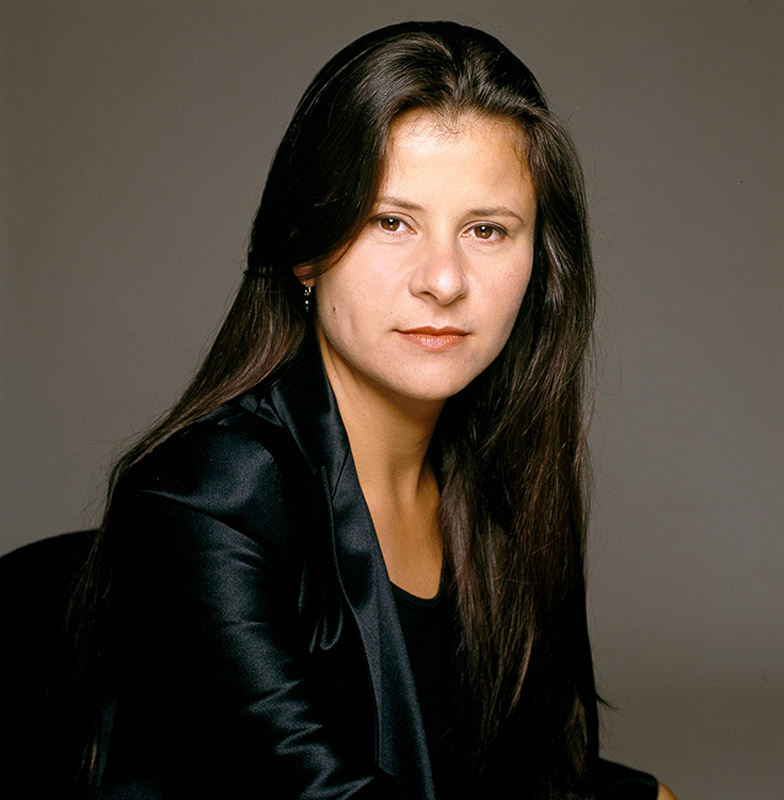
Here is a "thieving gypsy bastard" aka Tracy Ullman (sorry Mrs Ullman for using your image and identity but its meant in general for anyone who experiences racial prejudice who isn't a Jew).

Did you see what I did there? Well actually no you didn't cos there is no word for it? How weird.

If she was Jewish everyone would call it "Anti-Semitism" without thinking. But for poor old Ullman she's not so fortunate and protected and this is simply because of her race! Alarm bells.

For every 2 Jews in the UK their is a Gypsy but you'd never know. Ullman and her people experienced Holocaust just like Jews losing 25% of their racial population but no one says the Germans did a Roma Genocide, and they get no German Compensation Payments. Roma were given no country to "protect" them after the war either.

There is clear and provable prejudice in favour of Jews and so therefore clear and provable prejudice against Roma (swords are always 2 sided). And that prejudice is Racism.

Use of the word "Anti-Semitism" is actually a very serious form of racism but because people don't understand what they are doing they don't understand the error in using it. Calling anything "anti-semitic" is actually being deeply negatively Racist. It is discriminating race crimes based on race and attributing more meaning to certain races while prejudicing against other races.

The only way this issue is going to be solved is with people learning to respect one another and live together. The term "anti-semitism" is actually counter to this desire. Having differential courts of opinion based upon race is actually just amplifying the problem and making it worse. Any race crime should be treated as exactly that. If people need countries to protect their race then every race needs a country, if people need Holocaust compensation then every victim of genocide needs compensation. And so on. Once communities are divided by differential treatment based on race you have Racism. It means all the current pressure to change the law to protect Jewish interests is actually only making racism worse. And I imagine the last thing the Jews want (from what they say at least) is for racism to get worse.

Sunday, 25 October 2020

Owning Existence and why Existentialism is nonsense

 So the great problem since Descartes and beyond is Mind and Body. Our experience of the world and the world itself are different. And when we try and locate our experience in the world we have a problem. SRH is here already. Somewhere in the world must be our experiences, but our experiences are of that world. Either their is a secret space we cannot experience where they reside e.g. soul or we have an overlap. Anyway that's the introduction.

The problem for a Capitalist is that we try and own this Mind and these experiences and if we believe in secret spaces those also.

And then perhaps we get struck by their existence which is Real. Often experiences get demoted as just subjective personal perspectives. [running out of power will finish later] but that they exist cannot be denied.

For Descartes the existence of thoughts proved that he himself existed. He was more than owner of those thoughts, he was those thoughts.

But quickly we can see that existence is just existence and its nothing special to us. That one day we won't exist is not a revelation and is nothing personal its just a fact about existence.

Indeed their is nothing personal about existence. So why the dread about non-existence? By existing and non-exiting we join the universe of things. It is a binding experience not a separating experience that Sartre saw.

And why did Sartre see this? Because deep down he was a Capitalist and viewed self and existence in terms of ownership.


Often we demote reality. For Plato's Idealism in his cave physical reality was demoted as an imperfect copy of Ideals in a realm apart from the world. The modern material view inverts this so that computers and brains make imperfect models of a Real existing external world. Phenomenology would demote both these views as both Plato's Ideals and the Materialist Ideal of Physical Reality are just ideas. Reality lies in experience or Phenomena. This is very much more aligned with Eastern Philosophy that sees thoughts and ideas as just sense processes alongside sight and sound. In the West much is placed upon the value of Narrative (ideas) while in the East, Narrative is itself an observable process. In Buddhism everything is demoted to the same level, which is also no level.

Sunday, 4 October 2020

A general pattern for contradictions by self-reference

TODO

So Tarski, Turing, Godel and Russel all use the same pattern.

Regarding Halting:

A function H(h,x) determines if program h halts given input x.

Now we can construct I(h,x) which goes into a loop if H(h,x) says 'h' doesn't and vice-versa.

So what about H(I,I)?

If H says it halts we know that 'I' will loop and vice versa.

As usual I need tidy up the logic.

Regarding Tarski:

A function T(t,x) determines if theorem 't' is true given x.

Now we can construct U(t,x) which states the opposite. So that U(t,x) is false if t(x) is true.

So what about T(U,U).

And again with Provability for Godel and Selfincludes for Russel.

Tidy the logic up here.

Now is this the basis for Contradiction by Self-Reference.

If a statement can be transformed into this format it's game over?

Can all self-contradictory statements get into this format.

Are all other formats safe from self-contradiction?


Friday, 2 October 2020

Strong SRH is Dead Digest

 So if last blog didn't quite get there here it is:

Let us begin with the idea of "Contradiction by Self-Reference" CBSR. This is a contradiction that is derived by use of any type of self-reference. There is debate (that I am currently reading) on whether all paradoxes involve self-reference. It seems self-reference paradoxes can be rewritten as infinite paradoxes and vice-versa. But certainly not all contradictions involve self-reference. But that type of contradiction that comes from self-reference is what interests us.

Quick note on method. Theorems taking theorems as input is usually achieved through a mapping from the ordered list of theorems to whatever domain variables have. If the logic is about numbers this is very evident. Theorem(5) can mean both the result of operating on "5" and also the theorem that is listed at position 5 in the ordered list. This is called Godel Numbering.    

So Strong SRH hypothesises "all systems with self-reference can derive contradiction from that self-reference" SSRH (strong self-reference hypothesis).

Note to myself: I need give the logic here a little bit of thought to get it really accurate. Consider the a function like SR(x) that decides if the theorem x has self-reference. SR(x) is true if x involves self-self-reference and false otherwise. However I can't just do SR(SR) since SR is bound to a variable. It would be a whole family of theorems like SR(SRx) the theorem that comes from binding itself to itself with an input x. If "SRn" is the theorem at position n in the list of SR theorems then SR(n) is only self-referential if and when n = SRn. I'm unsure where we can argue self-reference is guaranteed in this construction!

So at the moment I don't know how to create a function like C(SR(x)) which would says that if x has self-reference then you have a contradiction. Which is not quite SSRH which states that the theorem itself is true i.e. SSRH(C(SR(x))) is true. Warning this could all be nonsense I'm just thinking it through.

Anyway concerns out of the way:

Suppose we construct a sequence of logic, a theorem called SSRH to illustrate this. It takes one theorem as input and outputs 1 if the theorem has CBSR and contradiction and 0 otherwise.

So SSRH(SSRH) = 0 is an obvious contradiction. SSRH says that all theorems with self-reference can derive a contradiction yet SSRH(SSRH) say that it doesn't. But that is itself a contradiction as this self-reference has provided a contradiction so the result should be 1. 

But SSRH(SSRH) = 1 is highly problematic too.

It says that SSRH is a theorem with self-reference that generates a contradiction from that self-reference.

Clearly it has self-reference since it has taken itself as input. But it says that doing so derives a contradiction. If we believe it, it has said that its output is a contradiction, and if we don't believe it it means that SSRH is inconsistent. Essentially Godel's result.

If SSRH is consistent then it says its own logic is faulty, which if it was true invalidates the outcome. Not "I am lying" but "I tell contradictions." In standard logic we reject contradictions so it means "If the logic is consistent then reject an assumption that you made in deriving this contradiction." But if we do that then we are actually taking a contradiction to be true! If we accept that the logic was good it would be a contradiction to reject an assumption! This road breaks the very process of logical truth! So we reject SSRH.

So what if SSRH(SSRH) is not the self-reference that is problematic and there is another one. If SSRH contains a self-reference that is problematic within the logic not bound to the variable then the result is even worse and applies to all input. So the problem above stands.

So we must reject the consistency of SSRH all together. There is no such thing.

Now what about Weak Self-Reference Hypothesis (WSRH). This is much more interesting. It says that where there is self-reference and definable conditions then there is CBSR.

Firstly let me introduce the theorem C(x) which sees if x contains a contradiction. (Note: this is proving a useful session as forcing it into logic is really breaking up what I've been trying to say here).

Suppose we illustrate WSRH like this: 

WSRH(x) := C( Conditions(x) && SR(x) )

Which says that if theorem x contains self-refence and it meets the conditions defined by Conditions then it will give a contradiction.

I'm going to leave this here for now cos I need to go back and sort out self-reference and the function SR(x). That might be very fruitful in itself.

Lots of meta-logic functions here (functions deriving results from the logic itself: Godel only had one Beq(x) which decided if a theorem was provable): probably too many.

Not getting stuck into the logic. To recap WSRH suggested that where a domain contained its range (like with fractals) you were guaranteed a "Fixed Point" and the existence of that indicated that SRH was true and problems with self-reference were guaranteed. Let me just define the meta-logic function FP(x) which for a logic decides this. FP(ZFC) is a valid statement since Zermelo-Fraenkel Choice logic enables Godel numbering and so there is guaranteed a statement with one variable in ZFC (e.g. F(x)) which calculates a number which is its own position in the list of theorems.

Note:

F(x) = x is a fixed point

F(n) where n is the position of F(x) in the list of theorems is Self-Reference i.e. n=G(x) is position in the list of theorems or a unique mapping to the domain somehow.

They are different.

OK racing through this. Need to go over the very faulty logic!!!


Wednesday, 23 September 2020

SRH is dead (after 13 years of struggle and 30 years of interest)!

So I've been insisting with someone they should keep a daily record of their symptoms (not coroanvirus). And we joked that the stress of keeping that record might set off the symptoms.

Now you could add an extra factor to your analysis, and extra row in the spreadsheet to record whether you were keeping a spreadsheet. However due to SRH this is meaningless. It would need to be always ticked. In logic it is a tautology and what is necessarily true is also meaningless. We might do some statistics using that factor but obviously we would never learn anything.

For this situation to make sense we need an independent recorder to make a new spreadsheet that records our symptoms and whether we are updating our spreadsheet. This row can now contain proper data with a decision being made on whether yes/no. That actual making of the decision is the basis of the data and meaning.

Now the patient can deduce all this from SRH because they know automatically that rows on their spreadsheet that are self-referential are open to issues.

But here is the crux. Not all self-referential rows are a problem! And this has been the sticking point for SRH. Can we determine absolutely a rule for knowing when self-reference will be a problem. The SRH was the hypothesis that there is a definite way to decide whether self-reference would result in paradox.

The classic example of self-reference not being a problem is in infinite sets. The Cardinality of Natural Number is a Natural Number. The interval [1,2] of the Real Numbers maps to the interval [0,3] thus a subset maps to itself. This result would appear to destroy the SRH. The Natural Numbers can be constructed from a natural number 1 and the S() successor function. It is therefore defined in terms of itself. Especially in maths there are examples of SRH that don't result in paradox.

The key concept I wanted to introduce here was "dependence." If we allow that a things have a logical dependence then its easy to express SRH. The classic sample from this blogs Past is "castles in the air" (CITA). The problem is that CITA are usually considered to rest on clouds. They cannot support themselves, and so are dependent upon some "ground." In  gravitational fields things are "dependent" upon other things. Now its interesting to observe that a single entity while creating a gravitation field is not influenced by its own gravitational field. It seems that self-reference is indeed protected here. Yet that entity is really just a collection of smaller entities that are both creating gravity and being influenced by each other. So you can never really have a single entity here. Its also interesting to note that a pair of entities while not being influencing by their own gravity directly can influence each other so that they do end up experiencing the influence of themselves second hand. Why is this? explore later. That "dependency" creates rules that underpin SRH. Once something is dependent on something else, paradox arises if that dependency is ignored. The King standing in our CITA will fall to "ground" when the CITA does since he depends upon it for support.

Now let me get to the point. Assuming "dependency", the SRH says that there is a definite way to determine whether self-reference will be a problem and that is by looking at the "dependency." Dependent Self-Reference is the issue here. Now SRH itself must conform, so it would be able to tell in a definite way whether the Theory has problematic self-reference.

Now its like the spreadsheet above.

The theory depends upon itself in this scenario, and so it must always be without problematic self-reference and so tautological. Otherwise it is problematic and we don't even get to updating the spreadsheet. There is a more rigorous argument here but its essentially Halting Problem (HP) revamped.

In fact using HP suppose there was a decision algorithm that took a theory analysed and decided if it was self-referential in a problematic way. e.g. "the set of all sets that don't include themselves."

Incidentally while Zermelo Fraenkel amongst others proposed a way around Russel's Paradox what interest me (and SRH) is why the paradox is there at all. There are definite conditions that lead to problems, and as Godel and others afterwards have shown the existence of these always self-reference derived problems can be used to cause all kinds of problems. And you can tweak things to avoid the paradoxes, yet they're always waiting to strike. Godel actually uses SRH to provide his proof. SRH is much bigger than incidences of self-contradiction occurring its about the existence of such a thing at all.

p.s. the real classic was machines understanding themselves. This is linked to AI and self-consciousness. All very Hofstaedter.

So SRH takes a theory and spits out whether it is clean (result 0) or self-reference problematic SRP (result 1).

So following Turing we build a new machine (SRHb) that uses SRH to decide the input. 


==NOTE SRHb is nonsense it proves nothing (logic below is faulty) BUT the gate is open. Should be able to complete this now. 


But its much bigger than Turing because these machines are actually examining the input for self-reference issues. They would detect the presence of contradictions and report on that, rather than just cause halting jams. If you put Turing's Halting Algorithm into SRH it would spit out that it causes a contradiction.

Now you put SRH into itself what do you get? Does knowing whether things cause contradictions (by specifically by examining their self-reference SRH) itself cause contradictions or doesn't it?

The other implication of SRH is that simply by looking at the self-reference relations of an entity you can decide whether a contradiction is possible. The set of self-reference relations includes all the contradictions. There are no contradictions that don't depend upon self-reference! That is an essential corollary of SRH. 


SRHb is then given itself. If SRH spits out 0 then it is not problematic, yet SRHb spits out 1 so it is problematic. 

But SRH should be able to see this Turing Contradiction coming so it must spit out 1 for itself. SRH must then be self-reference problematic (SRP) which means that we must reject it. Yet if we reject it we are conforming to SRH. So SRH gets us truly stuck. We can neither accept nor reject it!!!

So there must be contradictions that do not depend on self-reference, so we can reject SRH on a bigger scale than SRH itself (since we are rejecting that self-reference is the problem). OR we cannot decide before hand by any means whether something will result in a contradiction. SRH is dead.  


==== Update 25/9/2020


So there is a very obvious contradiction to note first.

Strong SRH (SSRH) says that self-reference always leads to contradiction. So what does SSRH say about itself? It says that it is contradictory to even ask! But this is worse.

Let us adopt function syntax to indicate applying a logic SSRH(x). So SSRH(x) says that if theory x contains self-reference it was derive a contradiction. So at first the above says that SSRH(SSRH) will derive a contradiction. But the very act of applying SSRH to itself is the cause of the contradiction. So if SSRH(SSRH) indicates a contradiction that SSRH is true. It is contradictory to even have a contradiction! There must be a meta-state that is beyond true/false (analogous to Turing Non-Halting) that SSRH(SSRH) implies. Interestingly this is the +1/Horatio parts of SRH. Self-reference has broken the system and implied a new "terms" or "domain". SSRH even breaks itself! I need think that through some more to tidy up. 

There is also the weaker SRH (WSRH) to consider. The special conditions for self-reference I was suggestion before are the same as for Fixed-Point. Any system that has a fixed point, and which is self-referential will have a paradox. So more subtle SRH includes this Fixed-Point axiom.

Tuesday, 8 September 2020

The point that all change leverages

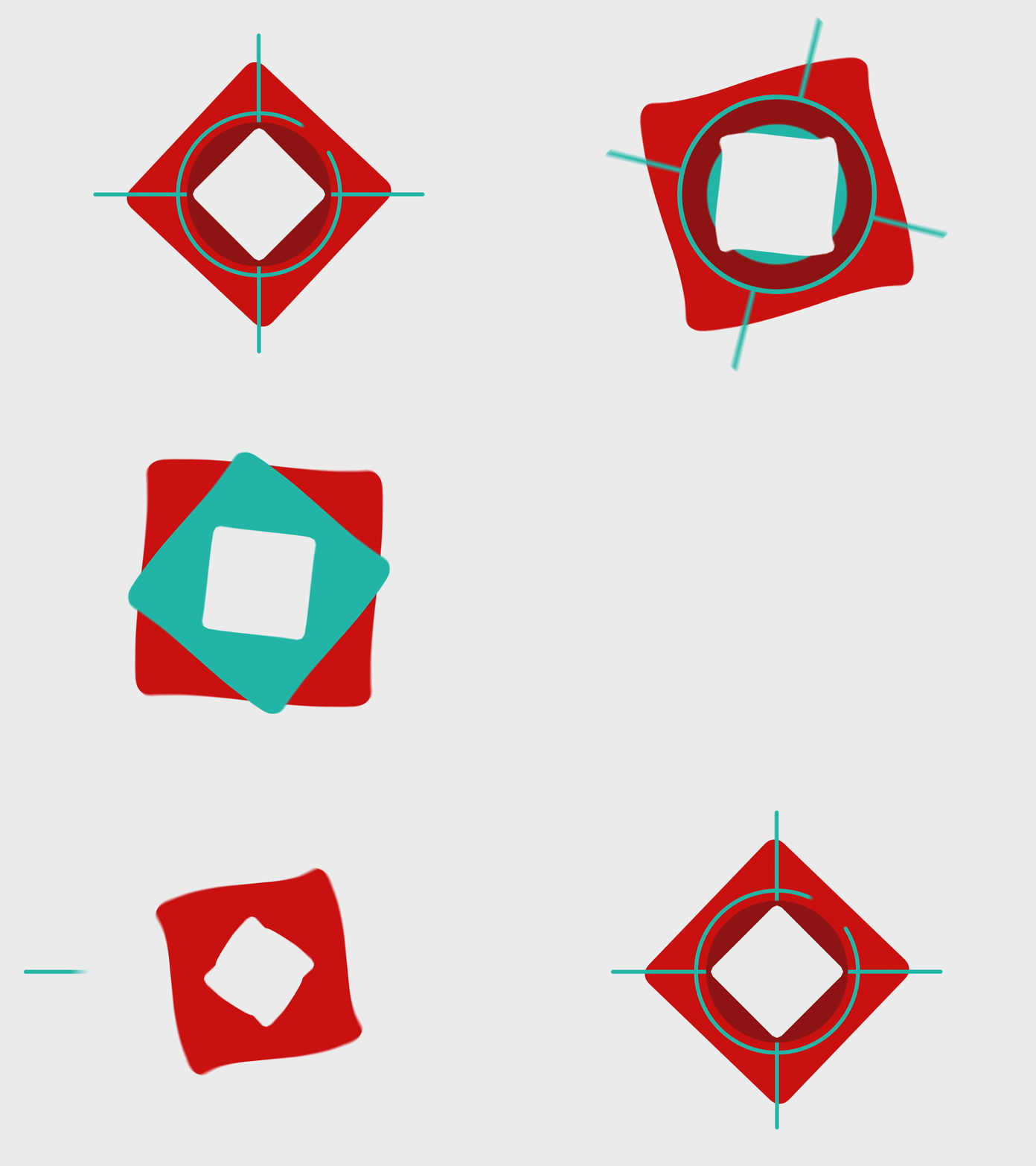
So here is a busy scene


Despite its busyness there is a particular point that unifies all the movement: it is the centre. It doesn't need to be centre every transformation whose range is within the domain has such a fixed point. I've spoken at length on fixed points, this is a revision.

The fixed point remains unchanged under a transformation. Certainly if we refer to the set of everything then this must have a fixed point, since by definition the range is within the domain. And all transformations on infinite sets the same. This is the basis of Diagonalisation.

But its also the basis of Spirituality too. Which is much more why this blog spends so much time on SRH. Millennia ago people were talking about the hole in a wheel into which the axle fits, and around which the wheel turns. They spoke of rotation around the centre as referring to the world moving around an unchanging truth. The Enlightened Mind observes change fully because it itself is still.

"The point that all change leverages" is a good description of the Truth. In the picture above it is quite easy to see that all the zooming in and out and the cross hairs moving in are all aimed at or occurring round the single centre point. We can discover this special point quite easily here. But in the complex changing world of our Lives with everything changing from the weather to the news to the people and events around us to our own bodies, thoughts, emotions and minds: the World IS most definitely Changing! All of it is changing. They say in Buddhism it is a burning house. But all this change is swirling around a singularity of perfect peace and calm that is never-the-less not separate from the world. The Point that forms the special centre of the picture above, of any affine transformation is part of that domain and range. It is not "outside" the picture. The Peace of Truth Enlightenment and Wisdom is not outside the world, but is created through the very swirling of all the transformation that make up the change all around and in us.

One unfortunate thing is that the processes of education like explaining and showing people things are all part of the world's change. If one considers a student before standard education and after they hopefully have changed. The fixed-point of Peace is thus even a fixed point of the education system. You can't change to a state of Peace because obviously the new state would be itself be changeable and so not Peaceful. We must find the Peace that lies even in the states of change that regard education. Even while reading this the world and our minds are in Flux (to use Heraclitus' word): observing all this change closely so we can see where it has its unchanging centre is all we need to do. 

An algorithm you can use to find the centre of rotation is to take a point of reference that is outside the rotation. So for example on a computer screen with a rotating complex shape if we place our finger on the screen we can see that this point traces out a circle on the rotating image. If we then move our finger inside this circle and do again we will eventually arrive at the centre. Of course with the World it is harder to get a reference point that is "outside" the World, and so harder to get a reference point. However you can have two systems in different states of rotation. From the perspective of one the other traces a trajectory, and vice versa. This is like looking at the orbit of planets from a planet that is itself orbiting. No one can stand on the Sun so we effectively have no way of viewing from the fixed point, we cannot get a finger outside the picture. But we can look at these trajectories. Originally with Epicycles (a predecessor of Fourier Transform) and then we a Heliocentric solar system. we did eventually work out the fixed point of all these changes especially the bizarre behaviour of retrograde planets (which turned out to be just parallax). The process of spiritual progress is very analogous, comparing chaotic and changing systems looking for the centre. 

I won't go as far as Fritjof Capra in Tao of Physics to suggest that there is anything more here than just a nice analogy joining fixed points and spiritual peace. But it is uncanny how these ideas are so similar. It is almost as though through meditation and reflection we slow down the change enough to see the point that is not effected by the world's transformations. The point of Peace. Once found obviously all the changes make sense and have a centre and a grounding. And the more the world changes the more we see the point around which it all changes. This is quite different from the view of change which is trying to stop the world. This type of Peace is disturbed the moment change occurs again.

So regarding SRH. A quick stub to remind me to look at Fixed Points and Russel's Paradox. Excellent summary here in Scientific American

US displaying its Imperialist credentials... yet again

Wanted to know the pattern of UN votes over Venezuela and then got into seeing if ChatGPT could see the obvious pattern of Imperialism here....