So I was looking at this the wrong way it seems.
The concept of interest is "closure."
In the figure are 3 regions A,B,C. B is enclosed by the red circle, but importantly it is still within the domain of A. Any point within B can be referenced on the same co-ordinate system as A. This is how we define B in fact as the locus of points within A that are within the area bounded by the circle.
Region C is different. While it exists in the same plane as regions A and B, I've deliberately removed the co-ordinate grid from around it to suggest that in fact the points within C cannot be referenced relative to A or B. I'm using the word "closure" here to mean that the points within C are relative to C and nothing else. Closure here means to separate like a Monad or Solipsism.
In computer programming we might illustrate the same thing with these 3 programs.
A
10 Print "hello"
20 Goto 10
B
10 Input a$
20 Print a$
30 Goto 10
C
10 a$ = "hello"
20 Goto 10
Program A has an output. We can run it and observe as it interacts with the world "outside" it. Program B interacts even more as it take an input, during which time it halts, and then it supplies an output. The system is very open. Program C however has no output and no input, it does nothing.
We can write the programs in many ways. Program A might be written like D:
10 Print "h"
20 Print "e"
30 Print "l"
40 Print "l"
50 Print "o"
60 Goto 10
D is a much longer program but as far as the outside world goes it is the same as A. We can in fact say that programs A and D are functionally equivalent. They may work differently but as far as the outside world is concerned they perform the same function.
Program C is interesting however. It is a special type of program that does nothing. As a result we can say that all such programs are equivalent. There is only one type of program that takes no input and produces no output.
We can say that Type C programs are "closed." They exist entirely within their own "world." We don't know what a particular Type C program is doing, it might be extraordinarily complex. But because it is closed it is the same as all other type C programs.
This was my first experience of SRH in fact. Pursuing artificial "consciousness" I wanted a program that was aware of itself. So I first made a program that could discover patterns in a matrix and then planned to map (isomorphically) the state of the machine to a matrix. This way input was the system state itself. In terms of this blog I realised that once the syste, had "closure" and the input was entirely limited to the system itself then the resulting patterns whatever they might be would be meaningless. Having no relationship or point of reference with the outside world would make the operation of this solipsistic world entirely meaningless. I realised since that there would actually be patterns meaningful to an observer, as such systems produce fractal output, with the system structure being formed around fixed-points. Fixed points as hypothesised in this Blog are a metric that breaks closure, and cannot be expressed within the system. The reason they cannot be expressed within the system is that the system does not operate on them, and you need to be outside a system to generate such meta-data that the function made no change to a given input. To put that another way a fixed-point is unchanged by a system, yet for the system needs to change somewhere to identify a fixed point, so isomorphically there isn't room in the system to perform its function AND comment on when it does nothing. Suppose there is a program that finds a fixed points of given function F(f) -> fp such that f(fp) = fp. If we apply the function to itself and it finds a fixed-point then F(F) -> F. Then like Godel and Turing we would be able to construct a contradctory function who secretly knows the truth and breaks it ... todo)
In the geometric example above we can say that all regions that cannot be referenced from a particular co-ordinate system, or space are also equivalent. There is only one such space.
So this is the SRH point. There is only one type of entity that does not interact with a particular system, there is only one type of "closure."
What the original formulation of the SRH was driving at was that any system which had a particular nature must have an outside. In the new formulation, to be something distinct we can't be closed.
So that means that the "totality of knowledge" or the "totality of existence" (i.e. the Universe) cannot be closed.
Now we might think that an ant living in space C is living within a closed system. But the ant can never know the limits of space C without reference to something outside space C. An ant living within space C might walk to one boundary and then measure across to the other boundary. And they would discover the size of space C. But at exactly the same time they would have created a co-ordinate system that extends outside space C and they would know the limits of space C at the same time they knew that there must be something outside space C.
And this is where the Self-Reference part of the Hypothesis came from. When you refer to yourself, you must be an open system first. A closed system cannot define itself. From which we can infer that anything with self-reference is open.
The original formulation said that "true" self-reference was impossible. The intuition here was that trying to refer to ones "totality" was impossible as it implied openness, and so self-reference must also come at the cost stepping outside the boundaries of what is referenced. And since we must step "outside" the boundary, it isn't "true" self-reference. Like the ant living in space C, to define the boundaries the ant much create a metric that extends outside space C. When Godel defined the Godel Statement within Principia Mathematic he created a Diagonalisation metric that was able to number sentences that were outside the system. When Cantor extended the numbers into boundless infinities he created the idea of set Cardinalities that stepped outside the limits of numbers. In each case a particular metric is the vehicle by which we first define and reference what we have, but then at the same time can extend beyond the limits that we have.
And this is true of the human ego. It is a metric that firstly defines ourselves. But in the very moment that we are defined as an ego we have a way to define other people, and we instantly occupy the space of a community.
SRH was also called the God principle. Because it means that any system that becomes "self-aware", or self-referencing does so by virtue of the fact that it is open. God being that constant awareness that there is no boundary to existence and knowledge, that we are always embedded in a mystery that both illuminates the known and obscures the unknown at the same time.
Returning to a few side shoots to see if they work. The issue of a box containing itself. Initially it was the show the absurdity of "true" self-reference. A box can contain a representation or reference to itself, but never its actual self. But formally why is that? Well if we want to reference ourselves in entirety we can't be closed, which contradicts the idea of enclosing!
Another important example of SRH is the data/code distinction in the use/mention example. And also the concet of "meta", usually attributed to Douglas Hofstadtler. So the sentence "The word 'word' is 4 letters long" uses the symbol "word" in two ways. One is part of the sentence to indicate a word, and the other is a mention or reference to a particular word namely "word." In a reverse use of "closure" the two uses of the symbol "word" are in closure to each other. The metric (context in this case) of dictionary words is an entirely different space to that of words in use. There is closure as you cannot move from one to the other. This is how Russell and Whitehead would have liked to keep it with their theory of types, because when a metric is found that spans these worlds you get contradictions (Godel Numbering/Diagonalisation in Godels theorems). So SRH is actually turned around here and here is a todo.
Few other notes:
ExEy | x is closed & y is closed
Shouldn't this strictly be a contradiction since how can x and y be different if they are indistinguishable. And if they are distinguishable then they are expressing something unique (an essence?) and so are not closed.
y = set of x
Ax-Ex | x == y
The "closed" set cannot be a member of itself, because "closed" here means non-literally "self-contained" and if it really did contain itself them it would have to be open by the new SRH.
Some more thought to make this rigorous but this seems to be the correct way to think about it now.
A search for happiness in poverty. Happiness with personal loss, and a challenge to the wisdom of economic growth and environmental exploitation.
Friday, 25 October 2019
Tuesday, 22 October 2019
What is Racism?
This is a subject that has been gaining ground over the last few decades. Everyone thinks they know what it is, but the more I think about it the more I realise no-one knows what it is.
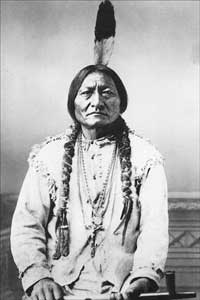
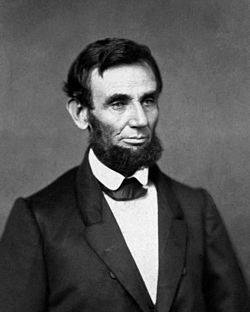
In a nutshell the problem can be summarised by this question: what does an American look like? There are 2 pictures below. Have a think.
Now it appears to me the possible answers illustrates everything about the issue of race and racism.
Someone who says they are both American is following what you might call the "National" concept of race. Our national background determines our identity. In America this may appear to make sense. But anyone who travels to the Old World will quickly realise that in each part of the Old World people look a certain way. If you go to Europe you will find mostly whites. If you go to Africa you will find mostly Blacks. If you go to China mostly Chinese, India mostly Indians and so on. Now we might argue that this is an old fashioned way of thinking and anyone can go and live anywhere. But people in the Old World don't think like this. In the UK you have people who call themselves British-Chinese and British-Asian. This means while they are born in Britain they are descended from people who came from China and India. But in fact that may be quite a few generations ago and what it really means is that they look like people from China and India, speak the language and share the culture with these places.
Unlike this Old World view, it is only in the New World where you get this pure "National" concept of race. I may look like a Chinese but I am American, I may look like a European (Figure B) but I am American. However Figure A presents a problem. Figure A doesn't look like a European, nor a Chinese nor an Indian nor an African. Figure A actually looks like an American! But if Figure A looks like an American and Figure A does not look like Figure B then Figure B who calls himself an American does not look like an American. This is the situation you have if I go and live in Iraq and take citizenship. I may become Iraqi but I do not look Iraqi. So we are uncovering an uncomfortable truth that the person in Figure B is actually an immigrant.
Now this uncomfortable truth hides a very important unavoidable point about the history of the New World. The European colonists (both white and Hispanic) invaded various parts of the world and annihilated the local populations. They were aided by the spread of diseases to which the majority of local people died, but the rest were hunted down and killed. It was unquestionably a genocide that occurred in the Americas North and South, Canada, Australia and to a lesser extend New Zealand. The measure of the scale of the genocide is measured by how large the remaining populations of locals is now. I have a friend who is Peruvian and his family looks like the Inca, he is not a European. But I have no friends who are True American, just one girl I know who is distantly a part Cherokee. I fear the truth we don't want to face up to is we call Figure B an American because we killed off all the True American to make room for him, and they are today an extremely rare race. In fact the 2019 population figure for True American is 4.4 million while for Jews it is 5.7 million so there are 30% more immigrant Jews than native Americans - this is a crude statistic but since both groups experienced Holocaust we get some idea how massive the Native holocaust was. This is why in the New World we carefully avoid the question about what people look like and where they belong because to do so reminds us that we don't really belong in America.
What is particularly ironic about this is that history is rather bulldozed over by that most infamous of events that rather colours everything else: the Holocaust. The reason we are told we don't like to think in terms of "where people belong" is because the German people started to do this in the 1930s and it lead to the conclusion that Jews did not belong in Germany, so they were put in concentration camps and killed. In fact Wikipedia used to have an interesting quote from Hitler on this:
Once, when passing through the inner City, I suddenly encountered a phenomenon in a long caftan and wearing black side-locks. My first thought was: Is this a Jew? They certainly did not have this appearance in Linz. I watched the man stealthily and cautiously; but the longer I gazed at the strange countenance and examined it feature by feature, the more the question shaped itself in my brain: Is this a German?
Now we are not allowed to think about these things today because of this fear that the next stop in our thinking will be agreeing with the gas chambers. On the other hand, once we stop being allowed to think about things we also get the gas chambers too as people suspend critical thought and follow mass movements like the Nazis. Can't win unfortunately. It seems obvious to me you can consider any of these questions without suddenly becoming a mass murder. Such an idea is as crazy as thinking that through watching a horror movie we will become mad. So yes Hitler wrote that quote, and he is most hated in humanity, but he was human and had a point of view, and I found it interesting that he poses a very valid question. A question in fact that most people want an answer to today.
What I particularly like about this subject are the number of ironies. Not only does the Jewish Holocaust neatly divert attention away from the American Holocaust. Nazi Germany was actually only looking for lebensraum which comprised reclaiming the lands that Germans felt historically were theirs. What the European settlers did was start colonising lands that had never belonged to them; they went far further than the Nazis ever even thought about. And the genocide that followed in the New World was the pure removal of local people to make room for them. The Nazis never even dreamed of that level of expansion. But it remains that the Nazi Holocaust is why we don't like to think about these things. And yet the spill out from the Holocaust was the Jews trying to secure the historical lands where they belonged. The Jews did a lebensraum of their own immediately in the foot prints of the Germans and like Hitler had to ask this question "what is a Jew", because you needed to be a Jew in order to qualify for relocation to Israel. I think the Jews have a clear idea of what a Jew is (I imagine they could have told Hitler had he asked). But I think the Germans are still trying to answer this question, and they are not being allowed to. Indeed much of the West isn't being allowed to, while the rest of the World know already. Interestingly it is the European Americans who are stopping the debate, as suggested I suspect because it leads straight to the door of their own illegitimacy as Americans.
Just in the news recently we have the Kurds being attacked in Syria by the Turks. The Kurds are one of the groups left out of the partitioning of Arabia by the European League of Nations. They want a homeland for their people. I imagine a Kurd, like a Jew, or a Roma, knows what a Kurd is, and knows what type of people they want to live in their wished for Kurdistan. And the international community, like with Israel, sympathises with this venture more of less (although they will never change the borders now). Yet when Germans ask or the same thing there is no sympathy because they are "racists." This illustrates how this word doesn't mean anything. If the Germans are racists then so are the Kurds and Israelis racists. I must note of course that not all Jews agree with the country Israel, for most Jews "Israel" is an abstract place that a nomadic people like the Jews carries with them, plus lots of detailed scripture and history that says they no longer belong to that land. But abstract or not the Jews still need to answer that question of Hitlers "what is a Jew?" in order to know who is a part of Israel and who is not.
So its a mess. Returning to the two pictures. If someone says that Figure A is a True American and Figure B is an immigrant then they think like the Old World, and the people of the Old World, who even after 5 generations in a foreign country still believe they are from their homeland and look to the people of that homeland as their closest friends. They carry the language, the culture and the physical look of that peoples, and the songs they sing are still of that land. This is why there is nothing racist in a Chinese person born in Britain calling themselves Chinese, because they still look like they are from China and still carry much of the culture and feel this place as their true origin and home. And similarly there is nothing racist in a person saying I am German meaning I am white and look to the land of Germany as my home. And of course our Chief Sitting-Bull above is not racist when he says I am a True American and all these other people are immigrants. The evidence he is right is everywhere: even after 400 years the immigrants still speak the European languages English or Spanish of their homelands!
Of course this leads to the "Problem of Modernity" that the Nazis so spectacularly failed to answer. People I meet who would be called "Racist" believe that the positive idea of feeling that a place is my home, must imply that anyone who is not from here shouldn't be allowed in. Then you get the idea of Jews having to leave Germany and Blacks having to leave England (and no-one says this but it means Germans and Whites must return home also). Practically Jews would have had to leave Germany because the Nazis wanted to bring Germans home (also against their will), but apart from that why should we kick people out of a land? In Tibet the Dalai Lama has seen the effects of aggressive immigration by a foreign power and of course the Lakotan Chief in Figure A saw the absolute decimation of his land and people by aggressive immigration. There is a very real fear in allowing foreigners to take over a country. Most alien movies have Earth defend itself from invasion - it is a very real thing to keep the foreigner out. But at the other extreme it is the rather paranoid not allowing anyone to come and go across borders. This is a real problem, wholly unresolved and wholly undiscussed thanks to the brain numbing effect of the idea of "racism" and other unhelpful memes.
In my mind its all very simple. Remove all Hatred. What is racism without hatred? It is nothing, so in fact there is no such thing as racism, there is only hatred. So ignore racism, its a waste of time, just focus on removing hatred from your culture. Then set to work on the very real problem of preserving your land and culture from the modern world and the influx of new ideas, products, and people. While not going completely Amish and meditating progress and development. Its a matter of balance and avoiding the extremes (as one very famous teacher once taught who was not British or White but which most British and White would probably benefit from listening to).
![]() |
| Google Ngram for "racism" |
In a nutshell the problem can be summarised by this question: what does an American look like? There are 2 pictures below. Have a think.
![]() |
| Figure A |
| Figure B |
Someone who says they are both American is following what you might call the "National" concept of race. Our national background determines our identity. In America this may appear to make sense. But anyone who travels to the Old World will quickly realise that in each part of the Old World people look a certain way. If you go to Europe you will find mostly whites. If you go to Africa you will find mostly Blacks. If you go to China mostly Chinese, India mostly Indians and so on. Now we might argue that this is an old fashioned way of thinking and anyone can go and live anywhere. But people in the Old World don't think like this. In the UK you have people who call themselves British-Chinese and British-Asian. This means while they are born in Britain they are descended from people who came from China and India. But in fact that may be quite a few generations ago and what it really means is that they look like people from China and India, speak the language and share the culture with these places.
Unlike this Old World view, it is only in the New World where you get this pure "National" concept of race. I may look like a Chinese but I am American, I may look like a European (Figure B) but I am American. However Figure A presents a problem. Figure A doesn't look like a European, nor a Chinese nor an Indian nor an African. Figure A actually looks like an American! But if Figure A looks like an American and Figure A does not look like Figure B then Figure B who calls himself an American does not look like an American. This is the situation you have if I go and live in Iraq and take citizenship. I may become Iraqi but I do not look Iraqi. So we are uncovering an uncomfortable truth that the person in Figure B is actually an immigrant.
Now this uncomfortable truth hides a very important unavoidable point about the history of the New World. The European colonists (both white and Hispanic) invaded various parts of the world and annihilated the local populations. They were aided by the spread of diseases to which the majority of local people died, but the rest were hunted down and killed. It was unquestionably a genocide that occurred in the Americas North and South, Canada, Australia and to a lesser extend New Zealand. The measure of the scale of the genocide is measured by how large the remaining populations of locals is now. I have a friend who is Peruvian and his family looks like the Inca, he is not a European. But I have no friends who are True American, just one girl I know who is distantly a part Cherokee. I fear the truth we don't want to face up to is we call Figure B an American because we killed off all the True American to make room for him, and they are today an extremely rare race. In fact the 2019 population figure for True American is 4.4 million while for Jews it is 5.7 million so there are 30% more immigrant Jews than native Americans - this is a crude statistic but since both groups experienced Holocaust we get some idea how massive the Native holocaust was. This is why in the New World we carefully avoid the question about what people look like and where they belong because to do so reminds us that we don't really belong in America.
What is particularly ironic about this is that history is rather bulldozed over by that most infamous of events that rather colours everything else: the Holocaust. The reason we are told we don't like to think in terms of "where people belong" is because the German people started to do this in the 1930s and it lead to the conclusion that Jews did not belong in Germany, so they were put in concentration camps and killed. In fact Wikipedia used to have an interesting quote from Hitler on this:
Once, when passing through the inner City, I suddenly encountered a phenomenon in a long caftan and wearing black side-locks. My first thought was: Is this a Jew? They certainly did not have this appearance in Linz. I watched the man stealthily and cautiously; but the longer I gazed at the strange countenance and examined it feature by feature, the more the question shaped itself in my brain: Is this a German?
Now we are not allowed to think about these things today because of this fear that the next stop in our thinking will be agreeing with the gas chambers. On the other hand, once we stop being allowed to think about things we also get the gas chambers too as people suspend critical thought and follow mass movements like the Nazis. Can't win unfortunately. It seems obvious to me you can consider any of these questions without suddenly becoming a mass murder. Such an idea is as crazy as thinking that through watching a horror movie we will become mad. So yes Hitler wrote that quote, and he is most hated in humanity, but he was human and had a point of view, and I found it interesting that he poses a very valid question. A question in fact that most people want an answer to today.
What I particularly like about this subject are the number of ironies. Not only does the Jewish Holocaust neatly divert attention away from the American Holocaust. Nazi Germany was actually only looking for lebensraum which comprised reclaiming the lands that Germans felt historically were theirs. What the European settlers did was start colonising lands that had never belonged to them; they went far further than the Nazis ever even thought about. And the genocide that followed in the New World was the pure removal of local people to make room for them. The Nazis never even dreamed of that level of expansion. But it remains that the Nazi Holocaust is why we don't like to think about these things. And yet the spill out from the Holocaust was the Jews trying to secure the historical lands where they belonged. The Jews did a lebensraum of their own immediately in the foot prints of the Germans and like Hitler had to ask this question "what is a Jew", because you needed to be a Jew in order to qualify for relocation to Israel. I think the Jews have a clear idea of what a Jew is (I imagine they could have told Hitler had he asked). But I think the Germans are still trying to answer this question, and they are not being allowed to. Indeed much of the West isn't being allowed to, while the rest of the World know already. Interestingly it is the European Americans who are stopping the debate, as suggested I suspect because it leads straight to the door of their own illegitimacy as Americans.
Just in the news recently we have the Kurds being attacked in Syria by the Turks. The Kurds are one of the groups left out of the partitioning of Arabia by the European League of Nations. They want a homeland for their people. I imagine a Kurd, like a Jew, or a Roma, knows what a Kurd is, and knows what type of people they want to live in their wished for Kurdistan. And the international community, like with Israel, sympathises with this venture more of less (although they will never change the borders now). Yet when Germans ask or the same thing there is no sympathy because they are "racists." This illustrates how this word doesn't mean anything. If the Germans are racists then so are the Kurds and Israelis racists. I must note of course that not all Jews agree with the country Israel, for most Jews "Israel" is an abstract place that a nomadic people like the Jews carries with them, plus lots of detailed scripture and history that says they no longer belong to that land. But abstract or not the Jews still need to answer that question of Hitlers "what is a Jew?" in order to know who is a part of Israel and who is not.
So its a mess. Returning to the two pictures. If someone says that Figure A is a True American and Figure B is an immigrant then they think like the Old World, and the people of the Old World, who even after 5 generations in a foreign country still believe they are from their homeland and look to the people of that homeland as their closest friends. They carry the language, the culture and the physical look of that peoples, and the songs they sing are still of that land. This is why there is nothing racist in a Chinese person born in Britain calling themselves Chinese, because they still look like they are from China and still carry much of the culture and feel this place as their true origin and home. And similarly there is nothing racist in a person saying I am German meaning I am white and look to the land of Germany as my home. And of course our Chief Sitting-Bull above is not racist when he says I am a True American and all these other people are immigrants. The evidence he is right is everywhere: even after 400 years the immigrants still speak the European languages English or Spanish of their homelands!
Of course this leads to the "Problem of Modernity" that the Nazis so spectacularly failed to answer. People I meet who would be called "Racist" believe that the positive idea of feeling that a place is my home, must imply that anyone who is not from here shouldn't be allowed in. Then you get the idea of Jews having to leave Germany and Blacks having to leave England (and no-one says this but it means Germans and Whites must return home also). Practically Jews would have had to leave Germany because the Nazis wanted to bring Germans home (also against their will), but apart from that why should we kick people out of a land? In Tibet the Dalai Lama has seen the effects of aggressive immigration by a foreign power and of course the Lakotan Chief in Figure A saw the absolute decimation of his land and people by aggressive immigration. There is a very real fear in allowing foreigners to take over a country. Most alien movies have Earth defend itself from invasion - it is a very real thing to keep the foreigner out. But at the other extreme it is the rather paranoid not allowing anyone to come and go across borders. This is a real problem, wholly unresolved and wholly undiscussed thanks to the brain numbing effect of the idea of "racism" and other unhelpful memes.
In my mind its all very simple. Remove all Hatred. What is racism without hatred? It is nothing, so in fact there is no such thing as racism, there is only hatred. So ignore racism, its a waste of time, just focus on removing hatred from your culture. Then set to work on the very real problem of preserving your land and culture from the modern world and the influx of new ideas, products, and people. While not going completely Amish and meditating progress and development. Its a matter of balance and avoiding the extremes (as one very famous teacher once taught who was not British or White but which most British and White would probably benefit from listening to).
Sunday, 6 October 2019
So what actually does mindfulness achieve?
Here is a trivial example that was quite illuminating. I was cycling down a long straight country lane in the dark. At the end of the lane it joined a lit dual carriage way but the trees over hung the road in such a way that the light of the road ahead appeared as just a distant door or light at the end of a tunnel far ahead. As I cycled the road I was actually questioning the rate at which the circle of lightwas growing, was it reciprocal? To my surpise I found I never actually ended up cycling through the tunnel of overhanging trees into light, but instead the trees parted and there never was a tunnel.
Trivial as this is, it really demonstrated the difference between our expectation of the future and the unpredicatble complexity of what actually happens. What actually happens is an experience that occurs in a more fundamental way than our thoughts which are only ever superimposed. When people have an emotional relationship with the future, perhaps they are anxious about something that will happen, they are clearly not having a response to the actual event because it hasn't happened. Instead they have a relationship with the thoughts. Our emotions and derivative mental processes are always derived from what we think about a situation. About whether we see something as fearful or pleasant, etc.
Now meditation is the practice of placing oneself in the "present moment" for long periods of time. In Vipassana we spend time noting thoughts and when we are thinking to encourage ourselves to see this difference between the arising of a temporary impermanent thought that enters our mind like a film voice over, and the content of that thought which can be literally anything. The arising of a thought is real. what it contains is invented however. Eventually we can see the "present moment" at will, and ultimatly we never lose touch with what is really going on. Our thoughts don't go away, but we never make the mistake again of confusing what we think with what is there. We can always think of something else, or think positive rather than negative thoughts, and in so doing change our perception of the world. But we can never change what is actually happening.
Trivial as this is, it really demonstrated the difference between our expectation of the future and the unpredicatble complexity of what actually happens. What actually happens is an experience that occurs in a more fundamental way than our thoughts which are only ever superimposed. When people have an emotional relationship with the future, perhaps they are anxious about something that will happen, they are clearly not having a response to the actual event because it hasn't happened. Instead they have a relationship with the thoughts. Our emotions and derivative mental processes are always derived from what we think about a situation. About whether we see something as fearful or pleasant, etc.
Now meditation is the practice of placing oneself in the "present moment" for long periods of time. In Vipassana we spend time noting thoughts and when we are thinking to encourage ourselves to see this difference between the arising of a temporary impermanent thought that enters our mind like a film voice over, and the content of that thought which can be literally anything. The arising of a thought is real. what it contains is invented however. Eventually we can see the "present moment" at will, and ultimatly we never lose touch with what is really going on. Our thoughts don't go away, but we never make the mistake again of confusing what we think with what is there. We can always think of something else, or think positive rather than negative thoughts, and in so doing change our perception of the world. But we can never change what is actually happening.
Subscribe to:
Comments (Atom)
US displaying its Imperialist credentials... yet again
Wanted to know the pattern of UN votes over Venezuela and then got into seeing if ChatGPT could see the obvious pattern of Imperialism here....
-
The classic antimony is between : (1) action that is chosen freely and (2) action that comes about through physical causation. To date no ...
-
There are few people in England I meet these days who do not think we are being ruled by an non-democratic elite. The question is just who t...
-
https://chatgpt.com/share/688e1468-dfc4-8003-b47c-eb5351496d3d Me: Platonic Forms are invokes to explain how all apples are apples and all b...