Monday, 15 August 2022

Rule vs Law (4/11/2008)

This is the heart of the argument in this webpage.


An example of a rule are the legal moves of the knight in chess. We know that physically the knight can make any move, so the rule limits these possibilities. If we don’t obey this rule it has no real effect, it simply dissolves that game. We could use the new move and so have a new game. Rules create games, and games require the adherence and obedience to rules. It is up to people in authority to enforce and maintain rules. This is all in the mind however, it is not real.


A Law is different. If we let go of an egg the result is not an option, it will fall. Whether it breaks or not depends upon other factors but it will fall. Falling obeys very precisely rules which have been expressed in physics and indeed on paper. These arbitrary equations could be otherwise F=ma might have been a=Fm and the school master will enforce the correct rule. However in reality no one has to enforce the egg’s behaviour: it is always the same, it cannot be otherwise, it always falls. This is a Law for it cannot be otherwise. When people speak of God they envision an absolute unwavering enforcer of this cosmic game, the one who keeps the universe obeying these rules: the one who puts the authority behind the Laws.

If we disobey the rules we have only the wrath of imaginary human authority. If however we disobey the Laws we run into God. If we drive too fast it will upset the authorities but it does no real harm. But if we hit someone then we run into God and into Reality where real rules come into force. Laws that cannot be changed or undone.

This distinction between Illusion which is just man made custom and authority is to be seen as distinct from Reality which is factual and indisputable.

There is very much confusion on this subject because liberating ourselves from custom and authority is essentially anti-social. It demands that we see human authority and culture as non-essential. We exist in society and such a move is understandably frightening; it challenges us to our very core.

It is sad however to see this very move toward God become embodied in further customs and society as it has in the worlds religions and cultures. Our forefathers in every society retreated to the hills and the deserts and the forests to enact this transformation to God: they did not wear clothings or join in customs and cults – these entrapments are the opposite movement toward Man. The religious wars are between societies of men who have lost sight of the Laws and God and replaced them with man made customs which need enforcement. If you need to guard and enforce a Law then by definition it is not a Law.

There is an advert at the time of writing in the UK for army recruitment. It paints the compelling image of the comradeship and society that one experiences as a member of the army. What it doesn’t show is the equal comradeship experienced by the society of people that we will fight. Wars create strong social bonds and inclusion, it feels good to a fundamentally social organism like Man. But for every bit of belonging there are people who do not belong: all societies include and exclude at the same time: all societies unite and divide at the same time: all societies bring peace and war at the same time: all societies embody rules enforced by man, they do not embody Laws given by God.

Lawful society is already here we are all already members of it. There are no Lawfully righteous and no Lawfully heathen, there is nothing to Lawfully fight for, no Lawful kingdom to create; it is already here.

Disharmony exists because we humans cannot bear to accept the authority of God. We have insights but like my very writings here we chose to embody them in arbitrary rules. These words I use here can be written in myriad ways, they can say anything: some things that are Lawful (like F=ma) and some things that are Unlawful (like a=Fm); things that we call true and false. Lawful rules mimic God at first but soon come to replace Him.

Scientists once thought they were uncovered the Laws of God, but today some seem to think that they are responsible for the Laws. Unified Field Theory will be great detective work when it is complete, but the crime of creation happened all by itself billions of years before life had even arisen! Whatever rules we find to express the Laws of the universe it always remains to be explained why the universe obeys these rules as Law rather than others. That Law-giver is the ancient Logos: in various other languages called God (English), Allah (Arabic), Yahweh (Jewish), Dao/Tao (Chinese), Dharma/Dhamma (Indian). (To confuse us in some systems the Law has a personality as a god, in others like Buddhism it is just a Law).

To have a discussion things have to be one way or another. We can discuss rules, discuss what people have thought, written and said. By contrast the Law can only be one way. That is why it is a called Law not rule. On Law there can be no discussion. This is how the universe is, at the beginning there is always just Law. All men have always known this.

We are born as instinctive players into a million games and spend our lives learning the rules.

Rules of social acceptance,
Of board games and sports,
Of intellectual excellence,
Of sex and political retorts,
Of poetry and writing,
History! its fighting,
Of names and places,
Our airs our graces;
Through this maelstrom of rules,
Enforced yet changing,
God is forever distant,
Eternal light, self-effacing.

We know God not in the trip to the supermarket, but in the realisation that if we do not eat we will starve. Feel hungry once in a while just to remember the way things really are. We know God not in the money we give to charity, but in the realisation that if we didn’t someone really would find life more difficult. Spend the money on yourself one day and look at the difference it makes. We know God not in being pious and good (there is no such thing), but in realising that if we are bad it leads to confusion, frustration and suffering.

By contrast we know there is little God in TV because if we don’t watch it is makes no difference at all. We know there is little God in a shampoo brand because any soap will do. We know there is little God in a political party because it makes little difference who is in power - wheat grows as well under communism as it does liberalism. We know there is increasingly little God in the work we do because as the current downturn illustrates it makes no difference whether we are in work or not. But that is subject for another page.

It is obviously a subtle point as evidenced by the confusion that surrounds it: but rules and laws do seem distinct. Rules can be otherwise and are therefore zealously enforced by the games players, especially when their desire for society draws them deeply into a particular game. Whenever we feel that we need to enforce something: it is because it can be otherwise and it is therefore manmade and a rule. By contrast Laws are the foundations of all existence. They can never be otherwise. We notice them because they enforce some rules (F=ma) and not others (a=Fm), some statement and not others. In themselves they are beyond discussion and compromise: they just are. There is nothing to enforce: God enforces his own rules. We need only look and learn – that is the Way of Mankind.

Total Nature is a name for this underlying existence of Laws. Mankind is creative in making a buzzing and busy world full of stories and fantasy: but the test comes not from human authority and judgement but from the Laws that truly govern. Get it wrong and we all suffer.

http://totalnature.atspace.com/

Human & Animal (04/11/2008)


Human & Animal

Do animals have Fun?

I once watched a gull from a cliff top in Wales. It launched itself from its perch high on a sun drenched ledge and like riding a swing swooped down and away out to sea, before rising, wheeling around and riding back to its perch, using the light sea breeze to lift it that last bit. At first I thought it had fallen off the perch, and was returning to get settled again, but it missed its footing and began the ride once more. When it returned it missed its footing yet again and went soaring once more on its high aerial swing. It was at this point that I wondered whether this was really all an accident or whether this creature was actually doing this just for the fun of it. Sure enough it didn't perch the next time either and went again on its exhilarating round. As I watched I was struck, actually lifted in my spirits, by how much gleeful enjoyment it was having and I couldn't believe I had never thought of this before. It takes a very cold-hearted behavioural ecologist to ignore the signs that most "higher" animals can enjoy themselves. You see a dog playing with it's stick, or a cat playing with a fake mouse, or fox cubs tumbling in spontaneous wrestling matches, or a bird on a post singing away, or even just an animal lying in the sun and it takes very blinkered vision not to see that they are enjoying themselves. In the harsh economy of survival there is time even for animals to enjoy themselves.

While there is no doubt that animals differ enormously in the faculties they have and levels of development of those faculties it does seem on closer examination that a little too much has been made of the differences between animals and Man. To consider animals as having leisure time, a break from the routine of feeding and general survival, is to me already encroaching on the precious domain of humans.

The Distraction of Evolution

Many people will leap to the evolutionary perspective and argue that if animals do have anything we might can "enjoyment" it is simply an evolved strategy for survival in their environment. For example enjoyment might be considered a reward for success and therefore a reinforcement to encourage the animal to learn and adopt this strategy in future. Bird song for example might be explained in terms of mate attraction or territorial display. An animal resting in the sun might be viewed as maximising its energy budget by not wasting energy. All these might be true in the long run, the answer to why the world is the way it is. However to the organism doing the learning, singing or relaxing this is all literally academic. None of this distracts from the suggestion that the animal is a living creature that is experiencing a moment in its life. This is seemingly the preserve of conscious human agents, but where is any evidence forever thinking that animals are not the same?

Animals and Consciousness

The problem is that we don't get animals talking to us about what they did today. Being silent we can look into their eyes forever and never have any evidence that there is anyone looking back. But isn't this true of a dumb person also, what evidence do we need to decide that there is "someone" there?

Imagine that you are in a field and a cow says "excuse me but could you scratch my shoulder?" we would immediately assume that the cow was conscious and it was a "somebody". If there was a panel of 10 buttons meaning things like "give me some grass" and a button which said "scratch my shoulder" and the cow pressed it, it's not quite as convincing but we would still think that there was "something" there, particularly when we scratched its shoulder and it presses the button "thank you". If there were just 2 buttons "give me food" and "give me a scratch" and the cow "asked" for a scratch by pressing a button, and showed in some way satisfaction that it had got what it "wanted" - its not as good as a deep discussion with a partner - but there is still the sense that there is "something" there. If you took a knife and approached the cow and it looked scared and tried to get away then even at this crudest one-dimensional level you would still think that there was "something" there. The cow might not show appreciation when we decide to put the knife away and leave it to feeding, but we do know its happier not dying. The whole animal kingdom operates at this level or above. Even an ant or slug will try to run away from things it doesn't "like", its the argument Buddhists use for their respect for all living things.

In the above paragraph, in my opinion, the stage when the cow goes from being smart to stupid is when it stops responding to me. If it can answer me in some way then I feel that I have engaged with it and it is a "something", the point basically when it stops saying "thank you". There is little doubt that few animals, if any, have the ability to ever learn the respect of their fellows in this direct interactive way, it takes humans long enough! However there is another less direct way in which animals can show their appreciation. If they like what you have done for them they are likely to learn it and come back for more. A dog when it learns that you will throw a stick for it remembers your scent (rather than face) and will be more playful in future, if you hurt it the opposite will happen. If you gain pleasure from the dogs company then it's a reciprocal relationship and you'll come back also! Its certainly not as sophisticated as human relationships, but the principals of enjoyment and reciprocity are present just the same in both human and animal.

In conclusion of the above the question of consciousness couldn't be determined absolutely since it is such a subjective and vague term. It does seem to involve the level of reciprocal interaction possible. Consciousness ranges from the most borderline machine like behaviour of attraction and avoidance like in ants and amoebae, right through to us who have the same crude behaviour, but also levels of almost unlimited mutual awareness. I can see no reason in this discussion to separate animals from humans based on consciousness, since it is a continuum on which even people vary - consider the consciousness of a new born child with that of the child's mother.

Dreams

Something, which may come as a surprise, is that animals dream. The part of the brain which controls movement is normally put into paralysis during sleep so that animals and humans do not move in their sleep. If this paralysis is stopped then animals act out their dreams. You can have dogs chasing sticks in their sleep, cats chasing imaginary mice and maybe even birds even singing to imaginary mates (don't know if this has been tested). Quite what the animal might be experiencing we will never know, anymore than in a human patient who forgot their dream on waking, but it is already bizarre to find oneself speculating on the possible contents of the dreams and maybe even mind of an animal!

Do Animals Fear Man?

The recent discover of an untouched "lost world" in the Indonesian jungle highlighted an often forgotten thing. Animals do not innately view humans as anything other than other animals. The animals discovered had no fear of humans allowing the biologists to pick them up without any struggle. The only difference between these animals and the ones we know is that they have never met humans before. Their fear of humans must then have developed due to contact with humans, and in particular an aggressive attitude we must have always had to them. To me - a human - it has always intrigued me why animals should be afraid of me when I have absolutely no wish to harm them. The reason it seems is that not every creature which looks like me is a "human". Some are animals themselves whose more biological instincts of eating and hunting are dominant. The choice to be human or animal seems to be a recent one then, one that most animals haven't learnt we can make.


The take home point discussed here, like with so much of this webpage, is the sense that Life is a whole of which Human and Animal are just parts, or perspectives. There is no reason not to see Mankind as an integral part of an all-encompassing Nature and existence alongside those creatures once marginalised as just animals.

Nature & Man (04/11/2008)

Some thoughts from 2008.


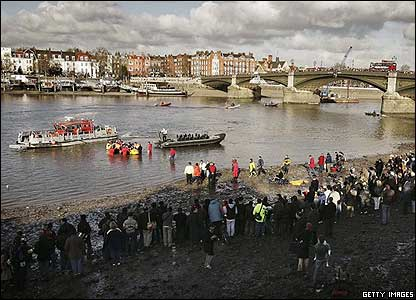
Crowds gather in central London on 21st Jan 2006 to watch the £100,000 rescue of a stranded bottle-nose whale.


Japanese whaling ship kills sears whale (worth between £11000 to £70000)

We humans are certainly contradictory creatures of many sides. Consider the quite opposite attitudes to whales in these two photos. I visited the site of the top photo. A crowd of thousands waited patiently partly to get a sight of the extraordinary creature, but also to encourage the team in their rescue. It was actually very touching and when they winched the whale aboard the boat I remember a child announcing in some confusion 'Mummy I'm crying', so there was nothing pretentious here, quite natural expressions. Unfortunately despite all the efforts to save the London whale it later died.

The Japanese on the other hand view the animals as a source of amongst other things food. It would certainly be hypocritical to criticise them since we in the UK slaughter thousands of farm animals a day for the same reason. Such a judgmental comparison is not my purpose.

I wish to highlight these two quite legitimate sides of human nature which we all share. The first I will call Man-the-human and the second I will call Man-the-animal, which I will now tackle first. (This distinction was one of the two problems, which became very apparent to me during my John o'Groats walk.)

Man the Animal

All animals have basic biological needs. The needs for water, food, shelter and reproduction are common to all animals even protozoa and for more complex species social inclusion and status becomes a requirement. Humans are no exception and it is the search for these basic resources which determines much of our behaviour. The often quoted destruction of the planet, the hunting of animals, the love we show our family and the hate we often show to strangers are all simply expressions of our animalistic nature. It is an irony that it is humans behaving as animals that are the threat to fellow animals. Many people argue that because animals are incapable of being human that is the justification for behaving like animals to them. Whether we accept this argument or not, we do have a choice.

Man the Human

The saving of the London whale is hard to explain in animal terms. There is no apparent reward for the people involved. If it wasn't saved it is hard to see how this would make any difference. Surely £100,000 could be better spent elsewhere? I would think most hard-line pragmatic Darwinists would agree that the operation was a misdirected expression of love (or altruism), which should have been directed to people closer to our own genetic line. Others might argue that humans have no right to interfere with nature, and we should just let things run their course.

For anyone who identified with the suffering of the animal it is much easier to explain. It is hard to resist helping anything that is in difficulties. Such empathy and unconditional appreciation extends to all forms of life and certainly further than any biological theory. It is the same breadth of vision and wonder at the world which inspired humans to explore the world's plants and animals as widely as we have, and come up with such evolutionarily pointless theories as Evolution. This sensitive appreciation of the world, something maybe the whale will never have understood (see essay on Human and Animal), is what makes us Human.

The Human-Animal Balance

In the event a person is forced into a survival situation the basic issues of water, food and shelter will turn the natural world around them into the means to the end of survival. Animals will be hunted for food, trees cut down for timber and firewood, plants foraged and rivers dammed for irrigation. This is how our ancient ancestors behaved in the UK cutting down 80% of the forests once covering the island. This is how we often continue to behave now with mining and factory production an added activity.

When not in an extreme survival situation another attitude can be liberated, the attitude of experiencing and enjoying. Forests no longer become resource for survival but becomes a pleasure to visit. Animals no longer become sources of food, but become living things in their own right. Landscapes are no longer the places upon which our food is grown and our houses made, instead they become places to spend our time.

There is an essential balance between the two. Obviously mankind must make a living from the land, and while we rarely consider it, that living is intrically bound to the land and its wildlife. The celebrated chalk grasslands of England, that hosts one of the country's richest wildlife, were created entirely by ancient man cutting down forests. But that biological living is only half the story, because more importantly we are humans, and as humans the world and its wildlife matter for its own sake.

The irony then is that the closer to nature we become the more like an animal, and thereby the more of a threat to nature we become. While the more we distance ourselves from nature and its drives within us, the freer we are to experience and enjoy it as it is, and through this awareness we become much more harmonious with other living things. Perhaps the most innovative part of this view is the realisation that the world of technological advances, high brow politics and economics, which to many sets us aside from the natural world, is actually our most animal side. Indeed despite all the advances the human world seems more than ever dominated by a belief we are in a 'survival' situation. The idea that we still need to struggle for our pay and survival as though it was the stone age is absurd (see essay on Work). By contrast it is the world of arts, literature, religion and outdoor pursuits aimed at exploring and appreciating the environment for its own sake that are our most human side.

The risk is always to go to extremes, either to the extreme of conservation and become too human at the expense of our animal side and needs; or the extreme of industry and become too animal at the expense of our human side. On my walks and in my lifestyle I have explored this balance for many years. I can say that my animal side requires much less than I was led to believe it did (especially by advertisers), and the human side has a potential to be much greater than I once cynically thought it could be.

updated: 04/11/2008, 01:43:58

Conservation (15/12/2008)

Some thoughts from 2008

Conservation is the natural response to seeing the monumental changes that mankind has caused to the planet. That we risk losing the natural world has become a very real concern epitomised by the plight of whales and giant pandas. Despite its apparent simplicity it is a very complex idea and I wish to sketch an outline of a rarer view here.

Naive conservation views the interests of Mankind and Nature against one another. Land is either preserved for wild habitat or it is dug up and built upon for man's use. In America this view is taken to its extreme in the concept of Wilderness and untouched Nature. Writers like Henry Thoreau romanticised a view of Nature as a mystical unknown world separate from mankind. Such a view of Nature leaves it extremely vulnerable to rampant human endeavour.

By contrast Nature can be seen as something which is embodied by Man. We are the products of evolution - the handy apes. We have biological bodies and an ecology which relates us as much as any animal to our environment which we both depend upon and shape. We are Nature. Such a view is much more realistic and it avoids the irreconcilable divisions of the previous view.

Conservation is not about conserving Nature then, but rather about harmonising mankind with his environment. It is obvious to any city dweller that we are far from cut off from Nature in the city. There are foxes in London that snoop around bins on cold winter nights by St Pauls. There are peregrin falcons in Trafalgar. Large parks host tree, flowers, insects and birds. If we have a microscope of course we can never escape the protozoans that form in puddles everywhere and anywhere.

Isolating regions of landscape as pristine wilderness it seems to me is a very limited concept of conservation. What is far more important is to integrate our lives, our cities, our farms and our transport with natural concerns. Building forest corridors through cities, leaving rivers over-ground, providing animal crossing points under roads, cutting the grass in parks in a rotation that leaves part of it wild for a year are just a few easily introduced measures that would harmonise the use of land between humans and other creatures.

Much of the natural world already depends upon human activity. Britain was once completely forested in climax oak woodland but the cutting of this down in the neolithic period and the introduction of farming hugely increased the biodiversity of the island. Chalk grasslands are one of the rare and complex communities that have been created and are managed by mankind. This is a good example of the essential symbiosis that could exist between mankind and the rest of the worlds ecology.

An important aspect of this view is the removal of mankind from a leading role in conservation. Nature is an ongoing event that mankind is just a small part of. The future of nature is assured, that of mankind like any species is not so secure. Improving our ecology is a conservation measure as much about preserving nature as it is about preserving man. The two are intimately linked and doing one ensures the other. What is unrealistic is the idea that man will prosper with or without nature as though man really were a world and a law unto himself. This is the previous idea of wilderness.

Conservation then is not just an arbitrary policy decision. Instead it is a fundamental question about man and his environment. Every aspect of mankind's activity from farming, to transport, to cities requires ecology as a broad ethical and scientific framework intergrating the near and the far and placing man sustainably and sensitively within his world. That is the view of conservation here.

updated: 15/12/2008, 20:02:10

Sunday, 14 August 2022

Physical systems have fixed parameter space dimensions, altho the parameters are arbitrary

https://www.nature.com/articles/s43588-022-00281-6

It appears that while the choice of variables is arbitrary, models of physical systems must have sufficient parameter space.

After training an AI to model a physical system, the researchers repeated it to see if the AI would arrive at the same solution. It didn't but the number of variables was constant, and matched the existing physical models.

I wonder what would happen if this AI was trained on itself?

Isn't the result indeterminate, or actually infinite. Starting with random weights it would be a hugely complex system to model with the number of weights being the number of hidden variables. But could it actually deduce its own hidden variables? The question is whether the error propagation function led to diverging, converging, or just chaotic system. At its limit the answer would be the number of variables (weights) in the actual AI. But would it end up modelling a virtual machine "within" this system. Perhaps the actual behaviour of the system would be considerably simpler than the underlying hardware, and could be modelled in fewer weights. The only constraint would be  kind of "fixed point" solution where the number of variables in the model that was training was equal to the number of variables in the output of that same model. 

SRH: the negation of a set must have its own definition (disproved)

The point is that you can often create a rule that defines a set such that the negation is very much harder to define in itself. Take the Mandelbrot set. The white area is easy to define: it is all the points which drive the algorithm to a magnitude greater than 2. We can calculate this. The black set is what is left over. Now I believe we can construct the Appleman directly from the fixed points of the iteration but its much harder. (Kind of playing with the fact that white points are computable cos they compute in finite time, while the black points basically never halt). The Mandelbrot set is thus by definition non computable looking at the black. However you can deduce it from the computable function of the white. Now is there a computable way to define the black?


I need think about this but I'm borrowing in part from Douglas Hofstadter who discusses this. Negating a set can create a new set which is hard to define.

Now for SRH the point is that you cannot create a set whose negation cannot be defined in itself, that is without reference to the original set!

A set whose negation is only definable in terms of the original definition is a problem. That is the hypothesis.

In the Jewish analogy it means you can construct Gentiles without reference to Judaism! That will comes as a challenge to Judaism because in Judaism the whole world can be built from belief in God and Jews. The idea that you can construct things from outside Judaism and God is catastrophic. But that is what I meant at the start (previous post) about being Hermetically sealed. It is essential for Jewish belief that there is no Outside. And it is that rejection of the outside which I believe is the cause of ALL the suffering that the Jews identify.

Just restate this side of SRH.

So if some formula f(x) defines a set F there must be a formula g(x) which defines  ¬F where there is no h(x) such that g(x) = h(f(x))

That is to say there can be no theory that uniquely defined f(x) and ¬f(x). ¬f(x) must be defined by functions unrelated to f(x).

And this goes into that issue of what dependency really mean. In what way does a function contain another function or depend upon it?

We can illustrate with some maths.

Take f(x) which is defined x:= x^2 {x ∈ N}

F = {0,1,4,9,16,25,36,...}
¬F = {2,3,5,6,7,8,10,11,12,13,14,15,17,18,19,20,21,22,23,24,26,...}

Now this hypothesis says that we must be able to derive ¬F without using f(x) that is a formula that does not use x^2 or can be reduced to a form with x^2 i.e. no x^4.

Now we know we can create a Turing machine that will take any input and create any output. So there must be a formula that will compute ¬F. But the question relevant to SRH is can we show whether that formula entails accessing the set F.

For example the algorithm I used to generate ¬F just counted from 0 and removed numbers in F that is I calculated the complement of F. But we're saying there must be at least a way of doing this without reference to F.   

Wow that is quite a statement. I need think whether it can be proven or disproved.

Anyway if it turns out to be true, if we map it back into Judaism it will turn out that Judaism was actually the path to the Truth but ironically, and so J(x) remains central to the world!

---

Lets see what this looks like:

Let f(x) be a set definition. It decides {-1,1} for all x.

Let g(x) is defined as -f(x). Simple. f(x) = -g(x) for all x.

Now we are saying that g(x) must have another definition h(x) = g(x) such that there is no i() where i(f(x)) = h(x)

Ok as written this makes no sense cos an example of i() is simply the negative function.

What we need is a way to express the idea that h(x) does not compute f(x) at any stage.

Now didn't we already show that such an algorithm is impossible. So it is impossible to tell if h(x) does or does not computer f(x). And therefore this hypothesis is meaningless!

Just check this:

So the simple proof was (after Turing):

Suppose there is a function C(f,g) which determines whether f is composed from g. That is if in calculating f(x) it involves computing g(x) at any stage.

Then we can construct the following function:

B(f,g) = C(f,g) ? 1 : g(1) 

Now what does:

C(B,g) mean?

C determines whether the function B involves calculating the function g. But if it decides that B does involve calculating g() then it actually only produces 1 and if it decides it doesn't then it ends up calculating g(1).

There is a smarter proof involving currying to match the arity of the functions but this will do.

So having a function that can determine the composition of functions leads to a contradiction. This is the end of the road for SRH based on composition and dependency. You cannot determine in a formal way the composition or dependency of a function, and so you cannot determine if it involves itself. This is also the end of the road for the Universal Engineer or Eva. That was the idea of a program that could work out the the "faulty component." If you can't even universally work out from the output whether a function entails another function then how can you isolate the fault! The only way to do this kind of testing/debugging is to "open the program up" and isolate the output of its components. You can't do it from the "outside." This is almost reverse SRH. we set out to show that there is no intrinsic "self" hidden within a system, but did that from the perspective of the entity: any entity require an outside:

>that was Horatio "There are more things in heaven and earth, Horatio, Than are dreamt of in your philosophy" meaning that all system are like Horatio's and cannot be total for they require an "outside" which is not accounted for by the system.

>+1 Hypothesis was similar that all systems will fail at totality because they will miss out themselves. So we can show that the "components "of a system are opaque to a viewer, it means that no system looking at itself can ever know its own construction!

AIME1987 (Artificial Intelligence Mechanism Emulation 1987 ) was a super naïve AI based around language structure. It wasn't a self learning machine, it was just programmed to asked syntactic questions about your text input so it could generate sentences itself. It never got to the point where it could ask itself questions. Primitive and useless. But it led to AIME1996 which was a pattern analyser that sought to reduce your input of a binary sequence to simpler geometric descriptions (kind of fourier). It was then fed its own state to see what would happen. This was the original insight for SRH. It started from particular speculations in 1990 that self-consciousness was linked to self-awareness and processing on self.

But all this appears at this stage to have just ended up showing that all systems have an inside that is not deducible from the outside.

Which is a trivial result.

Does f(x) = {1,2,3,4,5,6...} for x ∈ N arrive from returning just x or from returning x + 1 - 1

An algebra function can determine through formal steps that they are equivalent. But we are asking for actual function composition so we could determine "self" dependency where self was a particular application of a function where f(x) -> x+1 and g(x) -> x - 1 are examples of actual functions.

Regarding self its interesting that this echos our experience of "other people" that we don't know what is going on inside, and we see other people as a black box. That sense of other people being "black boxes" is very much the foundations of the ideas of "privacy", "self" and "personal identity." It great that no machine can ever deduce from the outside the true nature of our inner workings.

But it raises the question of what we know about our self. We don't view our self as a black box. But do we really see ourselves from the inside, or are we just viewers on the system from a different perspective?

If no system can universally deduce composition of another system, then it can't itself! Isn't that SRH! we are always on the outside!

Interesting that this current thread began with speculations on the Hermetically Sealed nature of the Jewish identity. I don't know if its is true, but Jews have a view that there is an inside and and outside to the world. There is the closed world of Jews and the outside world of Gentiles. Proofs on this page suggest we are all outside every construction, or at least we are unable to deduce the composition.

But is there still an "inside" beyond deduction. Can you still argue that "I AM" (Yahweh). You don't need to deduce yourself because you ARE yourself. But we speak of self knowledge, this must be impossible if self is "inside." If there is a self it is unknowable. Perhaps we can call that Yahweh? Altho this now sounds like Eastern Philosophy. There is no discernible difference between God and Man. This does not mean that God and Man are the same, but it means we can't know. We can't deduce composition from the outside we need take apart. The Original Sin suggests to Jews that they are separate from God. This means they do know.

#TODO Need to digest. 

We also showed recently that a similar contradiction occurs in the more specialised function that looks for self reference. A function that determines whether the function is being passed itself is impossible.

#TODO Check this proof too.

So the foundations for a formal description of SRH are slipping away :O

===

Okay what about a function embedded in another.

Take that function C(f,g) again which determines whether f is composed from g. That is if in calculating f(x) it involves computing g(x) at any stage.

Then we can construct the following function:

B(f,g) = C(f,g) ? 1 : g(1) 

Now what of?

C(B,C)

Does B require the computation of C. well by definition it does. (is there another way to calc B without C?)

C(B,C) = 1

But we said that C() was not computable.

So although C entails a contradiction we can still define a single value of C that must exist from definition because of our self referential definition that it is used to build B.

This also means that in the case of self-reference we can know that we ourselves compose a function.

This is now Descartes. Given that we exist (or are presented by the ontology that is by definition) we can use this to construct some truths.

So a function can use itself as an axiom, or building block for logic.

So if we take any function f(x) then we can build f(f(x)) by definition.

Self-reference becomes the basis of an infinite inductive construction. But only one way

if g(x) = f(f(f(f(f(x))))

C(g,f) = 1 is fine through definition.

But given h(x) we can't work backwards as to whether it is constructed from f(x).

In fact there must always a function that is derived from itself, and so we can construct an infinite number of functions from self-reference alone.

So there is a sense of self which means just "the given entity."

In English we often start a sentence with "I am going to the shops". This is like defining the function me(x) where me can consume any number of things and we set x = "go to shops".

The sentence introduces the axiom of "me", and that then give the rest of the sentence something to build upon.

Where does this "me" come from? well it is like f(x) above. It is just a starting point, or basis for recursion.

Now we can go forwards and use me(x) perhaps there is the form me(what/verb, to/noun) so that the above is written "me(go,shops)". And it can get recursive and self-referential "me(wash,me)" or
if "me(write about, holiday)" then we can have "me(write about,me)" and if we can even write about our writing so "me(write about,me(write about,me))"

But we can go the other way and investigate "me(x)." It is a given, and it is a contradiction if we could know about "me."

So this is original SRH actually. The idea that there is a given that cannot be based upon itself.

To summaries the way here is to realise that you cannot work out the composition of a thing. You need open it up to deduce the real contents. It means we cannot work out what is inside the self. But we can go the other way and use components build other things. And our life is the process of using the self as an axion to build constructs. But it can't build itself.

Esther, Law and the problem of Multiculturalism

 Just read the story of Esther. Now there is the standard interpretation that Esther took the role of Queen so that she could diffuse a Persian genocide of Jews. When Esther's uncle Mordecai refuses to bow to the King, the King's adviser Haman persuades the King that the Jews are a problem because they worship another King to Xerxes. The King is persuaded to kill them all. But Xerxes' wife is a Jew and when the King finds out that Haman has effectively persuaded him to kill his wife, the King kills Haman instead. Declaring to the King that she is a Jew was a brave thing for Esther to do which could have gone wrong and she could have been killed in the genocide as well. And the fact that the Jews were saved by Esther being in a position to help is seen as the work of God.

Now this is the reasonable Jewish side of the story. But what is the Persian side of the story? Well the law of that land was that it was ruled by Xerxes who had absolute power. Anyone not respecting the Law of Xerxes was guilty of treason exactly as is still true today. The Persian Jews were not Patriots and quite rightly those who refuse to obey the law face death. So it was not a "genocide" from the Persian perspective, just a mass case of legal disobedience and it is just a side feature that all those arrested and killed would have been Jews.

This is a very classic example of what the Jews don't understand. If you annoy people as an individual you will be hated as an individual. And if you form a club of people who annoy people that club will be hated. Now from the Jewish perspective it looks like prejudice against the club of Jews. But what Jews don't understand is that by joining together into a club that opposes other people they will be hated by other people together! That is not racism or prejudice it is quite coincidental that they are all Jews!

Consider a fire. If someone throws themselves in the fire they will die and everyone will see it as an individual tragedy. But if a club of people form called the "fire jumpers" and they all jump in a fire and die that is not genocide against the "fire jumpers." That is just individual people dying, and its a coincidence that they are all fire jumpers!

In the story of Esther the Jews were being killed not for being Jews but for not respecting the Law. It just so happens that many of the people not respecting the law were Jews. Jews seem to have some mental block or pathology that stops them seeing things from a Gentile perspective.

This is a type of Affirming the Consequent logical error. Look Jews are being killed! Therefore there must be a genocide. But I think you will find that anyone who didn't respect the Law of Xerxes was also put to death. This can be easy illustrated in a Venn Diagram of all the people put to death in the Persian Empire.

From this Venn Diagram it can be easily seen that if you pick someone being killed by Xerxes it is not necessarily because they are Jewish. It is because they disobey the Law, are non Patriotic and have committed treason! There was no genocide! Esther did not stop a genocide. How then is God involved?

This problem the Jews have is that they are Hermetically sealed against the outside world, they cannot see themselves from the perspective of a Gentile. Yet they still believe in Gentiles - in there is an SRH contradiction***. Someone might accuse me of Racism now for making broad statements about the Jews as a whole and not treating "them" as individuals but this comes from a fault in Jewish thinking itself!

J = ∀x | x is a Jew

"Jews" love to define a set of people (J) who are Jewish. There is this very funny website based upon exactly this.

Now is there a property true for all and only Jews?

∀x | x is a Jew ↔ P(x)

So P(x) might be long nose, or a spend thrift, or anything. But the question is, is the Anti-Racist denying there is any P().

If the Anti-Racist denies P() then there is no way to know who is a Jew or who is not a Jew! In which case there is no such thing as a Jew!

∀P∃x | x is a Jew & ¬P(x)

For all properties there exists a Jew to whom the property is false. 

Now in fact this is false. There are some very well known P(). There is the inductive definition of a Jew for example.

∀x | x is a Jew ↔ Mother of x is a Jew.

Who is J0, the first Jew. That is Eve I believe. So if you can trace your female line to Eve then you are a Jew by definition. The Anti-Racist is wrong!

But there is another definition:

∀x | x is a Jew ↔ x only accepts God as King.

So there you have it. You can refer to Jews as a set J without Racism and you can define properties to that set that are true for all members. And those properties are things that Jews themselves would uphold. This is one of the most extraordinary thing about Jews: they are racists! The whole existence of Jews depends upon having some algorithm that decides whether someone is a Jew or Not. THAT IS RACISM because it makes a statement broadly about a racial group of people, and prejudices against people not in that group.

And it is from that which the Persians quite reasonably decide to round up Jews and kill them.

Now Esther was able to bend the will of the King, so in fact she corrupted the King. From a Jewish perspective she bought the Jews time, but she did it by corrupting the King. And it is this way that Jews corrupt countries which has been the biggest property that unifies them.

What just King makes an exception for a racial group? That is racism against his own subjects! Xerxes killed all those who did not obey the Law. Why would he spare Jews?

Now Xerxes seems like a harsh ruler. But nothing really has changed. If you break the law you are in trouble. All that has changed is that the Law is no longer the will of one man, but has been abstracted to a general principle that applies to all. Most notably this entered writing on the fields of Runnymead in Surrey in England in the Magna Carta. But breaking the Law has never been allowed, not in Xerxes time, not today. Yet the Jews openly break the Law of countries by actually respecting their own law above the law of that country! Jews actually openly justify illegality and law breaking. For this reason it makes sense to imprison if not kill all Jews.

Now from the Jewish perspective they will say that all worldly Laws are inferior to the Law of Moses. But that is only true for Jews. And as seen above not everyone is a Jew. In a country ruled by a particular Law, the Law of Moses probably does not apply. And that makes all Jews criminals.

There are only a few ways out of this that I can see:

(1) The Law of Moses essentially overlaps the local laws. So Jews can respect the Torah and not infringe the local law. But they need to understand that where the Torah contradicts the local law they will go to prison or be killed. This is not racism, or intolerance it is just the nature of Law.  
(2) All Jews move to a country which is run by The Law of Moses. Israel has been made, ostensibly to protect Jews from Holocaust. But actually Jewish Holocaust in large part is because Jews don't accept local laws and customs. So its actually a way to let Jews be governed by their own Laws and customs without contradicting the nation in which they live. It's ironic that the Jews lost their land by refusing to pay taxes to various Empire and so absurdly enraging those empires that they got invaded and expelled. Jews really need to look at their own history with honesty and stop blaming everyone else.
(3) We do away with countries and have a Global Law of Moses. That becomes a Jewish racial dictatorship and Apartheid like the Nazis and South Africans with Jews divided from Gentiles. Is this what the Jews want?
(4) Multiculturalism. Lots of things are irrelevant to the Law so we'll call those culture and just enforce the important stuff. So Muslims can wear the Burqa and the country will ignore this cos its just clothing. But nothing is so simple because a Liberal Country which tolerates a lot, may seek to enforce Tolerance itself as a non-liberal principle. So ironically Liberalism becomes a rod with which to beat people. Muslims get beaten by the rod of Liberalism for not allowing their women to dress in Western clothes. And quickly it becomes a legal matter. Another example might be holiday times. National holidays are enshrined in Law. But those holidays may not agree with your own Law. Its not so simple. 
(5) Extreme liberalism. The only way to do this is complete libertine. Everyone can do whatever they want and we do away with the idea of Law all together. Then no one can argue about what is correct. But actually this doesn't work cos Jews and many other people are defined by their Law. Reject Law and you will be accused of intolerance and racism by the very people who also hate other people's Laws. The argument for all these groups is not Law itself just which law.

(6) There is another: the Kierkegaard version of Abraham. For K there are 3 ways to exist. (I) The Ethic, that is the rule of public Law (Antigone obeying King Oedipus and not burying her brother Polyneices - that is 30 years after Mordecai not obeying Xerxes) (II) The aesthetic, following our heart and family love (Antigone burying Polyneices) and (III) what K calls the religious, which is the divine madness. (I) gains its justification from worldly Universal authority, (II) from individual choice but (III) is individual but with the authority of the world. When Mordecai does not bow to Xerxes he is not just being wilfully rebellious, he is behaving as an individual but with Universal authority. However regardless this analysis Xerxes has no choice but to kill Mordecai for breaking the laws of the land (and Mordecai knows this!). 

In essence the problem here is Law itself. Law by definition must apply to all. This is what was decided at Runnymead. But its a two edged weapon. Law is great when its a law you respect, and not so great when you disagree. It means our rules must obey the same rules as us, but it also means we cannot escape the Law. Jews will always have a problem wherever they go because they think they are above everyone's law but their own and this is the essence of all the problems they have faced through history. They follow the principle of Law but also want exemption when its not a Law they like. That is an absurd contradiction, and look at the suffering it has caused!

But its not just Jews. This applies to anyone who respects a higher authority than the Law of their country. I for instance follow Pacifism. I believe there is never a reason to kill. That means if England ever goes to war and then very probably I will end up in prison for disobeying the government's order to fight. I will be accused of treason, treachery, lack of Patriotism and perhaps I will be killed in prison by people who hate me. But I'm not as stupid as a Jew to think this is prejudice against Pacifists! There is no genocide of Pacifists in times of War, there is just a legal system enforcing the Law which I happen to disagree with. What is particularly troublesome about Jews however is they seem incapable of understanding their own decision to cause trouble in this world. Christians did not complain when they were persecuted by the Romans. They knew perfectly well they were challenging the Law of Rome and the martyrs knew exactly they had the choice to obey the worldly leader or die for the God. Yet with Jews it seems its everyone else's fault and not their own. Jews know exactly what they are doing and they know exactly why it is happening. Talk of Genocides is just avoiding the truth, and diverting the blame. Jews have always had a simple choice: die for God or convert. And its a choice they have to take and live with the consequences just like everyone else.

So its a difficult one. But unless we have option 5 above and everyone is just allowed to do whatever the want then we have a problem. Something Jews/Muslims/Christians and all cultural groups with a Law of their own need to think about though: if what stops you from obeying the Law of your country is your own Law you at least accept Law. And what is the punishment for breaking the Law? Ultimately for everyone it is death. We all agree on this. So the question is simply who do you want to be killed by. Religious devotes famously choose to killed by their fellow man rather than by God. But many chose to keep peace with their fellow man and not be killed. Perhaps their souls will perish for their worldly obedience but these are the real questions behind Jewish identity, genocide and the story of Esther. Mordecai could have simply bowed to Xerxes and there never would have been any problem! Sounds stupidly simply doesn't it!

====

*** Jews are Hermetically sealed against the outside world. This essentially is the same as Solipsism or Self-Defining. Its what SRH set out to show was impossible.

In the case of Jewish belief they believe in God who is both the creator of the World and the creator of the Jews, who also places the Jews as central to creation. This encourages Solipsism cos it looks like all you need is to be a Jew. As a Jew you have direct link to the Creator. By being linked to the Creator you need nothing else in order to exist.

But what then is a Gentile? A Gentile is by definition not a Jew. It's also not exactly clear whether God made the Gentiles. My knowledge of the Old Testament is limited to that. If Adam and Eve were the first people then everyone is descended from Eve. So what I said above is not true and being Jewish more than being descended from Eve. It also means Eve was not a Jew else everyone is a Jew. I hear that descendance from Abraham makes you a Jew but then where does the Jewish Matriarchal line start. Sure there are answers but the point here is Gentiles are not defined in themselves they are defined in reference to Jews. Now is this really possible. If Gentiles are really defined just in terms of Jews...

OK lets skip the Jewish bit and make this the general issue. [Moved to new blog]


US displaying its Imperialist credentials... yet again

Wanted to know the pattern of UN votes over Venezuela and then got into seeing if ChatGPT could see the obvious pattern of Imperialism here....