There's one chink in the whole "we're the good guys to the rescue" motif... rescue who? When the Ottomans tried to join the allies in 1914 UK said no! So "allies" is just a club whose membership is decided by London/Washington. So when we rush to the "rescue" we choose who we rescue and who we destroy. Every expanding Empire in history has done this and sold itself as a liberator from Hitler to Napoleon to Alexander Great to Athenians... its just a matter of whether the Empire decides to liberate or destroy you (always in a pair). And Ukraine is a great example: America is trying to liberate Western Ukrainians and Russia liberate Eastern Ukrainians. If you had to take sides you might wonder how America invited itself into the heart of Eurasian politics, but it is playing the same game as any expanding Empire. So no the whole we're saving Ukraine is a big fat lie, and ULK tax payers are having their money wasted in Imperial conquest... just look how far the US Empire has expanded in a century: from the East coast of America all the way to Kiev with about 80 million people killed to achieve that! But this actually gives us the clue to end global warfare for good... if I was UK leader I would form a new military alliance with EVERYONE. Russia is invited. America is invited. China, India, Africa, South America, Europe are all invited. Now when it gets to critical mass that encourages other countries to join (safety in numbers/the NATO effect). Obviously the countries left out will be the war mongers who want global domination by Divide & Conquer and we all know who that is. So US will stand alone against a world unified by peace. That will lead to the mother of all wars which hopefully the US will lose and then the world will be free at last. Any country breaking ranks will be attacked by all the others. World Peace at last.
Friday, 24 February 2023


Thursday, 23 February 2023
Last glimpse of comet that you won’t be able to see for another 50,000 years
So we are told in the press that it's the last chance to see comet C/2022 E3 (ZTF) that will not return to our skies for 50,000 years. This sounds like a big deal and I must see.
But this captures everything about existence, desire and suffering.
Until we heard about the comet then no desire, no struggle and no gain/loss.
But then we hear about it, we may think big deal. But then we hear its our last chance for 50,000 years and this may stimulate the kind of thought "I don't know how valuable this is, but I know if I change my mind tomorrow it will be too late, so I better see it now so that its done and I don't need to worry about it."
So the text has finally created some desire and motivation to see the comet based on a not sure, but may as well just do it to avoid potential loss in the future.
But can't we just say, well if I miss this comet I'll just see the next? "There are plenty more fish in the sea" goes the saying.
Yes but the next comet will not be this comet. Whichever way I spin it once this comet is out of sight then I will NEVER SEE IT.
And so we start to get fixated on "this" comet. C/2022 E3 (ZTF) is unique, there is only this final chance to see it after which it is gone. No other comet will do, because they are not this comet.
We have switched from "seeing comets" as an experience, and essence, to seeing "this comet" which is an existence.
Now how do things gain existence?
Well up until we read that article it was just "a comet." We have seen comets before, we will see them again. There are always comets in the sky, although few get to magnitude 4 which is about what is needed to see with naked eye in the hugely light polluted skies of England. So any comet will do. Each has an existence, but its not a relevant existence to us. I'm talking "relevant existence" that impinges on our lives and experiences.
Relevant Existence happens all the time, and its spooky. It often happens when we are driving and there is another car. We look at it and we think it can't be going our way, or it can't be wanting to turning in front of me... and then it does. And we think what is the chance of that! How annoying. If we are easily angered or paranoid we start to get angry with the car for almost deliberately messing up our journey. That car could have just kept going, why didn't that car just go the other way and not mess up my journey. But of course we forget that for us to even see that car it must be very close to us and already set up to get in the way. We don't see the tens of millions of other cars that did not mess up our journey at that moment. We just see this one. That one becomes a Relevant Existence, and because of the rules of the universe it must be near us and ready to interfere with us already to even become noticed and relevant.
Likewise this comet C/2022 E3 (ZTF) has only become a relevant existence because its travelled close to the Sun and the papers have picked it up and made it into headlines. And now we have noticed it and its started to become relevant to us. This is how existences become relevant, but its all just mechanisms and processes.
When we don't see the mechanisms and processes, we can become tricked into thinking that the relevant existence has some real and fixed relevance. It actually IS relevant in some objective way, like if we were to get hold of the comet and look at it we would find a stamp on it somewhere saying "I am relevant", "I am the real deal." When in fact its only so relevant as we make it. This is how advertising works. If we see it advertised enough then it looks like its the real deal but just because we are exposed to it a lot. Same with music, we hear something enough and our brain starts to make it relevant "the sound of this summer" etc.
Now all that said a new comet appearing in the sky is a remarkable event. Perhaps not for those who almost never look at the sky, but for those who see the sky over long periods of time and get to know it, and then have a new thing turn up: that is quite remarkable. Like with Hale Bopp in 1997, a comet so bright you could see it even in central London, that new entity was really noticeable. We lived with it for many months and then it faded. We got to know it. We didn't need to read news articles telling us "last chance" it made itself known to us, and for those who didn't see it, that did not matter. And for those who did they will have memories of it that summer. For me it was once in France and once standing in a nightclub queue finding it really odd that I was looking at a celestial visitor in what was otherwise a really ordinary urban scene. Like with Van Gogh's Starry Night the beauty of the heavens both reflects in the Rhone river but also overlaps the earthly lights and I think parallels the celestial nature of human love in the otherwise worldly ordinary foreground couple.

Things can become relevant existences through quite natural proximities like friendship. Its an odd thing that those who believe in the celestial nature of human emotions never-the-less must admit the importance of physical proximity. We rarely lose sleep over people we have never met before. And perhaps we lose sleep over people we met in Past Lives but at some point it all began with a physical encounter.
Relevant existence is fundamentally caused by physical proximity and sensory input. And whenever something like a car or an annoying person becomes relevant, its worth noting that their proximity--rather than what they actually are--is where it all started before we blame them!
So great we realise that the newspaper article is goading us into relevant existence. If we just put the paper down and forget about comet C/2022 E3 (ZTF) then we are back to square one. Bliss. Happy. No longer motivated to upset ourselves into action and searching for things.
But perhaps we can't put it down. We have our heart set on the comet now! We sit their uneasy. Really I should go and see it. Tomorrow if I don't see it today I am going to regret it. I will spend the rest of my life regretting that. And we can really build ourselves up into a lather. And then perhaps now fixated on the comet we turn events around and say "Thank God, praise to the newspaper, if I had not read that article I would have missed the comet all together."
This is a classic salesman technique. You are sitting there happy and content. The doorbell goes and the salesman wishes you well and then asks you about something you have never thought of. Have you heard of "Jesus Christ" is an old one that people ignore now. But how about "Are you aware that you could save money from [something]." or "80% of people in your area have already bought [something]"... there are a million things they can say. Remember you were sitting there content, but now you are not content. You think my past life was bad, I'm being offered a better one. Well nothing bad about content, after all once you have bought your new life you will only be content again! But its too later the salesman has tricked you into being unsatisfied and only they hold the key to becoming satisfied. When you are really hooked you will look back and thank the salesman, saying wow until you made me aware I had no idea, I was living a lie, but now I am heading for happy days and satisfaction. Except you were satisfied before.
Problem is few of us are ever satisfied so the salesmen have an easy job. Since we are trying to become content they can easily trick us into trying new things in the hope contentment will come. It won't, but the same tricks that may unbalance the content person will almost always unbalance the discontented person.
So relevant existence is easy to create, and is the basis of sales, brands and much of what we do.
So great we think. I will not answer any doorbells, I will not read the newspapers or listen to news on TV (actually a good thing to do), avoid adverts and not go out of my house so that relevant existence cannot occur. I will become a peaceful oblivious bubble with no desires, wishes or anything to upset me.
Well actually this is not an entirely bad idea.
But it has one flaw. This idea of the "content bubble" just becomes a new "relevant existence"! Uh ho deep existential crisis. Even my "safe place" is just another source of discontent.
Okay so we need to realise that "holding on" is the problem.
Being unable to get comet C/2022 E3 (ZTF) out of our mind is the problem, rather than the relevant existence itself. The paper is not really to blame, its our lack of mastery of our self.
We need make a decision do we want to see the comet now we have found out about it. Forget about fears of regretting it, that is just accepting we are unable to master our self. Do we actually care. Are we the sort of person who gets kicks from seeing? Maybe we don't know and its worth a try. Often you do something enough and you get to like it, so its worth a try.
And its that ability to undo the process of "relevant existence" to turn it around into "irrelevant existence" that lies as the heart of self-mastery and learning not to suffer. This is the essence of Buddha's teaching.
Once we know we can turn "relevant" into "irrelevant" then the news article saying "
Last glimpse of comet that you won’t be able to see for another 50,000 years
"
loses its sting. It just becomes shall we see it or not. If we make the wrong decision now, we know in future we can just turn it into an irrelevant thing. Sure the comet still exists and has an "actual existence" but so do trillions of other things we will never think about, the point is its "relevant existence" and that lies with us and us alone.
Its an interesting parallel that celestial objects have an Absolute Magnitude and a Apparent Magnitude. The Absolute magnitude is the brightness of an object at a standard distance away (10 parsecs) while the Apparent is the magnitude to an Earth bound observer. That makes the "actual existence" its Absolute Magnitude while how large and important that existence is to us, the "relevant existence" is its Apparent Magnitude. Obviously the "relevant existence" is down to where we as an individual stands. And its realising that we can move away and make a relevant existence smaller which is the real power we need to gain. So we make a mistake over seeing the comet. It has moved away and its Apparent Magnitude is now too low to be seen by an amateur viewer. We suddenly want to see it, and realise we can't, opportunity missed. We are filled with regret, we agonise about the lost opportunity and wish things were different. In a fairytale our fairy godmother turns up and makes everything okay. But its also a lot easier for us to just walk away and let the "relevant existence" fade too. We can always do this with everything.
But now armed with our new power to just walk away we start walking away from things that seem really import just to show we are not attached.
Buddha did this on his path, starving himself to the point of death.
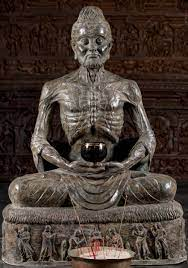
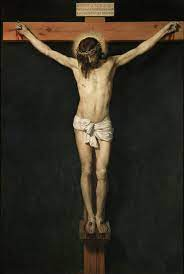
While the conclusions of this self-mortifications were different the fact remains that these great spiritual leaders both put themselves near or even to death as part of the journey.
They turned away from all the comforts we normally want in our life and walked as far away from everything relevant as possible.
But Buddha realised this was wrong. The right path is neither to hold on tightly to things, nor to just throw them away. And Jesus showed us that even when faced with the death of a criminal, hated and rejected (even his closest disciple Peter denied him), even despairing one self there is always still hope.
So how does that help us deal with C/2022 E3 (ZTF)? We know we have the strength to throw it away if we make a mistake. I mean once its out of sight that's the end, why bother anymore. But while its still in sight what do we do? Well we may have a strong desire to see it. That seems like it may be a problem from what Buddha said (don't cling too tightly). But actually no problem as long as we don't abandon other things we should do in favour of it. Our father is ill in hospital and we don't go to visit him so we can see the comet would be a good example of holding too tight. But then sitting in front of the TV cos we can't be bothered would be an example of not holding enough, and worse holding onto laziness and sloth too much. Its a fine balancing act that we may get wrong. But once its gone wrong we should have the ability to adjust our grip of things to match the new situation. Its when we can't adjust grip (tanha in the Pali) that things go wrong and we and others suffer.
So actually after all that there is nothing wrong with the news article. True it is trying to make us go and see the comet by pointing out last chance. But that is all part of the complex world of demands, needs and desires that we face and the constant adjusting of grip we need on things.
There are lots of areas of confusion. Marriage may look like a strong grip thing: "until death do us part" but even in the strongest view of marriage we know we must let go when our partner dies. Even that grip is not eternal. There are mythologies that suggest it is, and they are potentially harmful when we are encouraged to grip to things even at the expense of other valuable things (for example my muse from the early sections of this blog). Family and friends may look like they need strong grips, but sometimes its good to let go a little so as not to exhaust ourselves. Equally the opposite of grip which is pushing away has all the same problems. We may want to push away what is really beneficial and we need lesson that push. It requires wisdom and self commandment.
Saturday, 18 February 2023
Ego, Freedom and the Nature of Evil, going beyond and Hermit Crabs
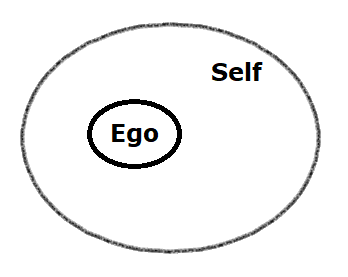
In our lives Ego is the "known world." It is the map of ourselves that we take for granted. It is safe, it is ours and its where we live.
But all good stories, all adventures and all heroes are brought to go beyond this safe map into the unknown.

And this is true for all our lives as well. It is by going beyond our self that we grow and develop. It is by challenging ourselves that we discover who we really are.
It involves facing the boundaries of our self and the fear and anxiety of what lies beyond the safe, familiar and tried and tested world.
We don't want to do it, and we habitually return to what is habitual and safe.

It's a trope well understood through childhood that the growing child challenges all sorts of boundaries like walking and talking and grows at each stage. I can still remember the decision to finally walk and "get on with it" being rather lazy and unwilling to take literal steps. And eventually the child is ready to leave their parents and fly the nest.
But while this is the greatest period of growth it is not the end. We are always growing and entering the Terra Incognita.
This is perhaps the most familiar image in the world. The image of the dying Christ entering the unknown. For Christians this is God made Man, born of a woman but with a Father in heaven who is never-the-less afraid of Death and feels abandoned, his last words being "Eloi Eloi Lama Sabachthani?"

How much greater a step into the unknown was this. Yet one we must all take. In Christian belief this step by Jesus was made in full purity so that Death had no command over Jesus and He was able to walk the Earth again before his mission was finished and he returned to Heaven.
Regardless your beliefs this is the most famous Hero in history and the one that inspired countless martyrs to go beyond and ultimately collapse the Roman Empire that had oppressed the Jews and many others. Unable to defeat Christianity, the Roman Empire adopted it in 380AD when the emperor Theodosius issued the Edict of Thessalonica, and made Christianity the official religion.
All religions lead their believers beyond and make Heroes of them. But not heroes like you find in may films. True heroes do not carry AR15s and sit in cockpits bombing people. They are the ones who step beyond in order to lead people to safety or encourage them to go beyond themselves. Killing someone is just a cowards way of ignoring them and protecting yourself so you do not need to go beyond. You ask them to go beyond and follow you, and if you resist you kill them. That is always cowardice and leads to retreat back into the Ego.
And the nature of Evil now starts to become more clear. Criminal and evil people do not really know they are evil. Well they do but they ignore it. They can do this because the map they have drawn paints them in a good way. It justifies their existence and what they do. This is the habitual map of the world in which they live. Its the world they wake up into and it contains all the comfortable tried and tested thing; the people who support them; the behaviours which make them feel okay; the coping mechanisms; the familiar. Its a common question when we see the news: how do people do what they do? What hope is there for the world when there are people like this? But evil people just suffer from the same condition as most people, an ego that blocks out the greater self. They are fundamentally cowards who will not listen to themselves and who then fall into the comfortable but false world of an Ego who tells them everything is alright. As cowards those comforting words of the nearby familiar Ego are easier to take than the True Self who needs them to go beyond and be brave. Its a strange irony that the people who need be the greatest Heroes are often the weakest cowards. But actually evil offers us all the greatest opportunity to grow. Someone in the middle of great evil has the opportunity to become the greatest hero. Listening to that far off voice in the middle of the seductions of familiar Ego is the greatest thing anyone can do.
But it is hard. Do I quit smoking? Its easy now with everyone reminding us of the harm it causes. But in the 1950s when every advert was telling us it was cool and women found it attractive the idea of filling our lungs with smoke, despite being obviously not a good thing to do (if we stop and think for 1 second about it), seemed like the thing to do. Authentic people can stop, listen to themselves and make these choices even when everyone else is saying the opposite. "If you can keep your head while all around you are losing theirs and blaming it upon you..."
In Buddhism there is this idea of the Buddha Nature. This is the True Self. The final self that looks down into our Ego lives from outside and tries to get us to step beyond to meet it. Even the most evil person knows deep down that they are evil, but they are unable to pull away from the familiar and habitual world they live in. They lack the courage and the strength to go beyond. In the hero story they are the person who closes the door to destiny and returns to smoking a cigarette in front of the TV.
In the picture above the Ego is the known world. It is what we see and what is coloured by our habitual beliefs and thought. We see the world in the form of our Ego selves, and without a bit of consciousness and thought we just approach the world the same way every time. People who think the world is against them, who find the same unlucky things happening to them again and again are trapped in an Ego. Without thinking they just default to the same known approaches and tried and testing things. This is "me" is what we think, I am unlucky, or victim of injustice, I have a right to do what I do, I will not accept anything from outside, why should I. Suppose we get angry, looking just for the inside we justify that anger and turn our hatred towards whatever has made us angry. It might be anything even a bird that has annoyed us by breaking the silence. Buddha's most deeply understanding disciple Subhuti was originally so angry with the world that Buddha found him in the forest throwing stones at the birds that were annoying him. Looking from the inside, and with no intention of going beyond, our mental states all makes sense and we get angry.
But the hero goes beyond, and challenges that anger and having done this before without success tries a new coat and a new approach. But to do this involves leaving the old nest, home, and ego and entering a new one.
The happy person is like a Hermit Crab always willing to try a new shell. Always willing to admit that the old things are not working and to go beyond.

This does not mean that we go crazy and just let it all go and run into the desert in search of enlightenment expecting to meet our True Self in a shimmering mirage. Our goal is our True Self our Buddha Nature, or Jesus Nature of Muhammad Nature. Each of the teachers says follow me, try my way. These Ways lead to the greater self that they are talking of. This Greater Self is looking down on us from the outside. Once we have grown we will come to know them.
Our true self looks like its on the outside, it breaks in on our habitual behaviour and says: hmmm perhaps that is wrong. Perhaps its time to lose weight, or stop smoking and be a bit more kind to yourself. Perhaps its time to have that discussion with a partner where I say what I really think. Perhaps its time to be a bit more kind to the people I know. Perhaps time to end an old hostility and open up to someone I have shut out. It is always like sunshine breaking from behind a cloud, even if we turn our back on it immediately afterwards and are not yet ready to listen.
This is because we are attached to Ego. We gravitate to the known. Like our eyes only see the inside of a room, when we know there is a huge world out there. Being attached to senses and our existences we look from the inside and the greater world appears far away and outside.
Little caveat. In meditation we attach to our senses! How contradictory apparently. But its different because we do it to stop the mind wandering onto other things. This focused attachment actually trains the mind to be focused and this ultimately leads to the mind being able to let go. Ironically focusing on the senses and the present moment leads to a free mind! But this is different from Ego which does not really focus, it attaches and sticks with what it wants to see rather than what is there. Ego filters things that it doesn't want out (like the True Self) and creates half truths and fictions to protect itself and stop us from getting out.
Its an extraordinary thing to witness that we are always bigger than who we think we are, and it often requires someone else to help show us this. It seems so obvious that we are who we are. But there is our greater self always looking in and guiding us if we just take a moment to listen.
Friday, 17 February 2023
Capitalism: the shift from need to Social Control and Planetary Destruction
warning: 3451 words!
Malthus is not famous for being a clergyman in the Church of England his fame is from a Darwinian theory about population growth and carrying capacity.
Natural Selection works because there is huge natural mortality weeding out the least "successful". Its a tautology as the definition of "successful", or "fit" as Darwin called it, is whether an organism survives. But on the principle that mortality is linked in some way to an organisms ability to survive (and wow is all that theory really socially loaded!) Malthus argued that human population would increase until all resources were utilised and starvation and poverty limited further growth. Yet we don't see massive population growth in the rich, if anything it occurs in the poor. Populations in the West are actually falling while those in poorer parts of the world are exploding. And there are other things about Darwinism that don't seem right.
A detailed dissection of Darwinism and History follows with the eventual conclusion that really Social Structure is what is driving these theories and Economic Theory much more than anything natural, scientific and necessary.
Having studied Zoology I always found Darwin's theory a bit odd--yes of course we can code genetic algorithms that use a metric to determine who makes it to the next generation, or who is lost from this--but that "metric" Darwin called "Fitness" turns out to be fabulously ill defined. Dawkins thinks he did well by envisaging rowers in a rowing team and the captain having to weed out the least successful through testing multiple combinations. For rowers read gene. But Arrows Impossibility Theorem shows that even in trivial situations there is no optimal solution. Even in rowing the captain needs to review power/weight ratios. He may have the option of heavier but more powerful teams, or lighter less powerful teams. Combine that with experience, stamina, injury, water conditions, personal time available/other commitments, personality and it all starts to become difficult which team to pick. You see this in all team sports as arguments break out about who should play, and who plays well together. And in football this is just 10 pitch players. Imagine an organism with 10,000 genes like a human, and with billions of individuals all interacting in unfathomably complicated ways. How can you possibly work out fitness without just a try and see. So "fitness" is a poorly defined idea, and one we shouldn't take too seriously. Yet in the field of social engineering in the 19/20th this idea became central to ideas of "master races" and social performance. All the prejudice of the Class System which stratifies humans into classes and "worth" found its apparent "scientific" basis in" fitness." And that led ultimately to the Holocaust. But continues today in Capitalism with the idea that humans must "prove" themselves worthy of wealth and status. You see how absurd these ideas are when you consider that the British system as a whole hands out as much free money in Dividends to the rich as it does in Welfare payments to the far more numerous poor. Yet while there are a million voices questioning whether the poor deserve it, there is only this blog really asking whether the rich deserve it. In both cases people who did not work for it, and prove themselves in anyway, are being given free money. Capitalism is exactly the fraud by the rich over the poor, this self-entitlement to free handouts that continues from the very first days of debt and tribute.***
*** everything needs a caveat. So traditionally this status quo has some justification. Essentially its a protection racket. The powerful engage in warfare and take over a region. They then tax that region (usually of 50% of its productivity) and in return they stop anyone else taking over. This seems extremely unfair. But people tolerate it because paying taxes for peace is usually a better solution that constantly being at war. We saw this in Iraq. Saddam Hussein may have been a tyrant but he had all the troublemakers in prison and Iraq was peaceful. The moment the idiotic yanks banged the hornets nest, killed Hussein and opened the prisons there was civil war for a decade and not a person in Iraq is not not traumatised and longing for Pax Husseini. England saw exactly this during the Civil War which inspired Thomas Hobbes to write his Leviathan justifying Monarchy if only so people could have Peace. This idea had its inception with the Magna Carta of 15th June 1215 signed down the road from here in a beautiful meadow. Unfortunately the Americans have spoiled the area with some pointless building work that I hope is dismantled soon as it was not an act of democracy itself, but overseas Imperialism, and seriously degrades the area.

Magna Carta was not a removal of the Monarch. Anarchists will be puzzled. Why didn't the Barons take the opportunity that Cromwell took on Tuesday, 30 January 1649 to execute the Monarch and be free? It's because it was a truce. The Barons were tired of fighting for supremacy and so the optimal solution was actually to agree on a leader. We all accept the same leader in return for stopping fighting. I believe this is an example of a Nash Equilibrium. This is why people accept the position of subjects to a King. Hegel offers another explanation. So you could argue that the poor accept the rich and powerful because social order and peace is preferable to war. And this is very much the status today where people are comfortable enough not to be bothered with war, and so accept slavery.
And that leads actually into the topic. In nature things are relatively simple. You have resource needs and you do what you need to attain these. For an amoeba this is as hard as it gets.

But organisms have two main possible reasons to get more complicated.
Firstly if they start to exploit the resource offered by other organisms they will enter an arms race as prey evolve to escape predation, and they evolve to predate. Obviously this is not what really happens, this is humans imposing predator/prey and arms race to the what they see. In reality predators are just those organisms that consume other animals. There is no "race" or "conflict" predators could leave that resource if it did not exist. And when prey evolve to occupy the space not yet occupied by predators they create a new resource for new predators. That looks like a "movement" or an "evolution" or a "pressure" in a direction, but its just static like separate frames of a film. Its not like an "individual" undergoes changes. There was no "fish" that decided to walk on land. There were new organisms that developed because there was an opportunity on the land, or actually the subtle regions between like mangroves and mudflats. True they came from what we call "fish" and bear lots of similarities, but all organisms are connected and these names are just human cataloguing.
Secondly in response to their colleagues. Interactions start to become significant in the lives of organisms. Really famous examples are lichens and corals where two completely different types of organism fungus/plant and animal/plant come to live together depending on each other. Multicellular organisms actually are like this with bacteria and animal cells becoming linked with mitochondria and chloroplast bacteria.
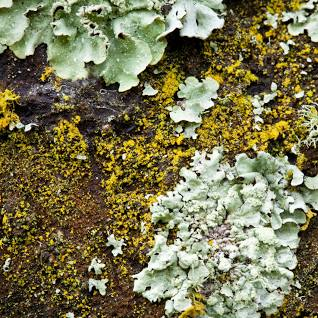

So what does all this have to do with Capitalism?
Capitalists sell Capitalism as just a continuation of the Natural World where things must work to survive. Humans must work to survive and so its a "natural" system.
But this is not true in anyway.
Organisms do what they need, no more and no less. There is no gain in an organism working all day to accumulate wealth. Just come back tomorrow. So what if there is no tomorrow? Well there will be because we are adapted to this. What if conditions change? Well things happen slowly, its not my problem. I won't live for ever anyway, why accumulate all this wealth I will never use. Ah perhaps I can give to my children? And then what will they do? Last thing a child wants if for their parents to "give" them a life. And what will they do anyway? Just accumulate more wealth? It's all pointless.
No nature does not worry about this things. Lets live for today for that is what we have.
But what of the Ant & Grasshopper Aesop fable from Greek oral tradition and written down around 300BC?

A fable about preparing for the future. But also controversial even in its time. The cicada sings all summer while the ant works and when the cicada comes begging in the winter the ant tells it to sing the winter too. But this is only one side of the argument isn't it. The fable of the Dung Beetle who works all summer to collect dung finds it all washed away in winter rains. We have today for certain, tomorrow is always uncertain, and the work we do for tomorrow is always a gamble.
What is obvious is that in an interconnected world we can always rely on the charity of others, and they on us. And this idea of slaving all summer to rest up for the winter is a myth. Its true in the North of the planet winter does mean people must prepare for the future, and that is engrained in the behaviour of things here from humans harvesting to squirrels burying nuts. And perhaps more famous are the 7 years of famine from the Bible that made Joseph of technicolour coat famous. Given knowledge of our conditions we accumulate to mitigate environmental variation. This is obvious. But it is quite different from just hoarding. Squirrels do not spend all their time burying nuts, and stealing from each other, and trying to corner the market so they can enslave their competitors in debt. The strategy they have evolved appears to just involve hoarded for the purpose of winter only, not for wealth itself.
And this is where Capitalism deviates from normal behaviour. In Capitalism humans work to control resources. You see this with territorial animals fighting for control of resources. It may be deer rutting to command breeding herds of females.


No longer does it start to be about need but rather social structure and control.
This is most obvious in the human distinction between working class and aristocracy, between slaves and owners. Or later in working class and capitalists. In both cases society is roughly stratified between those who do work, and those who instruct them, or own them, or at least the resources.
Proponents of the system will say that this is a natural division because those who "know" and are trained can instruct those who don't know what to do turning their "idle" hands to good use. Everyone benefits. The person who can build walls get work, and the employer can sign contracts.
But it becomes unnatural because all things are owned. There is a squirrel capitalist who has buried and hidden everything already, and seeks to bury more and more endlessly.
And because everything is buried and hidden by the squirrels everyone must go to them for food. We are all cicadas now whether we want to sing all summer or work.
Its not like the Cicada could start work. The ant has actively hidden all the land and means to work that land. The Cicada MUST go begging to the ant whether it is Summer or Winter. And the ant has it all in their power to say no to the Cicada. This is Capitalism.
Now proponents of Capitalist will say not quite. The Cicada can go the the next ant and ask for work. and since Capitalists are greedy and like making money to hide, some ant is going to say yes to the Cicada.
But this is absurd isn't it. The Cicada who actually has needs, must go to people who are wealthy with plenty already stored and who have no need, and who only create jobs on a whim. This is the fundamental imbalance that means Capitalism always creates poverty.
Protest say proponents. Global poverty has been crushed since the world moved to Capitalism.

But Capitalism started in earnest in the 1700s and no one looks at poverty before Capitalism.

So this is actually a deep debate. In the UK the key shift was in the Inclosure Acts. Since the end of the Ice Age 10,000 years ago people have lived in the UK. Originally nomadic people became more tied to the land as their technology changed and they learned to farm areas. Once work was being done to raise food from the land people started loose property and territorial ideas. Conflict began to develop as stealing became a valid means of gaining resources. And warfare broke out as tribes contested regions and alliances. But fundamentally order reigned as everyone had a place to live and a mean to survive. Why waste lives fighting your neighbour when you have food in your own valley? Why spend all day sleeping in your round house when you could be out with your friends in the fields.
But then in the 1700 machines were made and owners of those machines started to need people to work them, and needed the land for industrial production and profit. Was this push or pull? that is the debate. Certainly original Capitalists did a lot to attract people. Wages were higher in the factories than on the farms, and they built whole cities of good houses that still stand today to house their workforces. Many people abandoned 1000s of years of life on tribal lands to take up modern lives in cities working in factories.
This paid dividends. New workers got wages that they could spend on new cheaper products that flooded the market place from all the machines.
But in case anyone thought this was all Shangri-la anyone who did not accept the new social structure had government orders to vacate the land. There may have been pull, but there was also aggressive push. Commons were set aside like Indian Reservations as a memory of how things use to be, but the rest of the country fell into Capitalist ownership to be exploited for profit and anyone who did not accept this was pushed to little settlements on cliffs and other lands unusable by the Capitalists.
Britain that had belongs to the people since first settlement, now fell under the ownership of a handful of ultra wealth capitalists whose only interest was profit.
Once people had no where to go but houses in cities all built and owned by the factory owners the good times ended. There was no need to attract workers, they were all desperate for work for otherwise they now starved with nowhere else to go.
Homelessness was invented and became the ultimate drive for people to do whatever Capitalists said.
The poverty and desperate plight of people under Capitalism became so great in the C19th that large numbers of the wealthy started to see a need to do something to correct it.
Socialism was born with an emphasis on finding a way to give the non-capitalists some stake in society. With the majority of the population completely dependent on owners for their living something needed to be done so they had a chance to live.
Most workers it must noted do not have the money or assets to interest a bank in giving them a business loan. And anyone who enters debt is just adding to their poverty as they now need to support themselves and the capitalist who made the loan. The poor are fundamental disenfranchised from the system of Capitalism.
Many Socialisms saw the solution in democratic government. If the people once again got together to take ownership of the country and the factories then everyone could benefit from industry and not just the private owners.
Obviously the private owners have spent a huge amount of effort to denounce this idea that they are not the correct owners. Capitalist in the early C20th began a huge propaganda campaign to denounce Socialism and promote Capitalism enlisting the help of such powerful propagandists as Edward Bernays. And one advantage that Capitalists have is with owning the whole country and press they have the money and power to spread their message better than anyone. So countries in the West became stuck with Capitalism. And other countries that tried to break free were bombed to destruction killing 100s of millions of people. Nazi Germany being the most famous example, but Vietnam being another of many massive war crime caused by the Capitalists. The West likes to attribute the mass deaths in Germany to the system of Concentration camps. But its not controversial to say that the vast majority of these deaths was caused by starvation, and that starvation was caused by the war. Have a chat with ChatGPT about it to get some more details. It was the Wests attempt to stamp out German Socialism that killed these people. But Germans were no better and had their own wars with Russian Socialism which they saw as a threat the Germans. However that was odd. Despite loathing Russians and their Communist Revolution which was very probably trying to topple Germany and expand Communism West, the Germans went into a power sharing agreement in Poland. Churchill then recklessly caused war by invading Germany and most probably tricking Germany into thinking that Russia was an ally to break that alliance and the 10s of millions who died in the ensuing bum fight are essentially Churchill's fault. Either way Socialism faltered in Eastern Europe, and with the Cold War and America's continuing campaign against Socialism it faltered yet more and now people live under Capitalism across Europe.
So global poverty was caused by Capitalism and with the unbelievable productivity of modern technology it is simply impossible to keep people poor any more, so poverty had reduced to pre-Capitalist times or perhaps even further now.
But when you think each person alive today lives in a world where $12,500 is made for them, it means that every family of 4 in the world really has $50,000 share in global annual production you realise that we have moved beyond poverty to a world of complete abundance. And yet the majority of the world still lives far below this level and only because of Capitalism. All those machines working away producing things that the majority are unable to buy, and instead a few individuals have more money than their families could spend in many centuries. This is why we all still need to work. It is because Capitalism and the system of ownership works to reduce our access to resources like deer rutting. and our need to still go out and work has for a long time had nothing to do with need but rather control of our lives and what we can do.
And this social structure that control availability of resources for no actual reason, that keeps people in working lives, making this just to fuel capitalism is why the planet is racing to destruction.
We work not cos we need to, but only to maintain the social structure of ownership and inequality that is called Capitalism. It is self serving. Capitalism works to maintain and promote itself. But the cost is the Natural world and Life on thus planet and that is the unforgivable crime. The most precious thing in the whole know universe: a planet with miraculous life on it that occurred by means we don't understand and which has never happened again, the same event that gave birth to humans and ourselves that complete mystery and immeasurable gift is under threat by an social/economic system that serves no purpose other than to control our lives and keep up working for owners who have taken everything so we have no other way to live. That absurdity is the world we live in, and very shortly won;t be living in because it will be dead.
Thursday, 16 February 2023
System Energy
Bit over due and am sure well studied in literature but not sure where.
And the relevance to blog and poverty? In essence poverty stems from "self." Once you are contained in a self then you are poor. As part of the investigation of self are iterative systems which are trapped in chains of results achieved by feeding output back into input.
In AIME a trivial AI pattern matching machine of 1996 the idea was to generate self-consciousness by pattern matching an array of data generated from the state of AIME herself. Is not consciousness linked to self-consciousness was the premise. Apart from that flawed idea, it became apparent that the result was going to be meaningless. It would be simply patterns built upon patterns, what else could it be. But then it became apparent that there would be some meaning to the "outside" world in the form of fixed points. The system would trace out paths through its solution space that conformed to "objective" fixed points. SO indeed AIME would have some meaning, but interestingly unknown to AIME. Ironically attention to "self" creates meta properties that are necessarily outside self. Self maps into self in such a way that is beyond self, and this is SRH. So we discover that "self" is incomplete and always exists in a world that includes not-self. Once self realises that it is linked fundamentally to not-self we are no longer poor. How can we possess something when we ourselves are no longer self-contained entities. How can we not possess something when we ourselves are no longer self-contained entities.
This is reminiscent of Greek tragedy. The protagonist seems locked in an irony that they cannot escape. It seems that to "be" them comes with an unfortunate destiny. Whatever they do remains in the locus of this destiny, and even contributes to it. This would be a great example of "self." The self is never privy to the dramatic irony of themselves. Self always generates an objective reality that is necessarily beyond the self. This is why most Religions are unequivocal that pursuit of selfish interest leads to hellish prison. The only way to escape this spiral into the chains of self is through abandoning self in favour of Other. All serious authentic religions preach the path away from self. As a reaction some try to overturn this and preach the gospel of self, Capitalism being one, but as unhappiness and mental illness spiral in the West it is only a matter of time before the error of this becomes apparent.
So we got as far as noting that iterative systems seem to have some "force" within them that either attractors or repels from fixed points. Quick explore of a simple case:
x = Sin(x) slowly approaches 0.
x = Cos(x) very quickly approaches 0.739085133... sometimes called the Dottie number.
Many people will have noticed that repeated application of the Cos() on a calculator always arrives at this value.
So why does Cos have such a strong universal attractor and Sin so weak and non universal? Why is the "energy" in the Cos system higher than the Sin?
When the x = Cos(x) system is plotted it looks like this. The green square spiral has been plotted for the first 3 iterations and can be seen to spiralling down on the intersection point between y=x and y=Cos(x). By contrast the Sin(x) only approaches y=x very slowly.

Can we hypothesise that the gradient at the fixed point is important for system "energy"?
dCos(x)/dx @ fp = -0.6736


Wednesday, 15 February 2023
End of the World - How can everything in the West be wrong?
You just need turn on the radio, or watch TV or read the internet and literally everything in the West is wrong how can this be?
Seconds ago the radio says that economics is dominated by men. Well that is true. But the domestic sphere and childbirth is dominated by women. Ah say the feminists but the domestic sphere does not give us any worldly control because finance is a worldly and not a domestic thing. But surely the argument there is that it should be and the battle is to end Capitalism and reassert children and domesticity as the centre of our lives and society. What is more more important than the next generation? Certainly far more important than economics. After all "economics" means "household management." This is just one example of how the West has everything wrong.
With the West waging war against Russia (get again) via its proxy Ukraine we see the full insanity of Western psychosis in all its colours. Even after America rules the world if anyone thinks that is the end of global warfare thing again. America will end up fighting itself, since murder and control is all it knows how to do.
So that is Western Economics and Warfare all shown to be nonsense.
The list goes on. Lets take medicine. West tries ever harder to keep people alive. Why? Admittedly there is a movement to improve quality if life and accept that sooner or later we die. But no where in medicine or science does anyone have any idea what death even is. So we are running from something we are completely ignorant of. Typical western ignorance and idiocy. Most cultures have a good theory of death and know how to approach it. Not the West.
Of course the main reason the West does not want to approach Death is that it challenges the fundamental ideology of the West, that of Ego which is wrong. In the West the "individual" more commonly called the Ego is celebrated as the unit of society and economics. We both derive action and receive enjoyment to the Ego. But its a myth. When we get up in the morning so that this Ego can service itself do we stop to think where even the energy to think comes from? "Food I grew or earned" we say. "That energy is mine." But even that thought was powered by this energy, that was used in the first thing we ever did. Okay we admit its not all mine, my parents nurtured me and my mother gave me that initial push to get me started so I could take my first breaths. But it all breaks down because the same was true for your mother that energy she used to raise you was not her's. This is just one tributary of the river and then ocean which confounds the Ego. And then there is Death which for the Ego steals its life, but of course a Life it never had and which was given to it from beyond. So the whole Western economics, politics and social fabric disintegrates in a puff of nonsense. The world always was, and always will be, and we are a part of that before we even raise a thought to the contrary.
And that feeds back into the other points. If all politics, economics, social theory, science and technology is fundamentally flawed that what good can come of it? Suppose America wins the war in Ukraine what good can come of it? Ukraine just lurches from what I assume is nonsense into new nonsense. Certainly the West cannot help, and can only make things into more nonsense.
And so on... its all nonsense here in the West.
Saturday, 11 February 2023
Here's the rule: when something is applied to itself it creates meta properties that lie outside that thing.
Which is obvious. To apply "to" oneself is to already to set up an "outside" to oneself. Already blogged on that regarding the "dative" case. This is really going around in circles (irony given we are talking about non-halting, recursive self-reference type things). Need to consolidate all this at some stage.
Couple of conclusions:
(1) Can you refer to self, "within" self. That is get a handle "on" yourself from inside. Suppose you could (and I keep using proof by contradiction, while now aware that T/F are part of the problem of dichotomies that we suspect SRH causes). But anyway... suppose we could get a handle on self from within: a true Monad.
Well the first thing to note is that a self which has a handle to itself from "within" is also the universal set, in that if it had handles to anything "outside" itself then it would belong to a greater set and reference to that would be reference itself from outside. Universal sets containing themselves is already problematic. QED (informally).
(2) Suppose there was a formal way to decide whether a definition was impredicative. That is a formal way to decide whether a definition included itself. Given a definition d we can simply run through the procedure I(x) to discover whether d is required prior to definition.
Frank Ramsey gives the example of a normal impredicative definition "tallest person in the room." in that the selected individual T is present in the definition. However this doesn't work because in the definition T is selected as being in the room, and the definition then selected this person based on height.
The problem only occurs if the room was filled with people meeting the description "the tallest person in the room!" Given a group of people in room A you can't then put people in room B who meet the description "tallest person in room B." If you could you have the option to make a room C filled with the people who are not the tallest in room C, or lets go crazy and put everyone in room C who is not in room C.
But you have a good example there of how SRH can mess things up and the kind of problems that fall under SRH and those that don't. Level 1 is that if we allow SRH then we can create contradictions. Level 2 is that SRH allows or contradiction itself!
Anyway I(d) where d = "occupants of Room C who are not in room C" so I(d) is true. Note the tautology d' = "occupants of Room C who are in room C" is also I(d') = True. The point is that you need to know the outcome of d to decide on d.
Now let us decide whether our Impredicativity definition is Impedicative: I(I). This is fine, it doesn't matter whether it is T or F.
Now a new definition J(x) = !I(x) just returns Not(I(x))
I(J) = False
Initially we think that J is defined only in terms of I() so I(J) is False.
But J(x) is defined as Not this result. So J(J)
I(d,e) -> I(I,I)
Jd(x) = !Id(x)
I(Id,Jd)
TBC...
Note interestingly unlike the Halting disproof the very use of J sets the result, while in Halting the decision is "lower" down. There are "layers" of activity within the logic, its not just simple T/F.
====
Original Post...
So in functions that apply to their domain you get "fixed points." Now I dismissed fixed points in a recent post because they are actually elements of the domain that are unaffected by the function. They effectively "pass through" and so appear useless.
But what I have said before and missed recently is that this is exactly WHY they are important. The function does not know they are fixed points. Being a "fixed point" can only be determined from outside the function! No function/system whatever can ever codify its own fixed points by definition because the fixed point is unaffected by the function!
So fixed point by definition define the limits of systems. Where there is a fixed point the system cannot be total!
So you need to prove that there was a function that applied to its domain that did not have a fixed point and that is impossible.
So I retract the previous post. Fixed points are actually the point.
SRH thus works because when you introduce self-reference even so little as to apply a function to "its" domain then you create meta properties that lie outside the system.
Now I need to check Godel's proof again because IU have always claimed that Godel numbering lies outside PM. Is this true? If it doesn't then does it number itself?
Not all the impredicativity here. Lots of "its." When a function takes its own output as input then it is defined impredicativitily. Altho not endless recursion because it is defined by a particular element at time=0. But like rainbow tables (or the 100 prisoners) this leads to finite loops (usually except in chaos in the real numbers where the loop is countably infinite).
===
Just to seal that point. Suppose there was a function f(x) with a fixed point of 5 that is f(5) = 5. Now we augment that function so that it takes it start value and compared with the outvalue to identify its own fixed points. But now its not the same function it is g(x). This new function outputs 0 or 1 for input values that are fixed points of the original function that is g(5) = 1. So now we have a function with a massively reduced domain. g(0) = 0 and g(1) = 1 offer the only two possible fixed points. And we don't know whether f(0) = 0 (which would contradiction g(0) = 1) or f(2) = 2.
So perhaps we have a more powerful function f(a,b) = {0,1} which outputs 1 if a(b) = b and 0 otherwise. With a bit of a cheat called currying we create a new function fa for each f(a,x) = fa(x). Enabling a 2 arity function to explore itself by splitting it into an infinite family of 1 arity functions.
f(fa,x) = 1 when fa(x) = 1 and when fa = a then this function is saying that 1 is a fixed point of f(a,b)
-
The classic antimony is between : (1) action that is chosen freely and (2) action that comes about through physical causation. To date no ...
-
Following from the last blog on animal/human a beautiful male Oedemera nobilis resting in a flower after presumably a good meal of po...
-
Wanted to know the pattern of UN votes over Venezuela and then got into seeing if ChatGPT could see the obvious pattern of Imperialism here....

