Saturday, 11 March 2023

Who realised Non-Self?

Building on the previous but one post there is a very simple version of Buddha's anatta teaching.

Buddha says very simply that all existence are non-self. This contains the awareness that "existences" are impermanent.

But in more depth consider where the self is.

If we think we can see the self then we close our eyes and it must no longer exist. This goes for all the senses.

If we think we can think the self then we think about something other than self and it must no longer exist.

If we think our consciousness is self then we no longer exist while asleep.

And so it goes on. Where ever we think self resides must at some point be unable to hold the self.

So the self resides no where!

===

Now it gets subtle. So the next "thought" might be "okay so if I can't find the self then it does not exist". But this is just the son of saying the self exists. Only conditional things can exist or not exist. We say Unicorns do not exist because they could exist but they just happen to not exist. To qualify for not existing you must be a thing that could exist. To say self does not exist is like being told there is a TV in the next room, and we go in expecting to see a TV and find there is not one. That is not existence.

But self is not like that. The above search for self and finding that actually it can't reside anywhere actually also undoes the idea of self itself. We know there is a self, but it does not reside anywhere. Its not like a TV that is not in the room. Its more like we have to rethink what we were looking for.

Self is luminous but it does not reside in anything we can experience or think of. We need to dump this idea that the self "is" something that is "somewhere" or even that it is something we can think about. Its not a thing "over there" it is always present, it doesn't turn on, it doesn't turn off. It doesn't start or end, get larger or smaller, we can't gain it and we can't lose it. It is quite unlike all the "things" we are familiar with.

This is what is called attachment. The belief that the self is things leads us to hold onto things that we think are precious and important to self. At it deepest level it makes us hold onto life. Death becomes a fearful thing because we think it will rob us of these things we hold on to. Before that old age looks like it robs us of our life as well. Everything seems to be taking chunks out of us. But this is because we are mistaken about the self and chose to stand with inferior entities. At its worst we will stand with material goods like houses and cars and even watches and jewellery. These things are just ornaments to life. They actually have nothing to do with us, and we are neither bigger or smaller with them or without them. They make no difference whatsoever. Perhaps our fear is that without them we will lose status and people will hate us or ignore us. But they only notice the body or personality or other such things which are nothing to do with us.

Now I recently argued that one hindrance here is our name. It is best to reject our name. The being so named does not exist.

I was rebuked by someone I know and respect. And that reminds me not to go to far with all this. There is self, but we must be very, very careful not to fall into the trap of identifying with it or making it into a thing. Self is just a transcendent luminosity that pervades everything even our thoughts and consciousness and even unconsciousness. Self is not the "lighting up" which Heideggar called the luminous emergence of things in consciousness (that luminosity fades when we sleep), the luminosity of Self is even present in unconsciousness. It never increases or decreases under any circumstances.

I think its correct to say we cannot speak of the number of such Selves. Being non-being and a non-things we can't say of Self that it is either one or many. If we were pushed we would go for One but even this is probably too much attachment to a form. It is boundless so cannot be separated from another one or even counted as it is. So when asked how many Selves are in the world we can only tentatively say One. It means that the usual idea of self as something that each person has in a very Democratic way doesn't work. And if we think about this whole idea of selves inhabiting people doesn't really make sense. But we must be careful not to go the other way and think that everyone is just faces on a single core person or God. In Hinduism they do say this, and its not completely wrong, but really we should steer far away from positing any existence at all, its pointless speculation and not really anything to do with self.

What is Work? Capitalists are really the Workers, and the Workers are really the Makers.

 On another thread of this blog which is Capitalism and Work (the things which underpin the ecological catastrophe and threaten all life on Earth).

Turns out the origin of the word "work" in the sense of "Labour" is from the same origins at Sanskrit लभते. This seems to be have the same kind of meaning as in John Locke's analysis of property, in that we take something. For John Locke the analysis surrounds the possession and eating of an apple and at which point the finder of the apple can be said to own it.

But the emphasis here is not so much in the modern notion of production and creation of products, but in the seizure of things. The taking for oneself.

This word must have a very great age because that is the nature of animal "work." You see a bird skipping through the undergrowth (probably a Turdus thrush in the Old World) and it is working in that it is looking for things to take.

Much of the later debate I have read on the nature of work, especially in Marxism, the idea of the Factory Mill being like a hive of honey bees working to make honey actually develops far beyond the origins of the term. Even honey bees actually are foragers collecting from flowers to make honey and royal jelly.

The idea of creativity, art, skill and production of something new from human hands seems to be an addition to the original idea of work.

This must be traceable in the Bible because God made the world through his work. Already there is the modern idea of work. God did not forage the world, he Made it. And Man being in God's image (altho we could just as easily turn that around) also has this power to make.

If you look at Capitalism it is very much work, rather than making. Capitalists buy and sell existing products hoping to arbitrage some profit, and the seek rents and dividends from what they own. They are simply seizing whatever they can from the world.

It is the entrepreneurs, skilled craftsmen and workers who are involved in the actual production and making.

So its quite a messed up series of concepts.

Really the Capitalists are the Workers and the Workers should really be called the Makers. 

Next up let me seize upon the origins of Make.

Friday, 10 March 2023

The Myth of Mortality

Imagine you are in a room with an assailant and you have combat in which the assailant delivers a mortal wound.

So you lie there bleeding and your gasps grow ever weaker as the life leaves you.

It seems like the end. But for who?

There are only 2 people in the room. The assailant call them Jane is watching you die. She is witness to the fact that your are mortal and will soon die. She will watch you die. You, Peter, seem very mortal. A tragic end to the Jane and Peter ladybird books.


But this blog has already established an odd feature of this situation. As you look at Jane through the eyes of dying Peter on the floor it must be that you have seen Jane and so you must be over there!

Its no surprise that we cannot see through walls. Light must get to our eyes to see. So in fact although we think we can see far away, actually science says we can't see far away, all we can see is whatever reaches our eyes. What does not get to our eyes we cannot see. So to see Jane, she must come to our eyes. Normally we skip the details and think that what we see over there sends light over here and that is how we see. But in fact the "over there" we are looking at its not about to send any light, it must have already sent light for us to be see it. Everything we are seeing must have already been seen! So what we think is over there is really over here. As we look at Jane she is not over there, she must be over here. So how then can she be looking at me Peter over here if she is over here too?

It turns out that the whole situation is an illusion. The Jane we are seeing "over there" has already been seen. And the Peter we see here has also already been seen too. His eyelashes blurring the rim of our vision his nose in the corner of our field of view, his arms, body and legs if we look down. In fact there is no difference between Jane and Peter they are both already seen, but by who? It can't be Peter or Jane.

Even the simple scene that Peter is looking at as he lies dying doesn't make sense. Peter is not at the centre of the scene and Jane is not looking down on him. we have added these perspective after it was all seen.

Now more sophisticated thinking by Peter in his final moments leads him to ignore the scene in his vision and instead concentrate on his consciousness. Ah ha says Peter okay I see that all I am looking at is an illusion but it is like a film being played on to a cinema screen. That Peter lying on the floor represents the Peter who has this consciousness. Perhaps it is that inside that Peter on the screen is this consciousness and that is the real Peter who is thinking these things. I accept that the pictures of Jane and Peter in that consciousness are illusions but the consciousness itself, I am sure of that because it is actually here, I am aware and know that I am aware and I know that when I die it will vanish (in some way).  

Okay we have gone deep enough for this blog and to go further is actually very advanced indeed. You will need deep meditation experiences, access concentration and Dhyarna to get really get fully to this level.

But let us not forgot how easily the Peter lying on the floor was fooled into thinking that Jane was over there and looking at him dying in the floor here. By direct analogy it turns out that even the ideas of a unified consciousness "over here" belonging to a true Peter "over here" who is dying turns out to be an illusion. We think its so certain that we are conscious, that conscious must be us, here it is, it is certain, I am consciousness, I can see it all, I can see it is me. But remember it seemed obvious at first that I was sitting at the centre of vision and looking at a world that seemed remote and outside me. Its only a small step (although a deep one) to see that consciousness itself is the same. Peter is not at the centre of consciousness any more than he was at the centre of his visual world.

Consider if we were somehow linked to consciousness then where are we when asleep? Do we stop existing until we wake up? The first step is linked to turning off the lights and thinking we never-the-less still exist even when we can see nothing. Surely this means then when the lights go on what we see is not us. If we existed even when we could not see, then we exist regardless of what we see. So we can forget that we look like anything. Likewise if we fall asleep, where are we? So we can ignore that we have consciousness. But we are running out of things. What are we, and where are we if we are not in our senses and we are nothing to do with consciousness? Complete mind f**k and while simple to write to really see this and unhook the self from what we sense and our consciousness is a seriously hard and subtle thing to do. There is another thing we have ignore here I realise. There is the thought of our self too. Okay we think yeah I am not in the senses, yeah I am not consciousness: I get that. But all we have done is go and sit in our thoughts. Thoughts in the West courtesy of Plato have a very high status, but actually it is a very low status like that of other sense. Cat. See immediately all those thoughts of "me" are gone and now a cat is there. Where does the "self" go when we are thinking about a cat! 


Its even more fragile that Peter lying on the ground considering that Jane is not really over there. We quickly back track in our minds, but it was me looking at the cat. Really? You had to invent that thought afterwards! When you were looking at the cat you were thinking cat! Suppose you were not thinking cat, you were thinking "I'm looking at cat" then isn't everything prefixed by this? I now thinking I was thinking I was looking at a cat... oo not correct I now thinking I was thinking I was thinking I was looking at a cat... ad infinitum, Once you can no longer just think something and everything must be wrapped in a bubble of "me thinking it" then you have an infinite loop cos even that surely gets wrapped in a bubble. Unless you allow of a bubble outside all the others that you don't know about. Really? Isn't that the same as just thinking it with no bubbles? SRH (see rest of blog). Thinking must at some stage just be thinking, and sometimes you think about me and sometimes you don't. And if you can sometimes not think about me, then it is not me thinking! Just as with vision and consciousness it turns out the self cannot reside in thinking either.

So that Peter lying on the floor is an illusion. That Peter who is conscious is an illusion. And so it goes on. Peter is an illusion. Peter is thus not mortal, he does not die. This is the essence of Buddha's "anatta" teaching where all impermanent, conditional things (those things that come and go, that have not existed forever and won't exist forever) cannot be the standing place of the self.

But we have seriously raced through this. Going back over it its important not to throw anything away. Vision is still there. Jane and Peter are definitely in the room and Peter is lying on the floor dying. Jane is looking at him. They can talk about this. Jane will leave the room after Peter is dead and perhaps think about this afterwards, remember it, perhaps even tell people about it. And Peter will be found and buried. All this is true.

But at the same time Peter was not there at the centre of it. No Peter died!

It seems paradoxical. And perhaps that is the best way to leave it until we are enlightened. On the one hand the world unfolds as it does in everyday stories, but on the other if we investigate it we find nothing in there.

This is why the Indians have the word Sunyata. It is often translated as "emptiness" because when we peer deep into the world there is nothing there. But we mustn't forget we were peering deep into something and that something is "full." I mean you enter a well and climb down and down at some difficulty and then reach water. Okay you wanted the water, you found it, but you had to climb down a well. Likewise to see emptiness there must be something that is empty! You must have been lying on the floor dying for you to investigate and see that actually there was no you in there to die!

Often first step is to call the world an illusion and then throw it away and imagine standing in blank space. The other is to imagine it solid and surrounding us. They are sides of the same much more subtle coin.


Thursday, 2 March 2023

How do Religions work?

The naïve interpretation of religions is that they are literal and factual. Nothing wrong in that everyone has to start somewhere. Usually Scientific criticism of Religion falls into this naïve bracket. 

Equally naïve is the interpretation that religions are metaphorical or allegorical. Adam and Eve did not literally exist and there was no actual Garden of Eden it's just a story to explain how human life became so hard and how we obtained the power of choice especially when we wield it to ignore God. Alternatively it could be seen as a myth representing the transition from Hunter Gatherer to Farmer (one I've supported in this blog). But actually for religious purposes this is as naïve as the literal interpretation.

To illustrate the workings of religion consider that one of the main ideas of Buddhism is actually wrong. Famously Buddha observed an old man, an ill man and a dead man and learned that life was not a simple pleasure garden. All beings he says suffer from old age, illness and death and so began his journey to liberate us from these sufferings and the tragedy of existence.

Had Buddha been a biologist he may have known that many animals do not get old or die. The common Beadlet Anemone being one. 


Modern science understands that old age and death are actually genetic instructions held by higher animals but are not a necessary. Getting old and dying are actually adaptations presumably to free the world of old organisms and make way for their children. For sexual organisms this is not just a simple replacement of old with young, but the young are genetic recombinations of their parents and provide variety and the opportunity for evolution. So sex, age and death all go together into the process of evolving which appears to have been so important that it itself evolved over a billion years ago at the very start of life.

Another adaptation in the sex story is error prone DNA copying. You can make your DNA very accurate as some organisms do. But then there are no errors and no variety. Children are like their parents. Alternatively you can make your DNA inaccurate and while this gives you the diversity from which new adaptations can grow, it also litters your DNA with bugs and bad mistakes. Without sex and cross-overs to mix the DNA up it would be impossible to separate the good and bad DNA and allow selection to eliminate the bad DNA and promote the good DNA. Obviously Good/Bad here are not readable from the genetic code, they depend upon the benefit of the characteristics they encode, and that we can't know until organisms have lived and either succeeded or failed. But this would be impossible if the DNA could not be mixed up to give what will become beneficial DNA the chance to get away from what will be costly DNA.

So actually Buddha gets this wrong. Old age and death are not certain, they are programmed, and they can be unprogrammed technologically. And this has led scientists to start to research how to turn off aging and dying genes in humans presumably so that in the future we can be immortal human beings. Not science fiction this is a fact.

Ah think naïve people, we don't need Buddhism then. We just tweak our genes get good medicine and we avoid illness, old age and death.

But this was never Buddha's aim. The goal of religion is so much greater than this. The "illness, old age, death" is just a story to get us to reflect on life and what it is really like. Most importantly its to get us to reflect on our bodies and how ultimately we are not our bodies. Getting ill, old and dying is actually really useful in showing us we are not our bodies. When we become immortal we will just lose this tool! When our bodies let us down we curse them. It all shows us we are not our bodies!

So while the scientists are messing around with bodies we leap into the "spiritual" realm, free from messy mortal existence. But a little more investigation shows us we are not soul or spirits either.

And so it goes on like an onion. At each stage we find that our chosen target does not belong to us.

Perhaps we get to consciousness and think we are consciousness, or perhaps we are higher levels of consciousness. But alas no, all these like bodies are not us.

Now Buddha warns of a stage where we think: if we are none of these then we are nothing and we leap into belief we are nothing. We start to deny existence, enter some void and disappear into a nihilistic state of avoidance.

We are not this either. The point as laid out in the previous post is just to let go of this unnecessary need to be something at all. If we take all of existence together it is quite perfect as it is without injecting "us" in there at all. All those thoughts and feelings and memories and beliefs and desires and wishes and actions and choices are all happy without anyone.

Religions are designed to get us to let go be that via Buddhism, or Islam. Someone once said to me that all religious people have the same quality: equanimity. They have an even hand in the world, able to suffer as easily as to rejoice. They take what life hands then and they accept this. This is liberation. That is the only thing religions guide us to pursue, but that prize is so much infinitely greater than any other path can give us.

So the modern obsession with Science is fine. But it has one dangerous side, that it encourages us to stay bound to the world and settle into the idea that we actually are what we think we are (whatever that may be).

And then we get into the even more ridiculous idea that we can chose what we are. If we can chose what we are then who is doing the choosing? This appears in the transgender debate right now. If I think I am female then I am female goes the debate. Which I suppose is okay but then the female person wants to change body sex. But how does the person know what the sex of the body is? Presumably they know the sex of their body the same way as everyone else does by looking at the genitalia. But if they need to look at the genitalia then how do they know the sex of the person? A person does not have genitalia only a body has genitalia, and if they can decide their own sex without genitalia then why can't they do that for the body? At the root here is some idea of choice. The person has simply decided that they are a particular sex, regardless of their genitals. In fact what has probably happened is simply that they reject their body. Now this is obviously very distressing, rejecting something as closely related to us as our body is never going to be a happy place. But actually we could look at it as a blessing because we are on to something. WE ARE NOT OUR BODY!

However the distress felt by transgender occurs because out of the victory they clutch defeat. The transgender rejects their body and then invents an inside fantasy body of opposite sex. Now we are in trouble and we are expressing deep desires here that we need to be careful with. Take a long hard look at this situation something is wrong. If you are not your body, then you have no sex! Only bodies have sex! Basic fact.

In Buddhism sex is one of the 10 illusions. It does not exist. If you see a man and a woman side by side on autopsy slabs and start to dissect them you will amazed how much is similar. In fact you won't find much different. Perhaps bones are slightly different sizes, and breasts are more developed in women, and clitoris becomes a penis in the male and scrotum evaginates and becomes the vagina and ovaries leave the body and become testis yeah sure there are differences but then there is blood and heart and lungs and brain and muscles and 2 arms and yeah they are the same.

Now Buddhism says a lot of things don't exist. The point is that while the words ate Black and White the reality is not like this. There is nothing in a woman you can cut out and go there you go the "essence" of woman and there is nothing in a man you can cut and go there it is the "manness." The difference is broad and covers the whole entity and yet the difference is not so different. You take a mans arm and a woman's arm and you'd struggle to find differences while similarities fill the page from mitochondria to hairs.

So what exactly is the transgender going on about? It's simply are result of not looking closely (which to be fair most people don't) and then tripped and getting confused.

So its important to look at what is there, not invent stuff. But perhaps we want to invent stuff because what is there is not very clear and has surprising results like men and women not being so different after all. And our bodies are not ourselves.

Liberation is a very tricky thing to do, and its so easily missed as an option. We tend to stick with what we know and what is simple and we don't have to challenge and look again carefully. Its just easier to carry on like we always have and not stop and double take. But that is what religion is for. Stop, look again. Take that time in church to contemplate Jesus and what he did for you, and consider whether you are ready to carry a cross for someone, and whether you are ready to meet God yet and ask for forgiveness for what you have done. Take it all and smash it up and look closely at what is there, especially when we resist it, can't be bothered, avoid it, are too busy or tired. That is when we should look even more closely. This is religion.


Tuesday, 28 February 2023

Plato & Buddha & Enlightenment

So both Plato and Buddha note that things have names. In the Buddhist writing the thing is the form.

Plato asks how things become what they are (essence) and concludes that all things of a particular type must have something in common and that thing is a perfect model of the thing. So all oranges are "oranges" because they bear resemblance to this perfect Orange in the world of Forms. Plato correctly identifies the example oranges as belonging to the senses and the perfect form of orange as living in the mind. For him the mental image is like an imprint in clay and when real things fit that image they become that thing. Its taken until the 21st century to really start to understand how this happens, and in those 25 centuries we have come all the way from clay tablets to neural networks and AI.

Actually not a bad job for Plato altho a few problems we'll ignore. But then he makes the fatal decision. He reckons that the Forms are the truth, and actual experience is an imperfect copy of that perfect form.

Buddha (and Eastern thought in general) sees the forms and the examples side by side and does not make one better than the other.

Forms are the "mind sense" and the actual reality are the other 5 senses. It means that for the East the occurrence of a thing involves all 6 senses. We have the feeling, smell, sight etc of the thing and then the mental processing into a thing we recognise and name.

In the East nothing is thrown away the whole process is watched. For Plato he discards half of the picture, demoting it like a class system into the lower workers who provide the evidence and the sense and the higher thinkers who access the deep essence of the thing. It is the thinkers in the West who know things truly, while in the East the whole thing is needed for knowing.

But the Eastern system has a far superior advantage. The 6 sense can be broken into 2 like Plato: the form (which is the first 5 senses) and the name (which is the 6th sense). Unfortunately "form" is used differently here.. not actually important but sort this out (#TODO)

https://learn.saylor.org/mod/book/tool/print/index.php?id=30538#:~:text=Plato%20used%20the%20terms%20eidos,actually%20existing%20thing%20being%20seen.

In Buddhism however watching the Form and the Name interchange gives us access to a reality "as it is" and this it turns out is the source. Just following ideas means we miss the actual nature of the source, instead becoming blinkered by discrete Forms which are inadequate to capture the subtlety of reality.

Its a common thing noted in Love that partners see their beloved as perfect, and then even more sophisticated see them as imperfect but love them all the same. Shakespeare Sonnet 130 starts:

My mistress' eyes are nothing like the sun;
Coral is far more red than her lips' red;
If snow be white, why then her breasts are dun;
If hairs be wires, black wires grow on her head.
...
Indeed the "individual" is under Plato an imperfect Human, and surely this leads all the way to German Ubermenches, Jewish Superman and master races (of which both Jews and Germans have toyed with). This idea that there is a perfect example has been incredibly influential.

Clearly throwing away the senses as subordinate to the Mind is a nonsense. In fact its obviously the sort of thing the Mind would do!

So we give the Mind a sharp reprimand and take the senses back.

Now we observe the strangest thing. Wittgenstein mentions in his Philosophical Investigation how odd and detached the name "Red" is from teh actual sensation of the colour. There is nothing red about "Red" at all. Indeed by SRH there could not be. If we needed to write Red to indicate the colour then the "red" doesn't do anything. We might as well write Green to indicate the colour and we know that it means red. "Red" must have nothing to do with actual red to be useful. By SRH they must be different. Wittgenstein does not say this, but he analyses the "redness" as belonging to the way that the otherwise meaningless token "red" is used in real world sentences. As language learners we start to get the point that "red" gets used culturally in situations that involve this colour. Its not that "red" exists in the world and we just label it, it is more subtle. The language culture defines under what circumstances we use this word correctly and that has a two fold effect. On one hand we start to be able to Name red things. But equally on the other hand we start to know what red is! Time for my favourite picture again.

Until we learn the word "red" we do not know what red is. There is a whole spectrum of colours out there how do we know when red becomes orange? That division becomes more accurate as we learn the language better and use this word more. Even expert speakers get into this. You describe something as orange and someone else says red. The language is not so exact that we always know where the boundary is. This means that we do not actually know for sure what is red and what is orange. That word "red" is not so exact. And yet looking at a tomato we definitely see a colour which is--we are pretty sure-- is red. So learning "red" is two fold defining both what is actually out there, and also knowing how to name it. It is NOT as simple as red exists and we just learn the word for it. This is the mistake made by kids learning a second language and my French teacher used to dislike the use of = in definitions e.g. "Fenêtre = Window." He would say they are not the same. True the French use this word for the same thing that English say "window" but they are just similar they are not the same. We see it more clearly in idioms like "joie de vivre" for which English don't have such a term and either use this or a direct translation.

So this is a long exposition to get to the interesting that Eastern thought enables: a sitting with the senses and the mind at the same time. Sitting with sensation of red and the word and thoughts to do with "red." Now isn't that a strange thing, that we can sit with BOTH the senses and the thought/name at the same time. It means we are not our sense nor our thoughts but can see them both from a third perspective! Now many people have tried to decide which of all these bits belongs to "us?" Are we to be found in the senses or in the thoughts? AI investigators talk about Turing Test, or artificial consciousness as ways of determining whether a machine is human or not. But we don't even know what "human" is. Am "I" the sense, the thoughts, the consciousness, the will or freedom of choice? Well the simple answer is none, and the proof is simple that we can sit in and watch all these processes from a Third Person Perspective.

Now its tempting at that point to decide that the Self must be a new Person who is not the senses and not the thoughts and not the consciousness .. and then we start to sound like the famous Heart Sutra 

"No Eye, Ear, Nose, Tongue, Body or Mind;
No Form, Sound, Smell, Taste, Touch or Mind Object;
No Realm of the Eye,
Until We Come to No realm of Consciousness."

"No ignorance and Also No Ending of Ignorance,
Until We Come to No Old Age and Death and
No Ending of Old Age and Death."

"Also, There is No Truth of Suffering,
Of the Cause of Suffering,
Of the Cessation of Suffering, Nor of the Path."

"There is No Wisdom, and There is No Attainment Whatsoever."

But enough! Sooner or later this phantom must be seen as a mistake and not there, something that we can just forget about and suddenly realise we forgot about it and it made no difference, it just fell off our back and we didn't even notice. It made no difference, but realising it made no difference was the difference! Wow we think, the room I never even noticed I was standing in has gone and in its place things extend freely in all directions.

So this is the difference between Plato and much of Western thought it wants to get to some summary and core Law so it can throw the worthless data away and be left with an essence, some Philosopher's Stone. But every cut to throw something away is injuring the world. It all goes together, you can't escape any part of it.

In the East by contrast it is all already there and the only job is to see it all. And when we have seen it all the most amazing thing we see is that no where in all of it lies anything call myself. The whole world comes together in a world with no part called me. How bizarre we thing. I always thought I was a part of the world, or perhaps I thought I was inside the world with the world wrapped around me. Or perhaps I thought I was not really of the world, and somehow dropped in to the world through being born and I was leave again when I died. But however we thought about it we always thought we were somehow contained in the world. But when we start to see the whole thing we see there is no room for us anywhere. We are not in the senses, we are not the thoughts, we are not in the decisions, in the choices, not in the memories, not in the imagination or fantasies: in every case we are watching from another place. Suppose me remember lying on the beach on holiday. Yes in one sense its us, but not really we are watching that memory right now! But where are we then? definitely not in the memory! So we think about what we will do tomorrow. We imagine asking a date out and sitting in the restaurant opposite her. Again in a sense its us, but not really we are sitting right here watching that fantasy. So we decide to invest money in the stock market. Again we are sitting here watching that decision happen, watching the thoughts and analysis of which sectors will experience growth. We are clearly not those actual thoughts or the conclusions not the decision, and we are not the moment we click BUY because like with everything we are sitting in on it watching it from another place. And we have funny ideas about where that place is. Like its in the body, or its in a soul or literally anything we try and invent a place to try and prove we exist in the world. But we don't. There is no place that needs us. It all fits together and works all by itself without one jigsaw piece missing that is "me" shaped. We are entirely surplus to requirements, redundant.

Oh how depressing we might think I don't exist and the world does not need me. I give up. Well just watch all those thoughts happen! None of them are you either. You are untouchable.

But perhaps we see something else. If we are redundant and play no part of life then why waste time on thinking about "me." Surely if it makes no difference then just give up with this "me" thing. Just let it go, to use that common phrase like just letting go of a kite we let it fly off without any care. It is nothing to do with me, just let it go.

Oooo how weird that freedom is. Perhaps we are not ready for it. A bit bewildering. Its not something we are familiar with. It may take some time. Its unlikely to come in one flash of freedom, it will take many goes letting go a bit more each time. If we are very trained already it will be immediate liberation.

Technically what is happening is that we have found we are "attached" to the idea of a self-contained, separate self that exists by itself, like a submarine with its hatches closed and the world turning up on its display panels. Inside we live cut off and separate from the world. Despite this our happiest moments are when we forget about this and engage with the world freely and without barriers. But it always crashes and we retreat back into the submarine. we are having a great time and then someone says something insulting and we take offence and we rush back into the submarine to re-establish ourselves as a separate entity and we may load up some weapons and return fire on the person who insulted us.

But while meditating and we realise that we were watching the insult come in, and we were watching it hit its mark, and this triggered some pain, and we did not like that, and it humiliated us, and we felt injured and small and we started to struggle to build ourselves back up and we fire some weapons back to hurt the other person so they did not do that again and treated us with some consideration in future, and these missiles hit their mark and that person got hurt and perhaps they backed off and we felt big again, or perhaps we ended up starting to hate each other... and all the while we can watch all this happen like its happening to someone else. I mean you can't "be angry" and also watch anger happening. Anger is more like a bad smell, it starts as a weak noxious odour but after a while it surrounds us and we can't think or move without being suffocated by the smell. It seems to be completely enveloping us and we cannot escape it. If we sit with it for days or even months or years we get used to it and its part of our world like a rotting rat under the floor boards. But all the while we are not the smell! That anger is not us. It is happening to us! And yet didn't we decide to get angry because we felt insulted? This is the mistake at the heart of it all. When the insult hit is mark, we were not where to be seen. We were NOT THE MARK we were only a WITNESS TO IT hitting the mark! How odd to start a war because of what we witnessed, but which was nothing to do with us! Let the mark start its own war, we don't have to do anything!

Okay perhaps that sound callous. If we are Christian we know the story of innocent Jesus being accused of crimes and being horrifically whipped and executed on a cross. If we are Buddhist we know of the Black King (Kala Raja) who tortured and dismembered Buddha in a past life. Neither Christ or Buddha showed any hatred for their persecutors! While all these arrows were reigning in on the pathetic bodies of Christ and Buddha, while the people were experiencing the worst injustices at the hands of evil people who deserved to be tortured and punished themselves neither Jesus nor Buddha raises even one drop of hatred or one drop of will to save or protect themselves. They both knew they were done for and would die, what the use of vain struggle. There was nothing to do. So with this barrage of insult and injury falling upon them they were able to see the "mark" take it all. But they were not the mark, they did not identify with the mark, they were just sorrowful witnesses at the horrors unfolding experiencing only compassion for the body that was being violated and abused and compassion for the people who had descended so far in their lives to be able to do this. This coolness of compassion is what happens when we see we are not the "mark" but only witnesses of it. We are actually untouchable, but those who wish to hurt us are caught in a the grand illusion and suffer from not knowing this themselves.

It is ironic that in Judaism the word "Sin" actually means "miss the mark." It refers to an unskilful archer missing his target and is an analogy for how the sinful fail to act in the correct and most beneficial way. In the example above of insult may have only been intended as a joke and we over reacted, or perhaps it would have been better to just let the person make his point and let their anger calm down rather than fuel it. There are always skilful ways to deal with insult and injury that never involve fighting back. Ironic again that the analogy is of an "archer" is  used who is probably firing arrows in retaliation or defence when this is most probably the least skilful action. So doubly ironic then that the true path is to let skilful archers hit their mark, but instead realise that this mark is not ours and is of no interest to us!

So eventually when we put the last piece into the world jigsaw and see the whole thing complete before us, we see that the piece we thought was ourselves actually fits neatly into the picture in which there is no me. It was a mistake, and we spent all that time holding on to a mistake. We can just let it go and feel the refreshment of just being.


Friday, 24 February 2023

Ukraine is a rather tired lie. But holds the key to world peace.

There's one chink in the whole "we're the good guys to the rescue" motif... rescue who? When the Ottomans tried to join the allies in 1914 UK said no! So "allies" is just a club whose membership is decided by London/Washington. So when we rush to the "rescue" we choose who we rescue and who we destroy. Every expanding Empire in history has done this and sold itself as a liberator from Hitler to Napoleon to Alexander Great to Athenians... its just a matter of whether the Empire decides to liberate or destroy you (always in a pair). And Ukraine is a great example: America is trying to liberate Western Ukrainians and Russia liberate Eastern Ukrainians. If you had to take sides you might wonder how America invited itself into the heart of Eurasian politics, but it is playing the same game as any expanding Empire. So no the whole we're saving Ukraine is a big fat lie, and ULK tax payers are having their money wasted in Imperial conquest... just look how far the US Empire has expanded in a century: from the East coast of America all the way to Kiev with about 80 million people killed to achieve that! But this actually gives us the clue to end global warfare for good... if I was UK leader I would form a new military alliance with EVERYONE. Russia is invited. America is invited. China, India, Africa, South America, Europe are all invited. Now when it gets to critical mass that encourages other countries to join (safety in numbers/the NATO effect). Obviously the countries left out will be the war mongers who want global domination by Divide & Conquer and we all know who that is. So US will stand alone against a world unified by peace. That will lead to the mother of all wars which hopefully the US will lose and then the world will be free at last. Any country breaking ranks will be attacked by all the others. World Peace at last.

Thursday, 23 February 2023

Last glimpse of comet that you won’t be able to see for another 50,000 years

So we are told in the press that it's the last chance to see comet C/2022 E3 (ZTF) that will not return to our skies for 50,000 years. This sounds like a big deal and I must see.

But this captures everything about existence, desire and suffering.

Until we heard about the comet then no desire, no struggle and no gain/loss.

But then we hear about it, we may think big deal. But then we hear its our last chance for 50,000 years and this may stimulate the kind of thought "I don't know how valuable this is, but I know if I change my mind tomorrow it will be too late, so I better see it now so that its done and I don't need to worry about it."

So the text has finally created some desire and motivation to see the comet based on a not sure, but may as well just do it to avoid potential loss in the future.

But can't we just say, well if I miss this comet I'll just see the next? "There are plenty more fish in the sea" goes the saying.

Yes but the next comet will not be this comet. Whichever way I spin it once this comet is out of sight then I will NEVER SEE IT.

And so we start to get fixated on "this" comet. C/2022 E3 (ZTF) is unique, there is only this final chance to see it after which it is gone. No other comet will do, because they are not this comet.

We have switched from "seeing comets" as an experience, and essence, to seeing "this comet" which is an existence.

Now how do things gain existence?

Well up until we read that article it was just "a comet." We have seen comets before, we will see them again. There are always comets in the sky, although few get to magnitude 4 which is about what is needed to see with naked eye in the hugely light polluted skies of England. So any comet will do. Each has an existence, but its not a relevant existence to us. I'm talking "relevant existence" that impinges on our lives and experiences.

Relevant Existence happens all the time, and its spooky. It often happens when we are driving and there is another car. We look at it and we think it can't be going our way, or it can't be wanting to turning in front of me... and then it does. And we think what is the chance of that! How annoying. If we are easily angered or paranoid we start to get angry with the car for almost deliberately messing up our journey. That car could have just kept going, why didn't that car just go the other way and not mess up my journey. But of course we forget that for us to even see that car it must be very close to us and already set up to get in the way. We don't see the tens of millions of other cars that did not mess up our journey at that moment. We just see this one. That one becomes a Relevant Existence, and because of the rules of the universe it must be near us and ready to interfere with us already to even become noticed and relevant.

Likewise this comet C/2022 E3 (ZTF) has only become a relevant existence because its travelled close to the Sun and the papers have picked it up and made it into headlines. And now we have noticed it and its started to become relevant to us. This is how existences become relevant, but its all just mechanisms and processes.

When we don't see the mechanisms and processes, we can become tricked into thinking that the relevant existence has some real and fixed relevance. It actually IS relevant in some objective way, like if we were to get hold of the comet and look at it we would find a stamp on it somewhere saying "I am relevant", "I am the real deal." When in fact its only so relevant as we make it. This is how advertising works. If we see it advertised enough then it looks like its the real deal but just because we are exposed to it a lot. Same with music, we hear something enough and our brain starts to make it relevant "the sound of this summer" etc.

Now all that said a new comet appearing in the sky is a remarkable event. Perhaps not for those who almost never look at the sky, but for those who see the sky over long periods of time and get to know it, and then have a new thing turn up: that is quite remarkable. Like with Hale Bopp in 1997, a comet so bright you could see it even in central London, that new entity was really noticeable. We lived with it for many months and then it faded. We got to know it. We didn't need to read news articles telling us "last chance" it made itself known to us, and for those who didn't see it, that did not matter. And for those who did they will have memories of it that summer. For me it was once in France and once standing in a nightclub queue finding it really odd that I was looking at a celestial visitor in what was otherwise a really ordinary urban scene. Like with Van Gogh's Starry Night the beauty of the heavens both reflects in the Rhone river but also overlaps the earthly lights and I think parallels the celestial nature of human love in the otherwise worldly ordinary foreground couple. 


Things can become relevant existences through quite natural proximities like friendship. Its an odd thing that those who believe in the celestial nature of human emotions never-the-less must admit the importance of physical proximity. We rarely lose sleep over people we have never met before. And perhaps we lose sleep over people we met in Past Lives but at some point it all began with a physical encounter.

Relevant existence is fundamentally caused by physical proximity and sensory input. And whenever something like a car or an annoying person becomes relevant, its worth noting that their proximity--rather than what they actually are--is where it all started before we blame them!

So great we realise that the newspaper article is goading us into relevant existence. If we just put the paper down and forget about comet C/2022 E3 (ZTF) then we are back to square one. Bliss. Happy. No longer motivated to upset ourselves into action and searching for things.

But perhaps we can't put it down. We have our heart set on the comet now! We sit their uneasy. Really I should go and see it. Tomorrow if I don't see it today I am going to regret it. I will spend the rest of my life regretting that. And we can really build ourselves up into a lather. And then perhaps now fixated on the comet we turn events around and say "Thank God, praise to the newspaper, if I had not read that article I would have missed the comet all together."

This is a classic salesman technique. You are sitting there happy and content. The doorbell goes and the salesman wishes you well and then asks you about something you have never thought of. Have you heard of "Jesus Christ" is an old one that people ignore now. But how about "Are you aware that you could save money from [something]." or "80% of people in your area have already bought [something]"... there are a million things they can say. Remember you were sitting there content, but now you are not content. You think my past life was bad, I'm being offered a better one. Well nothing bad about content, after all once you have bought your new life you will only be content again! But its too later the salesman has tricked you into being unsatisfied and only they hold the key to becoming satisfied. When you are really hooked you will look back and thank the salesman, saying wow until you made me aware I had no idea, I was living a lie, but now I am heading for happy days and satisfaction. Except you were satisfied before.

Problem is few of us are ever satisfied so the salesmen have an easy job. Since we are trying to become content they can easily trick us into trying new things in the hope contentment will come. It won't, but the same tricks that may unbalance the content person will almost always unbalance the discontented person.

So relevant existence is easy to create, and is the basis of sales, brands and much of what we do.

So great we think. I will not answer any doorbells, I will not read the newspapers or listen to news on TV (actually a good thing to do), avoid adverts and not go out of my house so that relevant existence cannot occur. I will become a peaceful oblivious bubble with no desires, wishes or anything to upset me.

Well actually this is not an entirely bad idea.

But it has one flaw. This idea of the "content bubble" just becomes a new "relevant existence"! Uh ho deep existential crisis. Even my "safe place" is just another source of discontent.

Okay so we need to realise that "holding on" is the problem.

Being unable to get comet C/2022 E3 (ZTF) out of our mind is the problem, rather than the relevant existence itself. The paper is not really to blame, its our lack of mastery of our self.

We need make a decision do we want to see the comet now we have found out about it. Forget about fears of regretting it, that is just accepting we are unable to master our self. Do we actually care. Are we the sort of person who gets kicks from seeing? Maybe we don't know and its worth a try. Often you do something enough and you get to like it, so its worth a try.

Perhaps you are too busy, or can't be bothered, just let it go immediately. But perhaps you end up unable to decide. So you decide not to go out and see it. Decision made. Some years in the future you see a documentary and that rekindles a "relevant existence" and you think oh now I wish I had gone out and seen it. Then there is regret. Oh no I missed it and will never see it again. Stupid me, self abuse and punishment. But get a grip, you decided not to see it, that was the decision then and now you can't see it so no use changing your mind now. Stand with what you did, really no point changing mind now, past has happened. So no real regrets either. Let go.

And its that ability to undo the process of "relevant existence" to turn it around into "irrelevant existence" that lies as the heart of self-mastery and learning not to suffer. This is the essence of Buddha's teaching.

Once we know we can turn "relevant" into "irrelevant" then the news article saying "

Last glimpse of comet that you won’t be able to see for another 50,000 years

"

loses its sting. It just becomes shall we see it or not. If we make the wrong decision now, we know in future we can just turn it into an irrelevant thing. Sure the comet still exists and has an "actual existence" but so do trillions of other things we will never think about, the point is its "relevant existence" and that lies with us and us alone. 

Its an interesting parallel that celestial objects have an Absolute Magnitude and a Apparent Magnitude. The Absolute magnitude is the brightness of an object at a standard distance away (10 parsecs) while the Apparent is the magnitude to an Earth bound observer. That makes the "actual existence" its Absolute Magnitude while how large and important that existence is to us, the "relevant existence" is its Apparent Magnitude. Obviously the "relevant existence" is down to where we as an individual stands. And its realising that we can move away and make a relevant existence smaller which is the real power we need to gain. So we make a mistake over seeing the comet. It has moved away and its Apparent Magnitude is now too low to be seen by an amateur viewer. We suddenly want to see it, and realise we can't, opportunity missed. We are filled with regret, we agonise about the lost opportunity and wish things were different. In a fairytale our fairy godmother turns up and makes everything okay. But its also a lot easier for us to just walk away and let the "relevant existence" fade too. We can always do this with everything.

But now armed with our new power to just walk away we start walking away from things that seem really import just to show we are not attached.

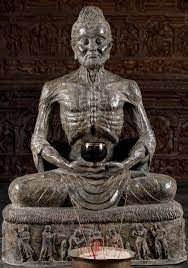
Buddha did this on his path, starving himself to the point of death.


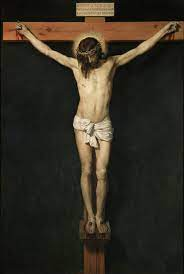
Jesus did this too, refusing to change his ways before Rome and being crucified to death.


While the conclusions of this self-mortifications were different the fact remains that these great spiritual leaders both put themselves near or even to death as part of the journey.

They turned away from all the comforts we normally want in our life and walked as far away from everything relevant as possible.

But Buddha realised this was wrong. The right path is neither to hold on tightly to things, nor to just throw them away. And Jesus showed us that even when faced with the death of a criminal, hated and rejected (even his closest disciple Peter denied him), even despairing one self there is always still hope.

 So how does that help us deal with C/2022 E3 (ZTF)? We know we have the strength to throw it away if we make a mistake. I mean once its out of sight that's the end, why bother anymore. But while its still in sight what do we do? Well we may have a strong desire to see it. That seems like it may be a problem from what Buddha said (don't cling too tightly). But actually no problem as long as we don't abandon other things we should do in favour of it. Our father is ill in hospital and we don't go to visit him so we can see the comet would be a good example of holding too tight. But then sitting in front of the TV cos we can't be bothered would be an example of not holding enough, and worse holding onto laziness and sloth too much. Its a fine balancing act that we may get wrong. But once its gone wrong we should have the ability to adjust our grip of things to match the new situation. Its when we can't adjust grip (tanha in the Pali) that things go wrong and we and others suffer.

So actually after all that there is nothing wrong with the news article. True it is trying to make us go and see the comet by pointing out last chance. But that is all part of the complex world of demands, needs and desires that we face and the constant adjusting of grip we need on things.

There are lots of areas of confusion. Marriage may look like a strong grip thing: "until death do us part" but even in the strongest view of marriage we know we must let go when our partner dies. Even that grip is not eternal. There are mythologies that suggest it is, and they are potentially harmful when we are encouraged to grip to things even at the expense of other valuable things (for example my muse from the early sections of this blog). Family and friends may look like they need strong grips, but sometimes its good to let go a little so as not to exhaust ourselves. Equally the opposite of grip which is pushing away has all the same problems. We may want to push away what is really beneficial and we need lesson that push. It requires wisdom and self commandment.

US displaying its Imperialist credentials... yet again

Wanted to know the pattern of UN votes over Venezuela and then got into seeing if ChatGPT could see the obvious pattern of Imperialism here....