Saturday, 22 October 2022

Structure of Good and Evil

We are shocked when "Evil" appears in such a ready formed way. It may be international like war, or a local murder, or more minor an aggressive threat or rude word.

Traditionally we just think well that person/people are bad or Evil.

In the mirror we do the same when people are Good.

But how does "evil" or "good" turn up?

Well this is a key misunderstanding. We tend to think of things as existing like a storm, or a new car, and we never stop to think of the long process by which these things come about. In the case of a storm there is a complex process of sunlight and moisture and lots of other factors that come together in the storm-- and we can't forget that we need to be there too, so we need look at all the forces that led us to be in the place where the storm happened. A lot takes place before something exists. And this is true for both good and bad. Altho it's not a mirror, there is a big difference between Good and Evil. That first.


Darkness is a lack of light. Light removes darkness in a flash. Physics will back up that darkness is not a thing, while light is a thing. Light has a wavelength and an energy. Darkness is not a thing, it is simply the lack of light. Things can be brighter or darker depending on the amount of light, not darkness.

Now the analogy doesn't quite work because Goodness is not a commodity. In fact Good pervades the whole Universe all the time. Evil is like darkness it occurs when that Good light becomes obscured. So its as though a candle lights the whole universe and its down to us whether we have our eyes open. This is what Genesis in the Bible captures when it places the nature of "Sin" within the hearts of Wo/Man and Eve and Adam.

So the question of Good/Evil is just the question of how open our eyes are.

Now in traditional thinking people just say well "open your eyes." What is stopping you? I've seen people say things like this. It shows a complete misunderstanding of how the world works, and even themselves. Presumably people who criticise Evil people think they are Good. But all good people can find someone better.

As Jesus says in John 8:7

“Let any one of you who is without sin be the first to throw a stone at her.”

I believe Confucius says:

When you see a man of worth, think of how you may emulate him. When you see one who is unworthy, examine yourself.

We are neither Good nor Bad. We are a shades of illumination, and being Good is a process of cleaning to be brighter. This is the thing we misunderstand.

Jesus reminds us that we have all sinned, and sinned so deeply that we will never be pure (through our own actions, God can forgive completely). Only God is pure enough to hand out judgement fairly. All human hands are tainted so are unworthy to throw that stone or pass judgement. Likewise Confucius points out that when we see people better than us we have a guide to improve, and when we see people who are worse than us again we have a window into our own faults.

And this is the point of the post. A good person is simply someone who has taken the opportunities shown to them to improve. And a bad person is simply someone who has not done this and has either let all the dirt accumulate and obscure the brightness, or has even become so deluded as to actively start to accumulate them and obliterate the light.

Eventually once the tiny little acts of good or bad accumulate you get a sudden existence. But it hasn't suddenly occurred its the result of thousands of parts we have put together over years.

And this is the danger of the mistake. There is a thought "oh its only minor, it doesn't matter." But a lifetime of minor transgressions becomes a major transgression.

So what is a "transgression." Well this changes depending on where we are. Jesus says in Matthew 5:

27 “You have heard that it was said, ‘You shall not commit adultery.’ 28 But I tell you that anyone who looks at a woman lustfully has already committed adultery with her in his heart. 29 If your right eye causes you to stumble, gouge it out and throw it away. It is better for you to lose one part of your body than for your whole body to be thrown into hell.

Well that seems ridiculous to a standard western male. Its okay to have a roving eye and enjoy the "eye candy" that is on show. And women in the West play along and dress and make themselves up to look attractive, appealing and sexually pleasing to the eye. Yet women in the West will become crazy if a man actually cheats on them. This works the other way around too, how many men avoid the eye of women even married women. So most do not tolerate physical adultery, but will tolerate mental adultery. But some tolerate even physical adultery, and some do not tolerate even mental adultery. Its a sliding scale from physical to mental, and they are connected. Actions begin as thoughts. So as we become "better" we shift from actually committing adultery, to just thinking about it, to actually not even being attracted to any woman we have not made a marriage vow to. How far the West has slipped! But this applies to everything, and the whole process of moving from Evil to Good is a scale on which everyone sits. Even Confucius said he would never complete the journey. Buddha, interestingly did declare that the journey was at an end and that he had cleared out all obscuring dirt to see the light of goodness completely unobstructed.

Now why do people slip and fall down the scale from Good to Evil? Why do we not spend every moment of every day refusing the bad things and moving toward purity and goodness so our eyes are wide open and we can see the world in the full joy and bliss that it is.

So why do we not do this? The answer is Ego.

Because we believe in an actual separate entity cut off from the world around us that we link to ourselves, like taking a cup of water out of the ocean and giving it our name. Because we do this, we end up needing to know about it, and we stick labels on it. One of those is whether it is "Good" or "Bad." So we believe the water in the cup is good, and then suddenly we find we have done something bad and hurt someone. Now if its small enough we keep on with the belief that all the water is good, and carry on. But eventually, and it depends how big a cup of sea water we carry around with us, because enough bad things and we suddenly decide that the water in the cup is bad. Then we go on a drive to purify it, go some good deeds, go and fix the faults, say sorry do things to re-establish a belief that the water is good. And then we go back to what we were before. And so it ends up cycling. And if we carry a huge water tank of sea water with us those swings are going to be huge. Evil people rarely think they are evil, they have such a strong belief they are good that they can ignore all the bad things. Eventually it becomes so ridiculous to argue they are bad, that they factually admit they are bad, but not deep down. Deep down the water is so permanently labelled as "good" that the fact it is green and rotting doesn't get noticed.

This is the danger of ego. This is why it is the worst of all the poisons (the others being anger and greed, that is wishing to do harm, or wanting more than we need). With ego we hold on to an inside glass of water and close our eyes to the ocean.

So if we make that inside glass small, and instead respond to the little things that happen we can get a firm purchase on the slide from Good to Evil and actually move towards the Good. eventually we can put the ego behind us and break the glass so it joins the ocean. We nakedly face the world as it happens, seeing the ocean in its entirety all the good and bad mixed up and working to correct all the bad we find, not just keeping the good for our self and throwing the stones at the "bad people".


Friday, 21 October 2022

Protecting Assets - the root of "all" evils: case study Tobacco.

Much is said about the evil intentions of the elites and how they are out to destroy the common folk. Some say, for example, that the global vaccination campaigns are designed to reduce population.

Its on both sides of the Hegemony. Some blame the incumbent hegemony for planning world domination and the destruction and enslavement of people, and some blame our "enemies." Famously the Nazis were blamed with every evil under the sun. When we hear this we do need take in account wartime propaganda. Often accusing people of great evils is done by their enemies for political gain. But I distract from the point. 

It may or may not be true that there are great malevolent insidious plots afoot in the world, but before considering this there is one important thing to understand. Capitalism quite unintentionally creates evil.

Take tobacco. A wonder drug that gave rise to the practice of smoking in Europe after the 1500s. This burgeoned into a huge industry worth today $3/4 trillion a year.

But there was a problem. It started to become clear that smoking caused all kinds of lung conditions. As people started to live longer this became more and more apparent. So what did the heads of the tobacco industry do? Well they are run by Capitalists who invest in their company. And Capitalists demand profit else they take their money elsewhere. Indeed it is a law in the UK that companies on the stock exchange direct their efforts towards making profit. If you take investments from Capitalists then you are committed by law to return them a profit. Naturally the chiefs of the industry looked into this and ran studies to see if they could disprove the claims that tobacco made you ill. What they found was that indeed tobacco smoking was harmful to health (its kind of obvious in retrospect). So what did they do? Well perhaps naturally, given that this is Capitalism and profits are the goal, they took the shortest path and hid all the information, paid lawyers to hunt down people who made these claims to defame, threaten and discredit them and silenced the whole thing. Tobacco also worked on putting loyal people in power in regulatory boards, and government and lobbying for the industry to be protected. Having secured power they carried on as usual, kicking this can of the farm being done down the road.

Eventually the weight of evidence grew too strong and the tobacco industry was force to rethink. What did they do? They agreed a road map of gradually increasing public information on the damage that smoking does, so that the public at least had the choice. The tobacco industry knew that many people were addicted and this information alone would not do much to harm their income. But gradually the pressure mounted on people to quit smoking.

Meanwhile the industry was working on a safer form of smoking. Eventually "Vaping" was invented. It meant that the industry could carry on as before moving their customers and revenue streams over to the new technology. I assume they also have a stream from nicotine patches and other products aimed at helping people quit the very product that they themselves have been heavily marketing all along. Instead of compensation for the damage done, they get victims to pay even more.

Now that Vaping is taking over, the industry is "releasing" pressure on regulatory bodies and governments so that they can move to fully ban smoking. Its been illegal indoors for a while because of a thing called "secondary smoking" and so has advertising. Eventually it will become illegal. But only because the industry has been able to protect its assets and income through other means. And in that time some say a total of a billion people have been killed by the Tobacco industry. And people say that Capitalism is benign and Socialism is the thing we need be wary of! Actually it is Capitalism that is the thing we need be wary of. Tobacco is just one industry running out of control.

This is the model example of how Capitalism uses the structures of markets and government to protect the assets of the wealth investors. It is the customer who is the loser every time.

Now Socialism was invented to address these issues. As a result the Capitalists hate Socialism and if you look attempts at Socialism have been bombed out of existence across the globe. That is the level fo threat to the model used by the Tobacco Industry.

Now this model I will call the Tobacco Model. and it turns up everywhere.

A recent example is the aggressive marketing of OxyContin by Richard Sackler of Purdue Pharma. Because the money is stacked in Sackler's favour its actually very hard to prove anything. He has already amassed a fortune from the sales of the pain killer, which makes him very powerful. There simply is not the money on the customer side to challenge this. But its no secret really. Sackler is simply following the Tobacco Model.

Sell and addictive product, down play the risks, fund bad biased research, cover up the truth, pressure regulatory and government institutions to ignore claims and limit regulation, pay lawyers to kick everything out of court. Misuse the regulation that should be limited your practice to take out your competitors. Expand your industry unhindered and take profits. Use the profits to buy people and improve your credibility and repeat.
The Tobacco Model

Much, if not all, the controversy surrounding Vaccination is Tobacco Model. Vaccines are harmful, and they are not properly tested. During the Pandemic the Health Emergency justified cutting corners even more. You can see why profits from the two leading COVID vaccines are over $30 billion a year. With that sort of money just use the Tobacco Model. It makes more sense to steam ahead and payoff criticism, than to stop and do due diligence.

But what the anti-vax fraternity wants to discount is that vaccines work at all. Once you think they do nothing then you have argued yourself into a corner where the only possible reason to use them is to do harm. Its a bit silly. It forgets that vaccination or inoculation has been used since at least mediaeval times and the first nation wide mandatory vaccine was in Turkey in 1885 under Ottoman Rule. Perhaps the Ottoman sultans were part of the global vaccination conspiracy? There have been famous opponents to vaccination like Alfred Wallace famous for co-discovering the role of Natural Selection in Evolution with Darwin. And there is certainly debate. But its very extreme to suggest that all this surrounds a technique that has no value what-so-ever. Could you make a multi-billion dollar industry over injecting water? If not then how injecting something that is argued to be harmful. The only way around this is to believe in a powerful elite who have ordered the whole thing. Bus such an elite could order the extermination of people in much better way than this method so covert we hardly notice, if at all.

That said this does not make vaccine safe! There are 2 sides to this, and people in the West only seem to be able to do one or the other. Perhaps the influence of sports?

Vaccine companies argue that the benefits so outweigh the costs that we don't need to look at safety. But this is not due diligence. Even if you save a million people, this is no excuse to harm anyone if you can avoid it, especially with profits like that.

But it is Tobacco Model. Its cheaper to cover up problems than investigate and deal with them. But this is a long way from deliberately setting out to harm people.

Capitalism leads to harm, without anyone actually intending it. Perhaps the most famous examples of this come from Imperialism where simple trade led to power struggles and wars and the deaths of millions. Churchill was not sympathetic to the millions of Bengalis he killed, but I don't think he actually wanted to kill them. It was just a shorter path to fight his war and let them die.

Now in Buddhism "assets" comes by the name of Mara. The belief in the intrinsic existence and value of material things. Since Capitalism is based upon a demon its no surprise that it leads to harm and evil.


Tuesday, 18 October 2022

Capitalism vs Welfare : the error?

TV interview with Greta Thunberg today. Interviewer says that Capitalism has lifted billions out of Poverty.

It seems that Capitalism is linked by some to human welfare, even if it is detrimental to the environment.

Intuitively this seems wrong. If Capitalism is so essential to human welfare then how did humans survive before it? And while humans survived before Capitalism, the planet cannot survive with Capitalism.

An initial look suggests that we should get rid of Capitalism.

Everyone is agreed that Capitalism is bad for the planet. The only possible escape is that somehow Capitalism can be changed to be good for the planet. The principles of Capitalism are the opposite of the principles of environmental concern. You cannot turn a wolf into a sheep. So this looks like the least fruitful approach.

The debate remains then whether Capitalism has been good for humans.

As argued many times in this blog Wealth is Relative and this leads to a paradox. Growth actually leads to poverty. The reason is that the future makes the past look poor. And if people in the future think we are poor today then how does that feel? It feels okay.

The blog has concluded that Poverty is not absolute. Even in Auschwitz Victor Frankl observed a hierarchy of poverty so that happiness was present for the now tiniest blessings. I can't remember the details but its easy to see how a bigger bowl of soup at the end of the day "from the bottom" rather than the watery liquid that was usual would feel like a banquet.

The blog argued at one point whether there was an absolute level of poverty. But this is hard to justify. Even amongst the dying a quick painless death is a luxury compared with a painful slow death.

All things are relative.

So has Capitalism raised people out of poverty?

Yes, financially at least it has. The number of people living in "extreme poverty" has rapidly fallen in the last 40 years (mostly due to changes in China).


It is pretty impressive that "extreme poverty" has been virtually eradicated.

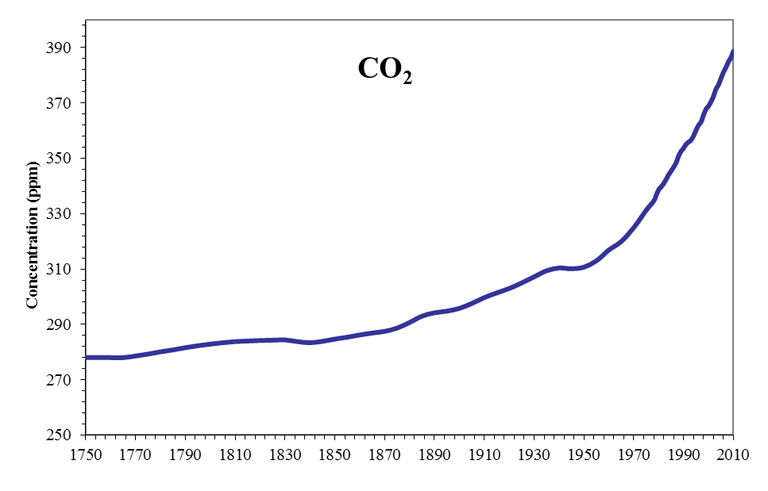
Firstly this is clearly the result of Machines and this leads directly into the environmental debate. Machines need fuel and the primary fuel is fossil fuel which creates CO2. The levels of CO2 are directly related to the running of machines. 


Now its more complicated than this as lots of technological advances have also happened like improved crop yields through breeding and now genetic modification.

This is all very much Science however not Capitalism. Humans have had the capability for invention forever its not just something that happens in Capitalism. So Capitalism is rather stealing something that doesn't belong to it. Again if Capitalism was needed for life then humans would never have survived the millions of years its taken to get to Capitalism.

One story to illustrate where Capitalism prospered where other systems failed was the creation of new crops. Under original socialist theory humans were the product of society. All the ills of humans could be traced to society. Especially hated was Aristocracy and Feudalism and the idea that people inherited wealth and titles. Its odd how the West has very gradually and carefully adopted these ideas so that now you can chose almost anything like Sex and Gender with no regard for your genes. But the West is reluctant to complete create a flat society free from inherited wealth and status. Not so socialist countries. But this social justice rather backfired in Russia because it meant that Stalin was ideologically opposed to funding breeding programs for better crops. He had world leading scientists on the verge of fundamental break throughs but the support was cut. This opened the door to the Capitalism who while out bombing the planet found a variety of wheat in Vietnam I think which became the basis of a new super wheat. So its very interesting how the various ideologies of the world be that Capitalism or Socialism feed into Science. But Science itself is the driver here and this is independent of Capitalism. 

The second thing is how did they get into "extreme poverty." Have humans always lived in "extreme poverty?" How can a species have evolved to be so miserable all the time? Species evolve to match their environment. How could humans be so poorly adapted? A worm is "happy" being a worm, and human should be "happy" being a human. Something is wrong here.

When you travel into the Outback of Australia or into the jungles of South America and you meet people who have evolved to love there they are happy. I remember reading an account of Afghanistan and the journalist was lamenting that the kids playing happily in the fields would have to grow up to live under the oppression of the Taliban. How strange that kids without XBoxes or iPhones or the latest highstreet fashions or even a full meal of McDonalds and fries could be happy? How odd is that.

Humans evolved to be happy. So something has gone wrong if they are not happy. And if "extreme poverty" means unhappy then something has gone wrong.

Well I suspect and I don't get know the answer for sure but if you look at History the most notable thing about the last 300 years is Capitalism/Imperialism. Imperialism is just overseas Capitalism where investors pay people to take over countries and mobilise their resources for profit. All the countries of the world with the few famous exceptions like Russia, China etc have been colonised and the people forced of the land so that Capitalists can take over industry and secure profits. The result of course was mass poverty. Famous examples of the extremes of poverty that Capitalism caused are the many Bengal Famines the most famous being the Bengal Famines of 1943 where millions of people were left by Churchill to starve to death "they deserve it for breeding like rabbits" Churchill is reported to have said. Such is the real nature of Imperialism and Capitalism.

So it seems to me that the "poverty" people are being brought out of is actually the fault of Capitalism itself. Trickle Down Economics if you like. The global Capitalists are so unbelievably wealthy today that even the crumbs that fall off the table are enough to bring the world out of poverty.

Now one interesting country is China that has not been colonised. Extreme Poverty in China has fallen from 88% in 1981 to 0.7% in 2015 (as measured by the percentage of people living on the equivalent of US$1.90 or less per day in 2011 purchasing price parity terms). Certainly the Capitalist economics of the last 40 years has put money in people's pockets.

But this appears to conflict with other issues. I heard from a farmer who travelled regularly to China on business that the spread of Capitalism and intensive monoculture was destroying traditional farming techniques. The problem is that while yields on these farms are huge, to be profitable they only cultivate certain soils. And putting traditional farmers out of business the huge areas that were once cultivated are now falling into disuse. He thought that the overall food production had fallen, but worse instead of cultivating perhaps 100s of different plants the majority of plants in Chinese farms are now cash crop monocultures and extremely vulnerable to disease. It may be that there is more money, but on the plate how has Chinese food benefitted?

#TODO discover the actual on the ground changes that Chinese have seen rather than buying power.

The other thing to consider is these changes in the context of China. Like Russia it was a feudal system before the Communist Revolution and people lived in farms controlled by aristocrats. England was like this after the Norman Conquest if 1066 and it took centuries for England to emerge as a "modern" nation. China's evolution into a "modern" nation is still in its infancy and I'm wondering whether assuming it is just "catching up with England" is a realistic idea. How do we know whether the Industrialisation of China in the last 40 years is really "Capitalism" or is it just the use of more machines. #TODO

The other thing to look and the most important thing, is Happiness Studies. "Money cannot buy happiness" so dollars in your pocket may be of no use if you just spend them on drugs like much of the US. Is China actually better off for having more dollars? #TODO

I'm assuming here that "extreme poverty" is a meaningful measure. Many monastics chose to live in what is extreme poverty because they recognise that this is the way to true happiness. Its a complex equation.

Anyway there are many reasons to doubt that Capitalism actually makes people any better off.

And unless Capitalism can be proven to be essential to human welfare (which obviously it isn't cos humans lived without before) then its damage to the environment is the most important thing about Capitalism.

There is then the argument that Capitalism is actually bad for people and those extra dollars in the pocket have a personal cost attached to them that is not worth it.

===


From a biological perspective the ultimate measure of a countries economic and welfare status is the fertility and population. A country of famines and hardship is not a country able to grow in population. People are hungry and infant mortality is high.

It requires explaining then how the Communist Revolution in 1949 in China led to a very sudden increase in population. Much is said about famines and the failures of Communism but the complete opposite seems to be the case. People had more food and welfare and were clearly able to breed better.

===


Monday, 17 October 2022

Until the Eco debate shifts to Capitalism the planet and life is doomed

Yet another environmental program with not a single mention of Capitalism

BBCs latest Frozen Planet 2 while absolutely excellent how can it benefit the planet without mentioning Capitalism.

At the end of the last program there is a call for people to "do" something. But what?

Well there was a single paragraph on cutting down our consumption and choosing renewable and sustainable means of living. If we do this then problem solved it seems.

Except what actually was the problem we were trying to solve?

Why for example is the Environmental Crisis occurring in the 21st Century and not the 8th Century? And why are undeveloped countries not experiencing an Environmental Crisis? It is only the Developing Countries?

Well an initial look blames population:


There we go this is the problem. Human population remains below 1 billion for all human history until 1900 when it explodes.

So if the problem is population then stop breeding. I for example have no children. There we go simple. One child policy. Simple.

Does the BBC say this?

No.

Why?

Perhaps we don't think the environmental crisis is worth making such a great sacrifice. If you ask people to limit their family size you will lose their interest. Small steps perhaps.

But actually it doesn't matter cos this is not the problem. Take Iran. If US uses 8 ha / capita and the global average is 3.18 ha / capita note that the Iranians only use 0.1 ha / capita. And this does not make them any less happy. When speaking to people who have travelled widely the one country that stands out is Iran. Everyone I have ever met who has visited Iran says it is the best country they have visited. 


This blog is called "The Joy of Poverty" because everything in Western Thought from Plato onwards is wrong and skews the truth about Life. You cannot understand Life if you look at material things, private gain and Capital with a naïve eye. Anyway that is an aside. The point is that the BBC and the campaign for the Planet and the Ecological activists are not being given a platform to voice the actual problem.

If we all lived like Iranians then the planet would use only 3% of its current resources. 

POPULATION IS NOT THE PROBLEM.

CONSUMPTION IS THE PROBLEM.

So finally we are moving toward the actual problem.

Why do we consumer so much in the West (US 8ha/capita) compared to Iran (0.1ha/capita)? That means to get through the day an American uses 80x the resources of an Iranian. Why is this?

Well first look is that Americans are richer and happier than Iranians and its down to the Iranian government to be removed so that Iranians can become rich and live like Americans.

Now this is a very complex statement. We need only look at the attitudes of Imperialism and the idea that the natives of undeveloped countries will benefit from being controlled and exploited by modern super powers.

There is obvious some truth to this. As Monty Python jokes the Romans brought roads.

But its actually a very naïve view that fails to understand anything about life at all.

A simple thought experiment shows the fallacy. If the British Invading India made the Indians happier then who is going to invade the British to make them happier?

The answer interestingly is the British themselves. Scientific innovation means that each generation enjoys greater richest than the last. This suggests we are happier than our parents, but it means our children will be happier than us. And so ad infinitum. No one then is ever very happy then. Compared to people in 1000 years time we are actually living in poverty! Yet we are happy today so it seems poverty is not a bad thing! This leads to the great realisation: 

Wealth is Relative

If you want to feel rich then just go and live with poor people. You don't need to accumulate anything. and if you want to feel poor just go and live with rich people. Or to really blow you mind realise you are both rich and poor at the same time! Its all just down to how you reference yourself. Wealth is a purely a mental process it has nothing to do with material reality.

OK much written in this blog about all this so won't take it any further. But this is the starting essence of this blog. Wealth lies in the mind so get to know and master your mind. This is the greatest joy.

So actually no reason for the Iranians to be unhappy at all. If they have an understanding of their minds then they are happy. And that seems to be the way it is. And no reason for the Americans to be happy, its just down to whether they understand their minds.

Now the pattern here is that people involved in more material production and with a greater focus on material wealth have less time for their minds. And this is the Paradox of Capitalism. Much work is being done to dismiss this by the zealots of capitalism who have a fundamental naivete about  existence, but everything points to happiness and unhappiness being in the mind and so Capitalism actually wastes people's time and is more likely to lead them to unhappiness. Which is what the evidence shows most famously the Easterlin Paradox.

But it not only wastes their time, but it wastes the Planet also. The damage that Capitalism does to us is mirrored in the damage it does to everything else. And this is the primary cause of the Climate and Ecological Crisis.

So I jumped there from material existence naivete to Capitalism. Just unpack that.

Summary of Capitalism

So Capitalism is the system of economics that revolves around the principle of Private Capital. An individual can own things, and Capitalist economics is built around this as its unit.

Ownership can change hands by many means e.g. gifts but the primary one in Capitalism is Exchange. This can be barter where we swap items of ownership, or it can use an intermediary as a currency of exchange. This is commonly called money. Many arguments about what is the best money for example the new crypto currencies.

A Market is the system of free exchange. And this is where Adam Smith's contribution comes in.

In a market where the agents are free to trade (exchange) entirely based upon their own wishes then you will get the optimum exchange. 

I have played with computer models and indeed this seems to be true. A free market is an optimal algorithm for exchange.

The reason it is so good is that it matches supply and demand. If demand increases then prices increase and so wages increase and there is more incentive for people to work. If over-supply occurs then prices fall and while volumes may increase initially eventually with continued over-supply the returns starts to dwindle, wages fall and people reskill and work elsewhere.

Its a simple algorithm too. Each person only needs to know what they want.

It became known as the Invisible Hand.

So what is wrong with that?

A superficial glance shows one problem. What if the objects of trade are human beings? Capitalism naturally leads to a trade in humans. If the price of human beings falls below the work that they can do, then its worth while buying that human being and selling their work to make a profit. Governments have stepped in to ban slavery. And this reveals the first problem. Capitalism depends upon Government and Law. Adam Smith makes this very clear: a free market is also a legal market. People must be free to express their wishes without coercion or fear. The very idea of ownership if one thinks about it is a legal issue. If people start stealing, or a mafia starts to threaten people then the pricing in the system breaks down. A free market requires a strong government. A lot of people forget this. Capitalism implies Government.

And if we need a government in order to create the Laws that underpin Capitalism then Capitalism is not the arbiter of Truth. It is Government. Capitalism is like a computer program or function that Government uses to find the price of things. But as seen with slavery that price can be invalid.

Quickly the question of the Climate Crisis can be seen to be a government issue not a market issue. Markets needs to be controlled when they start to do damage. This is all written into Capitalism.

Take the example of over hunting. Its actually quite complex. Markets can help endangered animals or they can destroy them. I knew someone who worked in this. I forget the details but some ivory markets were sustainable through free market while the particular features of the Rhino Horn market meant that it was in the interests of poachers to kill all the rhinos and drive the price skywards.

Free markets do not guarantee welfare. And so all markets need government monitoring.

But there is a second much bigger problem. Capitalism entails Returns on Investment. If you own something you can Rent it to someone who either only wants it temporarily or who can't afford it for a fee. There are 2 problems with this.

In the latter case you have the wealthy exploiting the poor rather than helping. The wealthy can exploit the needs of the needy for personal gain. This is exploitation that lies at the heart of Capitalism and Imperialism. But far worse you create a demand for profit itself rather than the commodity and this is the real precise reason for the Ecological Catastrophe.

Consider housing. Its in the interests of the rich to buy up all the housing so raising the price, and thus making lots of poorer people homeless. The homeless must then rent housing from the rich, passing on their hard earned money to the rich in an endless stream of income from poor to rich. This is the fundamental core of the capitalist system, and I presume why it is so supported and protected by the global rich.

Obviously the rental market must return at least maintenance costs to the owners for them to rent, and very likely a profit. And once there is a profit to be made from rent then the wealthy will make the situation worse for the poor and better for the rich through new demand for buying housing. In the UK we have exactly the problem now. Few people in the UK can afford to buy a house! That is a basic requirement, and people in the UK now live in greater poverty than any of their ancestors. Even people in the most traditionally poor countries have always had their own place to live.

So once people can get a profit from renting things then there is a demand for those things that goes beyond the underlying desire for the commodity.

I may have no need for wheat. I am fully fed. But if the price of wheat is rising then I may buy wheat not to eat, but because I see future profits. People doing this gives wheat a price and demand that is not intrinsic.

Now there are fundamentals. At the end of the day wheat needs delivery, and the person who gets delivery of it who cannot make actual use of it loses money. So reality and the planet does have some role here but profit creates unnatural demands and pressures on the planet. 

But the search for profit leads to all kinds of behaviour that previously did not exist. Food companies will examine their production methods and markets to see how much profit they can extract from them. For these efficiency cuts and product modifications to return profits some thing must give. In some cases it is just inefficiency. But that is indistinguishable from damage to things outside the economy.

So what is outside the economy? Well much of Nature is outside the economy. If you switch to intensive farming you wipe out the ecosystem. This leads to short term gains, but we are waiting to see the long term effects on the global economy of wiping out life on this planet. And a very interesting part of nature is the bodies of the people in the economy. Efficiency Cuts and Product Modifications may increase profits but actually harm people. Look at the current problems being caused by high salt and sugar content in foods. A consumer is going to chose the sweeter or the more salty product without realising that this will eventually cause damage to their body.

Producers say its not our responsibility to make the consumer healthy, we just make food and seek profit for our share holders (there is the profit taking over the show). And the consumer says I don't know the details of what the producer is doing, I'm no food expert I assume they only sell food that is good for me.

Governments once again have to step in to manage Capitalism markets to make sure the demand for profit does not harm people.

Another classic example in the Health Care system. The demand for profit leads to Pharmaceutical Companies trying to sell as many medicines as possible without regard for whether they actually do any good. The contribution of Oxycontin to the epidemic of drug abuse in the West is a high profile example of this. Consumers have little medical knowledge and rely upon the industry, which in turn wipes its hands of all responsibility as it it only concerned in profits for its investors.

As can be seen the demand for Profit by Capitalist investors begins to distort markets to ignore welfare both in people and the environment. When Adam Smith says that Free-Market only works in a legal system this needs to be taken extremely seriously as the demand for Profit is always pushing markets toward the illegal.

Harm of customers, the environment and any living things should be illegal. And  huge compensation payments should be flowing through the global economy to compensate people not to damage each other and the world.

But the problem we face is the governments around the world are funded by the wealthy and their concerns are necessarily on profits to maintain and grow that wealth. True they may become Philanthropists like the Victorian Capitalists but the condition for wealth is being a Capitalist and so the bias in the rich is always for profit and exploitation. And so governments around the world are beholden to the Capitalist lobby groups that place growth of their portfolio above all other things even the welfare of people and planet.

And all this is summed up by the government's continual doctrine of Economic Growth. Its obvious why. Capitalists looking to grow their portfolio and wealth find the government and easy target to lobby and force economic growth. This leaves the government in the absurd position of both needing to grow the economy to keep Capitalists happy, and also ask us to cut down on resource use like the BBC and David Attenborough in Frozen Planet 2. It is a clear insanity caused by governments trying to meet the demands of out of control Capitalists and more the serious concerns of welfare to people and planet.

Any system built upon profit is biased towards exploitation.

Another thread here is the trap people are caught in with Capitalism. To live its not good enough to go and hunt, or farm a plot of land: all that is owned by Capitalists in a capitalist economy. We need either go to the Capitalists and ask for a job, or we need become a Capitalist our self. It's a self recruiting system. But as there is no other way to live we are forced to take part in the very system of growth and exploitation that the BBC is asking us to somehow reduce our involvement with.

How can you have Reduce, Reuse, Recycle in a system being forced to Grow? How can you have a Capitalist economy that reduces it ecological foot print while also seeking increasing profits and growth?

So Adam Smith's beautiful argument breaks down. When money starts to fund the very governments that create the Laws that are supposed to maintain the Free-Market and people are driven by profits rather than actual desire for the commodity you have a breakdown in the system.

As a result Capitalism is a liability both to mankind and the planet skewing the natural order of things.

Given that Capitalism depends on government it is fundamental to reverse the focus on Capitalism and the wealthy and return to all powerful governments again who have full uncompromised power to curtail the activity of markets.

Unfortunately this sounds like Socialism. And billions have been spent by the wealthy to demonise Socialism as it is a direct threat to the wealth of the rich. Indeed not just billions in propaganda but centuries of wars across the planet against regimes that reject Capitalism. And it must not be forgotten that Capitalism and Imperialism are the same. The very reason for the West to travel and subdue the World was funded by Capitalists looking for new markets and profits. The very start of the Western Empires was the then very lucrative Spice Trade that the West wished to control it for their investors.

So we are full cycle back to the top. The actual reason that the West wants to take over countries like Iran is not because they are poor and in need of development, but so that Western Investors can have unlimited access to that nation's resources. This indeed is the history of Iran with the West backing the Shah in return for control of the nation's oil. See Coup 53 for details on how the CIA and MI6 covertly fought to control Iran. The Iranian Revolution, like revolutions around the world most famously Vietnam, was the Iranian people kicking out the West so they could take ownership of their own resources.

So the myths of the West and Capitalism are very self serving. Iran does not need to accept the West, and it doesn't need to modernise or develop its economy. All governments must remain supreme to free markets, and whether they use the free-market algorithm is very much a political decision. What it must not be is an enforced decision so that the West can expand its own out of control markets and capitalists into other regions of the world.

And underpinning all this is the damage to the planet that the West's out of control economies have caused. It is not the rest of the world that needs revolution but the West. People need to vote for strong governments that will take control of markets and put them back into legal control along with the out of control international capitalists the now fund and distort governments.

So the Environmental Crisis all points to Capitalism and Imperialism. But the BBC does not say this.

Perhaps it is because people are not ready to live in a non-capitalist world where they are not obsessed with shopping and working and will need to think of more honest ways to spend our time. What will we--once forced into working almost our whole lives--do with the time once growth and capitalism is controlled again by government.

But probably the bigger problem is that if the BBC stood up to the Capitalists then the rich would simply petition government to close the BBC down.

Indeed all media outlets are either owned or at least controlled by Capitalists. It means that the real reasons for the environmental catastrophe will never make it into the press. And here lies the real problem for the planet.

===

So how do you fix the Environmental Crisis?

(1) End Growth and manage economic deflation and contraction.
(2) Universal Credit to end the need to work. Once people don't need to work they won't apply this pressure to the environment. There are machines enough to do most of the work for us already.
(3) Government switch focus to the spiritual and mental sides of life. More focus on happiness, peace, love and satisfaction. Less focus on work, material gain, sex and struggle. Learn how to Enjoy Poverty.

Its an interesting reflection that for 7 hours over the last 7 weeks much of the UK has been sitting peacefully, doing nothing but enjoying the spectacle of nature. The only pressure on the environment has been the materials to make their TVs and the energy to run the TVs. And the minor energy to move camera crew to sites around the world and to power the editing suits and broadcast platforms. Obviously a bit more complex as a share of infrastructure needs to be added to the calculation. But the very act of learning about the crisis facing the frozen parts of the world did a lot to save the planet. This is a vision of the future. People learning and caring for the world instead of shopping and working on products that are mostly causes of unhappiness.

The problem is actually easy to fix we need only look at Iran and emulate how they live to see many people are actually already living the answer right now. But unfortunately our governments are controlled by Capitalists whose only concern is growth and profit and who are eyeing Iran as a source of profits and so want to transform that country to be like the West. Not only are the Capitalists the problem but their greed and aggression causes all the places that are good for the planet to fall and become bad for the planet themselves (also called Imperialism).

This is the real problem.

All Things Are Relative & SRH Statements

Bit of history, my first maxim.

Derived from understanding a line of physics "there is no nail we can hammer into the space-time to give us an absolute reference point for velocity" All velocity is relative to something else (a frame of reference. However the speed of light is constant to all frames of reference). But understanding the relative nature of speed gave the analogy to see all things as relative.

When we take any measurement it is with reference to a "yard stick." The issue then was whether deciding what something was required a yard stick.

Original investigation was colours as these are the most apparent qualia. Usually we think the colour of something is absolute.


That is green and if we pick a bit of it the "greenness" we think is "just there" and is "green in itself." 


There we go a patch of green cut from the above picture. In there are "pixels" that are green in themselves. However we have placed it on a white background in order to see it. Suppose we cut a bit of white from a picture:


There we go a bit of "whiteness" we think is "just there" and is "white in itself."

Now actually what is uncovered here is different from what I investigated as a child. The presence/absence of white above is down to "context" and is Quine's use/mention distinction. The page is white, the gap above has an ambiguity because I am referring to s specific patch of white in the same way as the green above, and yet because it is white on a white background we're unsure which is the patch being mentioned. While the contextual white of the page is being used.

A a child I was investigating the actual qualia. A much deeper problem than just a meaning problem. Does the "whiteness" or "greenness" have a quality that is "in itself."

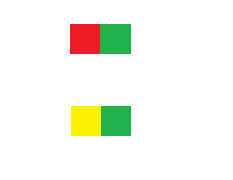
So the question to resolve is whether the green in a red context is different from the green in a yellow context. To his credit and I mentioned this before in the blog a friend when asked this question decide that at the boundary between red/green and yellow/green the green was different.

As a way in to this suppose the whole world was green. If all we ever knew was green then we would never have a word for green. Why would we say something was "green" since everything was green. It would be meaningless. I think I first met that idea in The Machine Stops. When Kuno gets outside the machine he notices a quietness and realises for the first time that the machine makes a continual sound that no one notices because it is constant.

Our experience is indeed relative. We are like dinosaurs and reptiles that we can only detect change. In fact difference is the basis of our perception. Things need to change or be different for us to be able to apply meaning to them. This was the great realisation embedded in that maxim. Which itself came from a jhana. In jhana it seems "the machine stops" and you see the fundamental noise of experience.

So back to the colours it is never-the-less very difficult to rethink the qualia of colour as a relative experience. Its easier to see the meaning of the words of colour as use/mention and depending on the contextual than to relativise the actual experience itself. Green does seem very absolute when we see are actually seeing it.

This goes back to a conundrum I was taught. While the words are the same, how can we tell whether the actual experience we have is the same as someone else. Perhaps someone else sees what you would call red when they look at the green box above, and vice versa. How would you know?

Now this conundrum enters a very shady world because it separates our experience absolutely. It is what Dennett calls the "Cartesian Theatre." Somehow what happens in my experience is completely divorced from yours. And I mean completely. But we agree that the words are the same. So that means that the words have no connection with the experience either. Even the mighty Wittgenstein in his later writing "On Certainty" puzzles over the mystery of how the colour red related to the word. Looking at a red thing and thinking the word "Red" there seems to be no connection. Now we can see here that there is the use and mention distinction. Normally we say "pass me the red box" and the red is in use and we don't think about it. In Wittgenstein's musing on the word "Red" he is actually mentioning it. So there is this added use/mention problem to that thought. And perhaps Wittgenstein got here himself and I forget, because this type of Language Game thinking is all his. When you puzzle over how the word Red gets applied to a red thing you are using "Red" in a different way, you are mentioning it, rather than using it as you normally would. That puzzle may stem entirely from language. We simply don't normally puzzle over the connection between words and what they refer to when we normally think and speak. I mean if we stopped to look at how the words of this sentence actually worked the sentence would break down and be of no "use."

So this is very Ryle in fact. Can we attribute the mystery of the link between "qualia" and their "words" to a change in the way we think and use words during such thoughts. To separate qualia and words we actually reuse the word as a mention and then no wonder we find qualia and words no longer belong together.

But this is perhaps not all of it. Aren't we left with the nagging feeling that qualia somehow exist separate from the words.

Well to cut this short there are several reasons why this all dries up. Firstly if you cannot tell then there is nothing to find out. What is the name of the oldest unicorn in existence? Unicorns don't exist so we have no difficulty in ignoring this question. What is the name of the oldest person in nearest parallel universe that we can never have contact with? Well its the same answer, we can just ignore it. Is the sensation I see when I see green the same as yours? Well we can never know so we just ignore it.

And that is interesting isn't it. There is something wrong with a question that has written into it a clause that says it can never be answered. "My Experience" appears to suggest that it is not yours and you can never know. Well in a weird way if you can never know then how can I know? This is again Wittgenstein and his argument against a Private Language.

It appears when we start telling people things that only apply to us we are entering into a contradiction. "But I am seeing Green but its not something you can see, only I can see it. You might be seeing Red" kind of statements are a bit weird. We can never know the answer cos the statement entails the impossibility of you seeing what I see.

Long post short. Shall we just leave it for now as a bit weird to say things like this.

So what of these "private qualia" the actual stuff of experience. Are they atomic absolute or are they relative. They are certainly a bit weird, and talking about them is weird also.

Its interesting that in the years since those experiments as a kid a lot has happened in perception research. Take Purves and Lotto's now famous illusion. I've cut a piece of the blue tile and piece of the yellow tile and moved to the white background. 

They are the same colour grey! And yet the context actually changes the qualia so that the same grey looks blue in the left Rubix cube and yellow in the right Rubix cube. 

OMG there we go the qualia are not absolute they are indeed the result of processing and depend upon context. Now we might dismiss as an "illusion" with no universal value. Under normal circumstances we think when we are not being "tricked" colour works normally and we see what is there, and our absolute qualia. But the point is this shows that a "grey" qualia can be seen as blue or yellow depending upon the context.

In other words we don't see the qualia! We see what we think.

Don't we then need to invents Qualia2 which are the perceived qualia from the actual qualia. So while the actual pixels are grey and the qualia are Grey we perceive Blue or Yellow Qualia2.

Its starting to look weird. That is all I need for now.

The point of the blog was to investigate again my first maxim that "all things are relative" and this indeed turns out to be an interesting maxim as its hard to find anything absolute. Even the certainties of vision "seeing is believing" become less absolute on examination.

So are we floating in a bubble of relativity? In Buddhism the gods tremble when Buddha starts going here. It takes a long time to deal with "emptiness" or sunyata when we are used to grasping at the certainty of sense experience.

However finally the Platonic argument and I received this very quickly at school. I was evidently very lucky to have smart colleagues. Plato argues that if all things are relative then how can you have an absolute statement like that? He demolishes Heraclitus with this argument against flux and never looks back (I think to the detriment of the Western World which spun off into nonsense there after).

It seems at the time like a pointless argument. It doesn't capture the value of the idea of relativity and seems to just try and shut the door as if not wanting to look at what lies behind. I believe Nietzsche argues like this too. Who cares for contradictions, they should not stop us venturing forth.

But it remains a thorn in the side of emptiness and freedom. How can we have doctrines that teach of No-Absolute, and how can we have Rules to guarantee Freedom? This is the Truth but it seems the truth somehow breaks logic.

Well we can turn to Godel instantly and show that systems with self-reference are either incomplete are have contradiction so we shouldn't be too troubled by contradiction.

But it is never-the-less interesting to just sit with that contradiction "all things are relative" is not itself relative. And its a funny thing about Truth that it always turns against its own definition.

And we are now on to, what has become probably the core of this blog, SRH. To make a universal statement implies self reference: "All things." And when there is self-reference the SRH says "beware!" Whatever you are trying to say of "all things" implies you are trying to deny something else. And that means you are limiting the freedom of "all things" and that limitation becomes a limitation of the statement. The negative side of the statement becomes compounded and self-defeating as Koesler observes briefly in "Godel, Esher, Bach"

"All things are  relative" is the same as "No things are absolute" and it is this negative side which then damages the statement itself.

Statements like to start with complete freedom. When we first say something we don't like to start with conditions. But when there is self-reference the statement becomes its own condition.

"No things are absolute" given that no things are absolute. Is what the maxim actually becomes.

And so actually because of self-reference it is relative to itself!

So the Platonic critics are stumbling into contradiction themselves. They are using the relative nature of the statement to show that it contradicts.

The Platonic Criticism depends itself upon the relative nature of the maxim "all things are relative"!

So to find fault is actually to prove the maxim! How odd is that.

Its not that the maxim does not contradict, but to self-contradict it must be relative to itself which proves the maxim. To contradict we must adopt the maxim!

This is very "I am false" or more modern its analogous to the infinite loop and never halting algorithm that cannot find an exit point.

Its not wrong, and its not right, you just can't find an exit point.

What is the logic status of algorithms that do not halt like "I am false"? Not sure what the technical status is: I'm going to call them "SRH statements" on the broad (unproven) conjecture that all halting problems arrive from recursion, or in logic from the isomorphic self-reference which is the SRH.

Conjecture 1: recursion is iso-morphic with self-reference
Conjecture 2: Halting problems are isomorphic with SRH problems.

Conclusion: statements that are neither True nor False are SRH problems and halting problems.

so "All things are relative" is actually a very interesting maxim indeed and its taken me almost 40 years to get to this point (how embarrassing).

This is partly due to the poor state of modern western society. At school I had a bright and smart environment in which to think and that paid dividends. But in the modern Capitalist world there is nothing but dullness and ignorance. Capitalism really is the last hurrah of the human race and the final decent into the pit of planetary destruction and mental stagnation.

Is there a broad statement that can be made about the axioms of Capitalism and how it entails destruction of all things (hopefully then itself!) ?

Sunday, 16 October 2022

Relative Self

Here's an important distinction.

Who are you?

When we answer its like the information we would give on a dating site. Things like what we want, and what we do. And for the most advanced dating site entries how we say it too reflects much about our intelligence, humour, creativity and education.

But all this is relative. We are trying to stand out from the crowd, differentiate ourselves from the crowd. Indeed when we have an "identity" it is relative like this.

We may select memberships of groups like the football team we support or religion we follow, but we do not wish to be seen as just another football supporter or religious devotee. We add that so that just a part of ourselves is illuminated, without obliterating the precious self that is "me".

But this is all just relative self. Self that exists in a society. Self that has been given a name by our parents that reflects our place in a family, and differentiates us from other people in our society.

This self also leads us down the most dangerous path of identity with a "permanent entity" we feel is "our" self.

I recently had reason to look at "To The Lighthouse" by Virginia Woolf [pdf]. In the novel, Lily a local painter, is struggling with the idea of impermanence and whether humans can create something lasting in this world. Mr Ramsey wants to create a lasting philosophy, Mrs Ramsey some lasting memories and finally Lily wins by completing a painting of the lighthouse that outlives the book and presumably herself. Not quite sure how Woolf decides that art is any better than Emperor Chin looking for immortality at the inception of China, but the book has indeed outlived Ms Woolf.

But Buddha's great realisation is that all these endeavours at immortality stem from an already existing belief and identity with a permanent self. Because we already believe in a permanent self or identity passing through time, we are already set up to suffer and fail. We think inside the childhood me is the same person who is inside the adult me and the me right now. The person looking through these eyes and reading right now is the same person who stared through those child's eyes we see in photos of our past. A little homunculus taking a ride with us and other people through life. This is a fundamental error, there is no such person hidden inside us. We are just what we are right now. The past is gone and the future is yet to happen, and they exist only as imagination in this person we are right now.  

When we meet old friends and put a name on them we think that somehow this is the same person we knew as a child. It is the same person in the same way that the sea is all the rivers that flow into it. There is a link but you won't find a river in the sea. You won't find the child you were anywhere in yourself now. There is a continual flow of time that links all the people we have been but that time has very low fidelity. Every step of the way it changes something so that the person you meet after so many years is not the same person. Obviously this is not to say we are a completely different person at each stage, we stand on the shoulders of past selves in a huge tower and where we are and the height we now stand is because of them, but we are not them. If those past selves have been good and constructive our tower will be very high and we will see very far.

They say that every 7 years we change every atom in our bodies. It is the classic Ship of Theseus paradox. The things that look the same are the same in the way that twins are the same. But we don't say twins are the same person. Just because our future self bears resemblance does not mean they are the same self in any way.

All this is possible because of Relative Self.

We know that there is one universe. Its that little paradox we learn not to think about. There is one world, and yet we like to think it revolves around each person, and we like to give each person (well us anyway) the powers to be centre of that world and to decide how it is, and also to remain unchanged by it as a being somehow outside the world and looking in from a divine unaffected vantage point.

There is one world, and that world is a world of change, and a world of millions of people and other creatures. How can there be one homunculus here that is not affected and is somehow centre to that world. No! that "homunculus" is just a relative self and the rotating around it and orbiting it just comes from identifying with it.

When we let go of this (and that is not a simple process) we begin to see our relative self in its place alongside the bustling and swirling society in which it lives, rubbing shoulders continually with other relative selves, depending on them, being needed by them, being made from the food it eats, being born and ultimately dying. It is all relative existence. This body not that body, that body not this body. This person not that person, that person not this person. This self not that self, that self not this self. There is just one world of many people, but the this/that comes from identifying and grasping to just one of them.   

Being free from this we actually achieve that unaffected state we knew deep down was our true nature but we mistakenly tried to get using the vehicle of the relative self. The same struggle we see in Lily and Virginia Woolf and I wonder whether such concerns ultimately weighed her down to her death.

The unconditional, non-relative self is very unlike the relative self. It does not have any features that set it apart from other people. You can't grasp it, there is nothing to hold on to or grasp. And at the same time there is nothing to hold on to yank it away from us with. We can't affect it, it just is. We arrive at it through letting go of the grasp on the relative existence. That grasping as we enter into this issue can also become a throwing away and denial of relative existence. Buddha himself followed the path of self mortification to try and throw away the relative mortal self. What can be grasped so as to clutch close or throw away is not us. The true self is already being, and it is only a smooth rock face that you can't grasp hold of to either pull near or push away.

Questions like is the true self immortal, or is it a soul and do I live forever are questions only for the clinging to a relative existence. We let go of these concerns too.

But its not like we live forever. Instead we cease to identity and grasp to anything that doesn't. Its all in the grasping! All our struggles and concerns lie with whatever we grasp on to and identity with.

Is letting go the same as dropping out and giving up. Absolutely not! This is the same as trying to pushing away relative existence as already mentioned. That is just one relative existence being swapped for another. This way and that way are two sides of the same coin. Letting go is not a this way or that way. Its not grasping onto a new things. You can't measure it like that. Its not a lifestyle choice. Its just the seeing the relative side-by-side nature of what we previously grasped as the centre. Seeing the relative as it stands in a relative world along with all the other relative things. Once we see all relative things shoulder to shoulder then we are already letting go. 

Tuesday, 11 October 2022

Will Meditation Help Me?

 Its the classic reason to start religious practice: some trouble in life. We think if we pay our debts to God or other people, say sorry, do some good deeds we will be forgiven and the bad things will go away.

Well in one sense of course this is true. We start behaving well, treating people with respect and clear our own hindrances and we will find life starts flowing more smoothly. (Fruits of Good Karma in eastern lingo) 

But I'm realising there is something much more important. Suppose we have a bad feeling, or some anxiety or some other mental affliction and we start meditating to cope with it. We find we concentrate on our breath and eventually after days, months, years of practice we find that we can leave this behind and enter states of bliss where we are free from the suffering. It doesn't need be mental it can be anything, but mental is particular interesting for this realisation.

Commonly we are then disappointed as we leave meditation that the bad states are still there waiting in the shadows to grab us. But at least we have faith now that we know how to get away from them which is an amazing thing to realise. Whatever life throws at us, actually we are powerful to always escape it through meditation at the very least.

But there is something much more profound in this. Why does concentrating on the breath give us this power to leave unwholesome states behind and replace them with bliss?

Well if we analyse exactly what happens when we concentrate on the breath we have a clue.

So our teacher or book or perhaps our own intuition (I kind of did this sometimes as a kid) says watch the breath as it comes in and then goes out. Count this breaths to 10, not letting the mind wander. If it wanders go back to 1. When you get to 10 go back to 1. Keep doing until the mind becomes solidly focused on the breath... years later still doing this. 

At first when I started meditating I couldn't tell whether I was experiencing the thought of "in breath" "out breath" versus the actual sensation. Then I got caught up in the whole  "I am breathing in", "I am breathing out." In fact this is the sticking point for much of meditation. And this is the clue as to why meditation works.

If we have a bad feeling the key thing is that it is "my bad feeling." If you have a bad feeling I don't (unless I am a Bodhisattva) think to meditate to clear your bad feeling. The reason I meditate is not the bad feeling but that it is "mine."

And this is why meditation works because eventually we get beyond "my meditation", "my breath", "my bad feeling" even "my good feeling" and start to see just the meditation, the breath, the feeling. And this quite extraordinary transformation puts us "outside our self." We no longer look at everything through the lens of "mine" and just see it. It sounds like a flash of inspiration or really noticeable thing but of course such thinking is still "me" based. Suppose we do find the bliss of just seeing things and forgetting about our self being linked to them, the last thing we want to do is think "oh look I have attained the state of non-self" although this very likely will happen and we fall back into ego.

So its interesting that the very reason we want to meditate in many cases starts with the ignorance we actually wish to transcend. I want to get away from "my bad feeling" does happen in meditation, but this bliss comes not from losing the bad feeling, but rather getting away from the self that has grasped the feeling as its own. That same self will try and grasp the in-breath and the out-breath, and will grasp as my thoughts that it thinks so important that it will leave the breath to pursue some thought train. All the while grasping at things, and dividing the world into that which belongs to and is part of it and that which is not. So everything, every feeling, every thought, every sensation begins as strong "mine" and in the process of meditation we start to see through the mineness and towards just the thing as it is.

And when we get closer to the thing, and far from the mineness then we start the blisses. Plural as there are many.

But its common for the self to "mine " the blisses as well. Wow I have attained a bliss. Or wow my meditation is good. Or perhaps we fail and have no bliss and we "mine" that too so that our self owns the failure. Interesting to note that the meditator who escapes the self into bliss but then owns it for themselves "I am a great meditator" is actually in exactly the same place as the meditator who failed to get the blisses and then owns that "I am not a great meditator"! The meditator who fails, but does not own that is actually in a very good place!

And this is why meditation is "good for nothing." I'm still rubbish at this, and I still own my meditation. But really it is something we just do. There is no reason, it is not ours, we don't do it, we think nothing and just do it. It is beyond our explanation and that is its power to go beyond ourselves.

So all that is quite unusual in a world that demands we take ownership of ourselves, our reputations, our careers, skills, health. But its subtle cos you can do all these things without ownership just as you can have the in-breath that belongs to no one.

Commonly trying to get away from self we actually dump the things that are owned rather than the ownership itself. Once we step beyond the self and the ownership to see things as they are then we can abide calmly and peacefully in the world in bliss.

48. The Destroyer brings under his sway the person of distracted mind who, insatiate in sense desires, only plucks the flowers (of pleasure).

49. As a bee gathers honey from the flower without injuring its colour or fragrance, even so the sage goes on his alms-round in the village.

[Dhammapada  Chapter 4, Flowers]


US displaying its Imperialist credentials... yet again

Wanted to know the pattern of UN votes over Venezuela and then got into seeing if ChatGPT could see the obvious pattern of Imperialism here....