Monday, 18 March 2024

"Here" as opposed to "I'm Here"

Been seeking this one for a while.

SO there is that experience of Present Moment where we feel like we really exist and right now is really happening. It is solid and tangible, we wouldn't want to be anywhere else, indeed we couldn't be anywhere else, because all there is is Here.

This experience has two very similar but different flavours. The common one is the sense of me experiencing this. How lucky I am we might think, or life is great or perhaps we have the darker non-luminous version which goes something like why is it always me, I'm so unlucky, this is not what I want.

But actually both the luminous and darker version are the same no matter how real this moment is, it is being had by "me." I am here to experience it. I am the one in the forest to see the tree fall. I can leave the forest now and tell everyone what the sound of a tree falling in the forest is. There is wisdom here in that a sound does need a ear to hear it. But stop there.

The other more quiet version of this experience is hiding from usual sight. It is the Present as just being there. I am looking at a sun set now from my study. I could be imagining a person sitting in a room looking out of the window and I could be thinking that all this is there for me so that I can see it. Certainly no one else is seeing this. Not only is it an enjoyable sight but it is my sight. A double bonus of a pleasant experience and affirmation that I am here to enjoy these things.

At least that is the one view. The other is just that there is the pleasant sunset. Seeing that is exactly the same as the bombastic version above. Exactly the same! There is the sun and it is being seen. Awesome let's watch...

 The difference is just that this moment is revealing itself all by itself. There is no need for someone to muscle in and take the front seats. Just let it be. You are already seeing it to even think about taking a front row seat so just forget about the seats. Just have that Now wash over you. There is nothing to do; no one to be affirmed, and no one to take anything away.

Of course the best bit is you never run out of Now. Ironically the only way to run out of Now is to try an take this one for yourself. Just put it down and let the next one come along. Okay there are thoughts of death that can mess that up, we feel limited and short of Nows. But actually we're already tainted to think that. Who is short of Nows? That guy a minute ago, the one in the future or the one Now? Well clearly this one has nothing to worry about, indeed never has anything to worry about, so just forget about it.

Friday, 15 March 2024

Grasping

We often find ourselves holding onto something we didn't even acknowledge we grasped.

Something happens and we find the thing we grasp being dislodged. Automatically we try and restore the grip. This can lead to all sorts of automatic behaviour.

Perhaps something happens or someone suggests we are not good at our job. If we hold onto "being good at our job" then we start to grasp to re-establish our hold on "being good at our job."

It can be quite a panic 


So we behave quite instinctively and without much thought. We need to regain that grasp, and we probably didn't even realise we had it before.

But actually there are 2 ways to go here:


The left way is to fight to restore our grip again. But we often over look the right way which is to acknowledge the grip we had and re-evaluate it.

Life throws exactly the right stuff at us to reveal what we are gripping.

It is quite spooky how right life is. This is why it is often said that "Life is a Test" which if we pass we get to Heaven.

But how and why is this? It seems too metaphysical and hocus-pocus to be true.

Well for something to exist you need the thing and you need someone to see it. The famous question "What sound did this tree make when it fell?"


We "know" it made a sound, but if no one was there to hear it then there was no actual "sound". We need be a bit careful. I'm sure fine analysis of the soil or something could prove there were sound waves being generated and the evidence is there for a sound. But what is the sound of sound waves if no one is there to hear them. The point is not that a tree fell, or sound waves were made or any other "thing" what we are referring to specifically in "hearing" is the consciousness of a sound. Someone with hearing needs to be there for there to be a "sound." Not sound waves, not any material thing but "sound" as we experience it.

The point of that exposition is to bring our attention not to the facts of the world but the experience of the world. If two people walk through a museum and then speak afterwards we know there experience will be different. One will say "wow did you see the display of dinosaur bones" and the other will go no but did you see the display of "musical instruments." Museum is the same, but how we interact and the experience we get is different. Life is like that!

We are not actually interested in the facts of life; we are interested in the experience, that is how it presents itself. It is the ability of certain things to present themselves to us that makes up our life. And why do somethings present themselves and others do not present themselves? Well that is to do with who we are. More precisely this is called in the East: Karma. Karma is best explained in terms of brain state. Someone who like football will automatically select football related things from their environment. If a person holds onto a football team then when that team loses they get reflective, when it wins they celebrate. Its not the team that matters its that we hold on to it. These responses are down to the grasping that they have nurtured in themselves. If they find football a good influence in their life then they hold onto good things, but suppose they start betting and find themselves losing money then they their grasping is no longer of use.

It is this ability to nurture a holding on to things or propensities in our self, that then select aspects of the world which is what makes our life experience.

The reason that life throws at us exactly what we need is because we automatically select those things for our self! We automatically pick out of the world the things we are holding and so they become apparent.

The naïve confusion is that people think the world is solid and thrown at them, they don't realise that to actually become apparent they still need to pick things up and hold them. If we just let the world fall then nothing would stick and nothing would happen.


So when faced with a sudden panic to grab hold of something that has slipped we have this choice of whether to really pick it up again or perhaps let it go.

As said the reason for the sudden panic is that we probably did not know we were grasping it. This is how life is constantly ready to surprise and shock us. It is constantly revealing what we are holding on to.

The wise person has perfected this picking up, holding and letting go of. But to master this requires firmly opening up this fork in the road.

And this raises an interesting feature of freedom. For the naïve person freedom is the ability to pick up what they are grasping for. They see an advert for a car and start to grasp and if they have the money they can buy it and hold it. That feels like freedom. But they are really only ever going Left and so don't have true choice. This way of living will eventually throw up a problem because life will shake their hold on the car at some point and with only the Left route to explore they don't have any option but to fight to grasp it again.

Meditation is the method that is often used to open up this Right option. Imagine being in a state where we have the genuine choice of whether to pick up or put down something.

Thoughts enter our mind here.

(1) I will just get lazy and put everything down like a drop out hippie. Well perhaps what is wrong with that? The problem of course is picking up anything after this. You are only a master of this when picking thing up and putting them down are equally easy.
(2) What about the things I cherish and love. If I put them down easily then what proof is there I love them. Would my wife appreciate me "just putting down" our anniversary and saying "hey don't get so attached, chill out and let it go." I know of a similar example to this of someone in a casual relationship who said to his partner when she raised the issue of something more serious "don't get attached and don't hold onto this." Again this is like (1). The master can pick up and put down, not randomly, and not inappropriately, but with equal ease. Why would you put down your anniversary?

(2) Now there is the naïve beginner approach here. We challenge ourselves to sit under the tree meditating until we enlighten like Buddha did on the final road to enlightenment. Or we punish ourselves by denying ourselves things. And we can dream up a lot of things to do to ourselves. BUT in here lies the BIG grasping. Every single ones of these revolves around a SELF that we want to move into enlightenment, or bring enlightenment towards, and we pick up this self and we move it around like a chess piece looking for where to put it. One naïve view is that one day we will pick it up and put it in Heaven so we do lots of good things and make lots of donations in the hope that God will pick us up and move us. It's been pointed out a few times by people that no self respecting God will have anything to do with people who try to buy their way into Heaven with good deeds. What is the difference between this and handing the priest a £5 back hander to forgive our sins. But its a starting point at least so not inherently wrong.

In all these cases we have not noticed that we are grasping a self. So life will throw stuff at us again and again that shakes our hold on this self, and we panic to re-establish that hold because it never occurred to us that there is a choice of whether to pick it up or let it down. We need a self right?


Do we need a self? What was this about?

Okay this is super advanced. We may run at this and go if that is what it takes to be free then "great I can let go of myself" and we do something dramatic and sacrifice our self in some way. Perhaps we give everything we have away to the poor.

Well maybe it will work, but chances are we are just doing this because "I" want to be free. we are still doing it to liberate a "thing" that we are grasping.

The whole goal here is just to have that choice to grasp at a self or not.

Ego is the famous example of self. Ego thinks it is permanent and never changes and never dies. But life will eventually throw that utter humiliation and failure at us which will bring us to realise that this particular "ego" is wrong and inferior and we need to grow. Who thinks we are still that person who tripped up when we were 1 and still new to walking and started crying. We have grown and can now run. But there is still that over arching Ego that we hold onto that we think is more important than life potentially. Its the "holding" that we need get aware of so that we have at least that option to put down.

This blog post is actually an example of what it is talking about. I recently discovered that my services were not needed in this company. I thought they were needed and valued. So I found that it was not a completely simple operation to just put it down. I found some latency and holding going on. But rather than struggle with it, I realised the Right turn and saw much more valuable that regaining a grip on the company was to notice this grasping and in so doing be free from it. Sure I can get a new contract with the company perhaps, or perhaps a new company who knows. But right now being free to pick up and put down is the real win. And then I wrote this blog entry which unfortunately is still a grasping of sorts as I seek to cement some "gain" for a "self. One day I hope to be free enough to even let go this freedom to chose and not own it, or even celebrate it or even hold it.

===

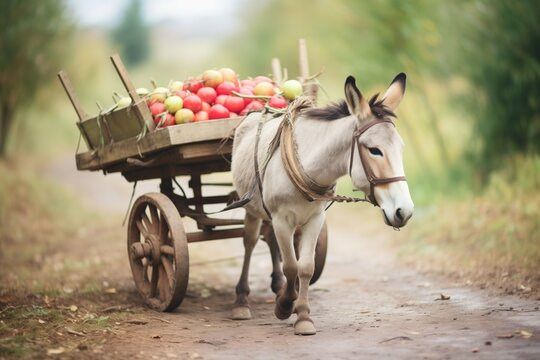
So that final point is that we can grasp at "grasping." If we walk away thinking ok this is easy there are 2 paths we can walk: (1) the path to re-establish our grasp on something, and (2) the path to step back and observe our need to grasp and use this space to review. Of course we are now grasping at this "2 path method." That is okay at this moment probably, but if we walk away with a doctrine the way life is it will shake that doctrine from our grasp as some point and we will feel like we are back at square one. This is the "loss of faith" that everyone feels occasionally, the "dark night of the soul" as it is called in Christianity. But we can see here that all this is happening is stale habitual dogma that we have accumulated is being shaken off. The goal after all is freedom not a donkey dragging a cart of truth and dogma. This is us after we have established some truths that we like:


However very quickly a "truth" becomes a "Truth" set in stone and no longer living; it becomes a burden we must carry with us and possibly forget even so we keep remembering it and thinking about it to keep it alive. We actually erect it as a monument to our achievement and then walk off!!! What we need to do is live within the truth all the time. That means constantly not grasping and seeing everything as if it was the first time we faced it. Not-Grasping is a activity we must do all the time, just as grasping is an activity we want to do all the time. I realise my own search for truth is typified by a desire to grasp at some solidity. But now it dawns on me that this grasping is the problem it raises a complete revolution in my approach. Instead of grasping a  truth and holding it for the future, actually I should examine the need and process of grasping it in the first place!


Monday, 11 March 2024

Reference, including self-reference needs a Proxy and so an object cannot refer directly to itself.

With "Mise en abyme" or the Droste effect we can provide a first axiom for SRH:

(1) In Reference there must be at least two entities: the main object or Referent and the Referrer which is a proxy object that in the context stands for the Referent.

In the sentence "he took the ball"

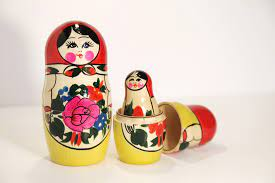
`the ball` is the referrer because obviously this is not an actual ball and you can't throw those words. A ball might look like this picture.

But you can't throw that either. Borrowing from later Wittgenstein we would say that all these objects can be used in many way. In the context of this blog we are most interested in objects taking the place of other objects. We could substitute an apple for the ball and he could still throw it.

So we can construct this odd sentence:

"he took the ⚽"

Yet we all know what it means because the picture ⚽ has taken the place of the object we mean, namely the ball that he took.

We have Quine's "use" and "mention" here. But really those are just specific examples of the more general Wittgenstein "language game" idea. "use" is very subtle and diverse, we can use something in many different ways, often only subtly different.

"I took the symbol ⚽ and then ⚽⚽ meaning that all together there were ⚽⚽⚽ written twice"

In this sentence am I "using" or "mentioning" ⚽? In the last sentence I am actually using the symbol ⚽ itself.

And other examples like "If we kick we can send it to the end of the sentence ⚽"

Here the symbol ⚽ is the actual object of the sentence, and while the implication is that ⚽ obeyed grammatical rules and existed in the right syntactic place (after kick) in the sentence it has under the pressure of semantics been kicked to the end of the sentence. I've no time to unpick this but its a very complicated example of the use of symbols.

However it remains that the process of one object taking the place of another implies that there are 2 objects. A referent and a referrer.

This must then also be true in self-reference, which is just a type of reference.

So the referent and a referrer are not the same object in self-reference. Which means that self-reference is not like an infinity mirror. The referrer by which we set up the self-reference is not the same as the self. We just move from self to a proxy and then back to self again.

Take the example:

"This sentence contains five words"

There are two objects here:

The referrer: "This sentence" and
The referent: "...the characters between the quotes..."

So we can use any referrer, let us call that sentence A. Many things are called 'A' but within the limited context of this page, the "state" of this object to use programming idioms, 'A' can be substituted with the sentence above.

'substitution' is the key operation that explain reference.

Given the rules above and the object

'A'

We can apply substitution to replace A with:

"This sentence contains five words"

Now semantics gives meaning to things in wide rule sets. The sentence is part of the English language and it means that were you to count the words in the sentence you will get a count of 5.

Clearly substitution does not preserve meaning:

While 'A' can be substituted with "This sentence contains five words" to give "'A' contains five words" they do not both have 5 words, they are not the same sentence even though we only substituted referrers with the same referent.

This means that "This sentence" cannot be substituted with A.

"A contains five words" is no longer true,

So while A and "This sentence" are both referrers to the sentence "This sentence contains five words" they cannot substituted.

This is because "This sentence" is used in two ways. It is both a referrer and a part of the referent itself.

We can introduce another dialectic here between Form and Content. "This sentence" and "A" have the same content in that they refer to the "same" sentence, but the Form is different. Indeed we use the form to determine the object. I have written 'A' many times in this page and so there are many objects here, but because they have similar form we call them the same "type of object" or "letter of the alphabet". This is only the first level of meaning however, and we take that "letter of the alphabet|" abstraction and then make a deeper level where it can be substituted by the "This sentence contains five words."

So we can note here that there are Forms with Contents which are themselves Forms with Contents. There is no absolute Form and Content level and Objects and Symbols can occur at any level of abstraction from the physical marks, to membership of an alphabet or set to part of a Linguistic net of meaning.


So returning to:

A = "This sentence contains five words"

This is a swirling mass of similarities, memberships and substitutions. How can "self-reference" be simple!

But we can say that the referrer "This sentence" is bound by another condition that it must have the right form as well as referent to maintain the truth value of the sentence.

Not all referrers are equal!

Perhaps I should introduce some syntax to separate the Quine issue here. 

"This sentence" is just marks on a page.
«This sentence» will  be used to use the sentence.

There is no reference with these characters "This sentence," they may as well be "jdhbstyvsmqwt"

While «This sentence» is semantic and refers to the physical part which looks like "This sentence"

SO «This sentence» is actually one of the shortest self referential statements. Perhaps only smaller is 

«Me»

When we ask what is referring to itself we find the sentence "Me"

Note that "" and «» are operators on the underlying characters and are not part of the sentence themselves.

In these immediate self-reference statements like «Me» the Form does not matter.

 «Moi» 

«मुझे»

It makes no difference. Pop those into the context of the language world's they come from and self-reference is semantically set up.

And if we ask what is «मुझे» referring to we could answer "मुझे". This gets into metaphysics because if someone was to say "मुझे" out loud we would take that to mean a "person" even if a computer said it. I plugged the Windows XP speak recognition into an AIML chatbot once and routed the output to the speech synthesiser. At 2am having a conversation with a computer made me feel like there was someone else in the room. Forget Frankenstein, making the illusion of people is really easy. I don't think we should read too much into a person saying "मुझे" it is just part of the language games, cultures and words we belong too. Ideas of ethereal spirits and souls is completely unnecessary.

Not sure I ever explored into this as deeply before. But hopefully it still remains that the referrer and the referent are different. Not a simple dualism as they can have interconnected forms but they cannot be the same.

"This sentence contains five words"

«This sentence contains five words»

are different.

Consider again that we substitute the sentence for A

A = "This sentence contains five words"

«'A' contains five words» is still correct.

"A contains five words" is just a new sentence like "qhg weqew qweqwe"

I miss one case:

""This sentence contains five words" contains five words"

is a new sentence from the following substitution:

"This sentence" = "This sentence contains five words"

«"This sentence contains five words" contains five words»

Is correct.

Anyway to wind this up the point is that an object cannot really refer to itself. It needs a proxy object that can be substituted for the referent object. These two objects need to be separate.

However it is noted that the Form of the object becomes important if the Referrer is part of the object. This adds conditions that limit the substitution.

I note here Douglas Hofstadter mentions somewhere in Godel, Esher, Bach that self-reference is always limiting. [need find a reference!]

A PDF of this remarkable book is here Godel, Esher, Bach

"But might there not be some vaguely Godelian loop which limits the depth to which any individual can penetrate into his own psyche?" [Godel, Esher, Bach p692]


Sunday, 10 March 2024

What is the probability this is correct. Another view on self-reference than SRH


Here's a self-reference statement to study.

Now SRH says that the existence of self-reference opens up a fixed-point, and a possible self-dependency and inconsistency.


To study let us imagine that a bag contains coins with a text written on them. There are N coins. Text 't' occurs with frequency F(t).

So picking out a coin we can say that the probability that this coin carries the text 't' is:

p(t) = F(t)/N

No self-reference no paradox.

Now we write probabilities on the coins. We have a function r(t) which returns the probability written by the text.

We pull out a coin and it has "10%" written on it. Very pedantic but r("10%") reads it to give us the probability 1/10.

Now if there are N=100 coins and 10 of then have "10%" written on them, then when we pull out a coin with "10%" on it then r("10%") gives a probability of 10% which is also the probability of pulling out a coin with "10%" written on it. We can call this the coin being correct.

Now if no other coin has the frequency that it occurs written on it then we can say that the probability of pulling out a correct coin is 10%.

No paradoxes yet.

So returning to the top we take 4 coins and write the frequencies on them: {0,25,25,50}. Then we ask what is the frequency of pulling a each text:

0     probability 25%
25   probability 50%
50   probability 25%

So there is no way to pull out a coin with the text on it that matches the probability of that text.

Now it is tempting then to say that the probability of pulling out a coin with the correct text on it is 0%. But now there is the contradiction because that is already taken by the text on the coin "0%" and the probability of that is 25% so it can't be 0%.

Indeed the coin "0%" is already slightly problematic because the existence of the text gives it a non-zero chance of being selected an so "0%" already contains a contradiction. It's not quite right to say it is always false, it is actually a contradiction.

So the problem is that we have 2 ways to refer to the coin "0%". One way (1) is to select that coin from the bag as stated in the game. The other way (2) is to select it as the answer to the question "the probability of pulling out a coin with the correct text on it."

So the answer is none. But by using method (1) the probability of selecting "0%" is 25%. But by answering the broader question of "which coin carries the probability that it is chosen" we select the "0%" coin.

This is actually a bit of a cheat. The context of the 25% is selecting randomly. The context of the 0% is selecting not randomly but according to a meta-criteria. They are different methods!

I wonder whether paradox can be avoided here by maintaining the context? Is this always true with paradoxes?

Rather a different solution to SRH which raises questions about self-referential methods of "selection".

===

What I wanted to do was use this simple paradox to explore the full set of "fixed points" and whether each one can be used to generate an inconsistency. #TODO

===

So a fixed point for a function f() is an element from the input set which maps to the same element in the output set

p = f(p) where p ∈ Sinput, Soutput

so f(x) in this case takes a quote of a probability and returns the quote of the probability of picking that from the bag. we assume that coins only have probabilities on them.

So in a bag of 100 coins then any coin with a number on it that matches the number of such coins in the bag is a fixed point.

In this smaller bag of 4 coins then: {"0%","50%","50%","70%"} means that 50% of the time you pick a coin with "50%" on.

"50%" = f("50%")

Note that everything is a "mention" of a probability in quotes no actual numbers.

Now the actual scenario involves a meta function g() which returns the probability of a coin being "correct." That is a coin being a fixed point of f().

So g("50%") = "50%" in that because "50%" is a fixed point then every coin with "50%" on when picked is "correct."

However "0%" is not a fixed point. The probability of picking "0%" is actually 25%. So the probability of it being correct is 0%

g("0%") = "0%"

So 0% is a fixed point of g() but not f().

Actually I can't see a problem here. To be completed...


====


Is there a paradox actually?

There are 2 questions in the above.
(1) What is the probability of picking a certain probability in the answers. Call this f(p)
(2) To be "correct" the answer you chose must have a frequency equal to itself. That is f(p) = p. Call that g(p)

So we can define f(p) as:
f(0) = 25
f(25) = 50
f(50) = 25
Sum of f(x) for all x = 100

Great defined f with no problem.

Now g(p)
So for all p: f(p) != p. Then g(p) = 0 for all p.

Now that is a perfectly safe definition too.

The problem arises because the original question combines these so that the answer given by g(p) becomes a probability within the domain of f(x).

But isn't this apples and oranges. f(x) applies to the frequency of tokens in the question. g(x) applies to the frequency of a different domain namely the range of f(x). "0%" is a token being used in different domains.

===

Let's try this on the classic "this statement is false"

If we really smash this up let us have two sets with names 'T' and 'F'. T ∪ F is everything. T ∩ F is empty. This is supposed to parallel True and False. Naively taking on Tarski here ;-)

So we could say:

What is the statement? "this statement is false"
This is just a sequence of characters.

Call that sequence of characters 'A'

Now semantically we can have a function f(x) which defines x is a member of F.

So the meaning of the statement A is f(A) which says that A is a member of F.

The problem is that we start with A being a member of T. But okay lets put A in the set F.

Great that makes sense. "this statement is false" simply says it is a member of the set F.

But we have missed something. If being a member of set F is supposed to parallel the behaviour of "false" then really it must mean "cannot belong to set T". You get put in set F only when you fail to fit into set T, otherwise you belong in T. I've always noticed this implicit bias to Truth in logic. All statements assume Truth to begin with. "There is an elephant on the Moon" we normally approach by looking on the Moon and if we don't find an elephant we assign it to false. Even if we assume it is false to start with we take the "There is not an elephant on the Moon" to be true. We always start with Truth. Maybe I misunderstand something here.

So actually we try and fit "this statement is false" into the T set. But it says that it belongs to the F set. Now it gets into the F set not because it says it belongs in F !! It gets into the F set because it does not belong in the T set. It says it belongs in the F set and so doesn't belong in T.

This very subtle difference is the difference between something being false because it is just false, and something being false because it is a logical contradiction.

"I am made from six words" is a truthful sentence. "I am made from five words" is a false statement.

"I am made of five and six words" is always false without counting because it is a contradiction. If it is made of 5 then it can't also be made of 6 of the same thing.

"I am a member of F" is the same in the rules above as "I am not a member of T" 

"I am not a member of T" cannot belong in T not because of its assigning membership but because it is a contradiction. Contradictions go in set F.

But we have 2 ways to get into set F now.

f(x) from above which says that x is a member of F.

But also anything that is a contradiction e.g. x & -x. says c(x) which also says x is a member of F if it is a contradiction.

Run out of time. But suppose we separate these two function domains as we did for the probabilities.

A = "I am false" maps to f(A) meaning put me in set F.

We could borrow the - sign to mean put me in set T. So -f(x) means put x in set T.

B = "This statement has both five and six words" belongs in F under c(B).

Now we can mix them.

"I am in both set T and F" belongs to F under the operation c(B) while it also assigns itself to T and F with f(x). This is fine.

C = "I am not in set F" is a set assignment and so is -f(C) which puts it in set T.

OKAY need another look. TBC


We already live in a mostly Anarchist system

https://www.linkedin.com/pulse/duration-royalties-when-licensing-invention-john-connors

Currently licensing inventions has an expiration date. Eventually all inventions enter the public domain.

If we consider the vast number of inventions that we take for granted and pay no royalties on we see that actually the world is already mostly anarchistic. Indeed were we to pay royalties on the wheel, fire, cog, screw, screw driver, nail, welding, sewing, weaving, growing crops, purifying water, metal extraction and the list is endless we would not be able to afford anything. The world only works because 99.999% of stuff is free to use in the public domain. This is anarchism.

So to switch to a purely anarchic system we would only need to remove the patent and intellectual property system.

Now proponents of intellectual property argue that without some way to profit from inventions then the incentive to invent would go and people would not invest in invention. But this is just an argument that depends on being in a capitalist system. If funding was from public money then there would be no need for private financial returns on investment, the return on investment would be exactly that the invention itself! States invest in R&D to get inventions there is no other reason, and no leakage of cash into already rich investors.

Ignoring Capitalism there is no reason for intellectual property. But it is worse because the amount of time, effort and money wasted complying with royalties means that Capitalist economies are actually very inefficient. Were public investment to create publicly available inventions with no barriers or limitations then the speed of development would explode.

You see this kind of freedom of invention in Mathematics. The moment an invention is made it is available for everyone to use and so Mathematics explodes ahead when things are found. If there were royalties on proofs this could only slow down progress as people have to chose what proofs they use, and project what profits they would make from use of these proofs to see if their work is worth it.

Here is proof that actually publicly available free intellectual property is the most efficient system. The only question is how much intellectual property slows this down.

It is possible that intellectual property exists deliberately to stop progress. The last thing the rich want is for their work to fall in to the hands of the poor. If this happened then the poor would be rich. It is often argued that Capitalism is exactly this system which stop the poor gaining access to the resources needed to make themselves rich. This can be the sheer cost of starting companies, but also the cost of education and gaining access to markets. In a private capitalist system you need money already to get access to the system whether that is your own or you need borrow from the wealthy.


Tuesday, 5 March 2024

The Alt-Right and the Socialist Left should agree on Trump for the same reasons!

 Think I just realised something. So many of the supporters of Trump are classified as alt-right and key to Alt-Right is actually Liberalism typified over the Pond by Ayn Rand. But there is a problem (noted by Rand herself) that supporting a common figure makes them into a collective and the storming of Congress was the action of a mob which is a collective. Yes Socialists totally agree with People Power and the same collective action to topple non-representative self-serving leaderships. So how is it that Ultra-Liberals who hate Socialism and Socialists actually agree. It lies in US Cold War propaganda. The "bogie man" dreamed up by the Pentagon is the Collective State in which individual freedoms are ignored. So Ayn Rand etc oppose Collective State. But what nonsense: how can you have a "collective state?" A Collective is a group of individuals who come together for a common purpose like the American, French, Russian and Chinese revolutions. While in Washington Propaganda the State is portrayed as an oppressive totalitarianism opposing the individual. If this is true then how can the Socialist Mob come together to oppose oppressive state like the Feudal systems before (and in so doing liberating billions of slaves around the world). Washington has very carefully spoken it double-speak and got Americans thinking in oxymorons. A Totalitarian State is not the same as a Peoples Collective. Indeed Washington's vast efforts to rubbish and bomb out of existence Communism and Socialism rather reveals just how fearful the US is of a popular people's uprising.. an actual Collective. So Trump is a figure of fear in the US. If he can mobilise a people's collective against the State then by irony of ironies he can liberate the American people. This is what the Alt-Right think. But it is also exactly what the Socialists thing. So Trump is a figure that the far left and right can actually agree on! In both cases the removal of a corrupt self serving State.

stuff about impermanence and self

 Here's a thought:

1) if you break up a table and make a chair from it you say that a "table" has been destroyed and a "chair" has been created.
2) If you break up a table and then make exactly the same table from it do you say a table has been destroyed and a table created? I think when asked what it is we just say its the same table and ignore any processes.
3) So if you go away for a few years and come back obviously you say its the same table, but that doesn't exclude the possibility of processes happening inside the table.
So this "what it is" is actually very crude, more like an inventory entry and not really detailing everything that has happened. This is the source of the Ship of Theseus paradox. But it gets much more interesting when you apply to people and yourself.

Here's a thought: When we celebrate a birthday are we same person who celebrated the previous birthday? If we are the same then we have no age so we can celebrate all our birthdays. If we are different then its not "our" birthday as many people celebrate these birthdays over the years.

US displaying its Imperialist credentials... yet again

Wanted to know the pattern of UN votes over Venezuela and then got into seeing if ChatGPT could see the obvious pattern of Imperialism here....