Thursday, 11 April 2024

USA has fought 604 years of war in the last 250 years.

It turns out that the "War Load" for people of USA over the last 250 years is 604 years of war.

This includes all conflicts both internal and external.

1775 1783 American Revolutionary War

1776 1795 American Cherokee wars

1785 1793 Northwest Indian War

1785 1795 American Algerian War

1798 1800 Quasi-War

1801 1805 First Barbary War

1810 1813 Tecumseh's War

1812 1815 War of 1812

1813 1814 Creek War

1815 1815.5 Second Barbary War

1817 1818 First Seminole War

1823 1823.5 Arikara War

1827 1827.5 Winnebago War

1832 1832.5 Black Hawk War

1835 1842 Second Seminole War

1836 1875 Texas Comanche Wars

1846 1848 American Mexican War

1847 1855 Cayuse War

1849 1924 Apache Wars

1849 1866 Navajo Wars

1854 1861 Bleeding Kansas

1855 1856 Puget Sound War

1855 1856 Rogue River Wars

1855 1858 Third Seminole War

1855 1858 Yakima War

1856 1859 Second Opium War

1857 1858 Utah War

1858 1866 Reform War

1859 1859.5 Pig War

1859 1859.5 John Brown's Raid on Harpers Ferry

1859 1861 First and Second Cortina War

1860 1860.5 Paiute War

1861 1865 American Civil War

1861 1875 Yavapai Wars

1862 1862.5 Dakota War of 1862

1863 1865 Colorado War

1864 1868 Snake War

1865 1865.5 Powder River War

1866 1868 Red Cloud's War

1867 1867.5 Formosa Expedition

1867 1875 Comanche Campaign

1871 1871.5 United States expedition to Korea

1872 1873 Modoc War

1874 1875 Red River War

1875 1875.5 Las Cuevas War

1876 1877 Great Sioux War of 1876

1876 1877 Buffalo Hunters' War

1877 1877.5 Nez Perce War

1878 1878.5 Bannock War

1878 1879 Cheyenne War

1879 1879.5 Sheepeater Indian War

1879 1880 Victorio's War

1879 1879.5 White River War

1882 1882.5 Egyptian Expedition

1887 1887.5 Crow War

1890 1891 Ghost Dance War

1891 1893 Garza War

1896 1918 Yaqui Wars

1898 1899 Second Samoan Civil War

1898 1898.5 American-Spanish War

1899 1902 American Philippine War

1899 1913 Moro Rebellion

1899 1901 Boxer Rebellion

1909 1909.5 Crazy Snake's War

1910 1919 Mexican Border War

1912 1912.5 Little Race War

1912 1933 United States occupation of Nicaragua

1914 1915 Bluff War

1914 1914.5 United States occupation of Veracruz

1915 1934 United States occupation of Haiti

1916 1924 United States occupation of the Dominican Republic

1914 1918 World War I

1917 1923 Russian Civil War

1923 1923.5 Posey War

1939 1945 World War II

1950 1953 Korean War

1955 1964 Vietnam War

1959 1975 Laotian Civil War

1958 1961 Permesta Rebellion

1958 1958.5 Lebanon crisis

1961 1961.5 Bay of Pigs Invasion

1965 1966 Dominican Civil War

1966 1969 Korean DMZ Conflict

1967 1975 Cambodian Civil War

1982 1984 Multinational intervention in Lebanon

1983 1983.5 United States invasion of Grenada

1986 1986.5 Bombing of Libya

1987 1988 Tanker War

1989 1990 United States invasion of Panama

1990 1991 Gulf War

1991 2003 Iraqi No-Fly Zone Enforcement Operations

1992 1995 First U.S. Intervention in the Somali Civil War

1992 1995 Bosnian War and Croatian War

1994 1995 Intervention in Haiti

1998 1999 Kosovo War

2001 2021 War in Afghanistan

2002 2024 US intervention in Yemen

2003 2011 Iraq War

2004 2018 US intervention in the War in North-West Pakistan

2007 2024 Second US Intervention in the Somali Civil War

2009 2016 Operation Ocean Shield

2011 2011.5 International intervention in Libya

2011 2017 Operation Observant Compass

2013 2024 US military intervention in Niger

2014 2021 US-led intervention in Iraq

2014 2024 US intervention in the Syrian civil war

2015 2019 US intervention in Libya

2023 2024 Operation Prosperity Guardian


source: https://en.wikipedia.org/wiki/List_of_wars_involving_the_United_States

China has fought 231 years of war in the last 324 years.

That great "threat" to the West has fought 231 years of wars in the last 324 years. That suggests an excellent and skilful government able to keep the peace both at home and with neighbours. Looks like Britain at least should look the China for ideas on how to be peaceful, not kill people and not destroy lives. But of course all that Britain is looking to do is invade and destroy China ;-)

1700 1757 Dzungar-Qing War

1765 1769 Sino-Burmese War

1788 1789 Campaign in Vietnam

1790 1791 Sino-Nepalese War

1794 1804 White Lotus Rebellion

1857 1857.5 Ningpo Massacre

1820 1850 Afaqi Khoja revolts

1839 1842 First Opium War

1841 1842 Sino-Sikh War

1850 1864 Taiping Rebellion

1854 1856 Red Turban Rebellion

1855 1867 Punti-Hakka Clan Wars

1856 1860 Second Opium War

1856 1873 Panthay Rebellion

1862 1877 Dungan revolt

1864 1869 Nian Rebellion

1866 1866.5 Formosa Expedition

1870 1870.5 Battle of Ürümqi

1874 1874.5 Japanese invasion of Taiwan

1876 1878 Qing reconquest of Xinjiang

1884 1885 Sino-French War

1884 1884.5 Gapsin Coup

1894 1895 First Sino-Japanese War

1895 1896 Dungan revolt

1895 1895.5 Japanese invasion of Taiwan (1895)

1899 1901 Boxer Rebellion

1911 1912 1911 Revolution

1927 1949 Chinese Civil War

1950 1950.5 Battle of Chamdo

1950 1953 Korean War

1959 1959.5 Tibetan Uprising

1960 1961 China-Burma border campaign

1962 1962.5 Sino-Indian War

1965 1969 Vietnam War

1967 1967.5 Nathu La and Cho La clashes

1979 1991 Sino-Vietnamese


source: 
https://en.wikipedia.org/wiki/List_of_Chinese_wars_and_battles
https://en.wikipedia.org/wiki/List_of_wars_involving_the_People%27s_Republic_of_China

Russia has fought 602.5 years of war in the last 324 years.

By the same method used to calculate Britain's total War Load. Since 1700 Russia has fought a total of 602.5 years of war. This is 70% of Britain's War Load.

1700 1721 Great Northern War

1704 1711 Third Bashkir Rebellion

1707 1708 Bulavin Rebellion

1717 1717.5 Peter the Great's Khivan War

1717 1847 Kazakh-Russian conflicts

1722 1723 Persian Expedition of Peter the Great

1733 1738 War of the Polish Succession Rhineland

1735 1739 Russo-Austro-Turkish War

1735 1740 Fourth Bashkir Rebellion

1740 1748 War of the Austrian Succession

1756 1763 Seven Years' War

1768 1769 Koliivshchyna RebellionCamp of Haidamakas

1768 1772 War of the Bar Confederation

1768 1774 Catherine the Great's First Turkish War

1773 1775 Pugachev's Rebellion

1787 1792 Catherine the Great's Second Turkish War

1788 1790 Catherine the Great's Swedish War

1792 1792.5 Catherine the Great's Polish War

1794 1794.5 Kościuszko Uprising

1796 1796.5 Persian Expedition of Catherine the Great

1799 1802 War of the Second Coalition

1803 1806 War of the Third Coalition

1804 1813 Alexander I's Persian War

1806 1807 War of the Fourth Coalition

1806 1812 Alexander I's Turkish War

1807 1812 Anglo-Russian War

1808 1809 Finnish War

1809 1809.5 War of the Fifth Coalition

1812 1812.5 French invasion of Russia

1813 1814 War of the Sixth Coalition

1815 1815.5 War of the Seventh Coalition

1817 1864 Caucasian War

1825 1825.5 Decembrist revolt

1826 1828 Nicholas I's Persian War

1827 1827.5 Battle of Navarino

1828 1829 Turkish War

1830 1831 November uprising

1839 1841 Second Turko-Egyptian War

1839 1895 Central Asian War

1841 1841.5 Gurian rebellion

1842 1842.5 Shoorcha rebellion

1848 1849 Hungarian Revolution

1853 1856 Crimean War

1858 1858.5 Mahtra Rebellion

1861 1861.5 Bezdna Revolt

1863 1864 January uprising

1866 1866.5 Polish rebellion in Siberia

1877 1878 Russo-Turkish War

1897 1898 Cretan Revolt

1899 1901 Boxer RebellionRussian troops in Pekin

1902 1906 Rebellion in Guria

1904 1905 Russo-Japanese WarRussian cavalry in a reconnaissance mission during the Battle of Mukden

1905 1907 Russian Revolution of 1905

1905 1911 Persian Constitutional Revolution

1914 1917 World War I

1917 1917.5 February Revolution

1917 1917.5 October Revolution

1917 1922 Russian Civil War

1917 1921 Ukrainian-Soviet War

1917 1920 Kazakhstan Campaign

1918 1918.5 Finnish Civil War

1918 1919 Sochi conflict

1918 1920 Latvian War of Independence

1918 1920 Estonian War of Independence

1918 1919 Lithuanian–Soviet War

1918 1920 Georgian-Ossetian Conflict

1919 1921 Polish–Soviet War

1919 1923 Turkish War of Independence

1920 1920.5 Invasion of Azerbaijan

1920 1920.5 Invasion of Armenia

1921 1921.5 Invasion of Georgia

1921 1921.5 Soviet intervention in Mongolia

1921 1922 East Karelian Uprising

1916 1934 Central Asian Revolt

1916 1934 Central Asian Revolt

1924 1924.5 August Uprising

1925 1926 Urtatagai conflict

1929 1929.5 Sino-Soviet conflict

1929 1929.5 Afghan War (1929)

1930 1930.5 Afghan War (1930)

1932 1932.5 Chechen uprising of 1932

1932 1941 Soviet–Japanese border conflicts

1934 1934.5 Soviet invasion of Xinjiang

1936 1939 Spanish Civil War

1937 1937.5 Islamic Rebellion in Xinjiang

1939 1939.5 Polish War

1939 1940 Winter War

1940 1940.5 Baltic War

1940 1940.5 Bessarabia and Northern Bukovina War

1941 1945 World War II

1944 1965 Central and Eastern Europe uprising

1945 1945.5 Soviet–Japanese War

1946 1954 First Indochina War

1950 1953 Korean War

1955 1975 Vietnam War

1953 1953.5 East German Uprising

1956 1956.5 Hungarian Revolution

1961 1961.5 Vlora Incident

1968 1968.5 Czechoslovakian War

1969 1969.5 Sino-Soviet border conflict

1969 1970 War of Attrition

1975 1991 Angolan Civil War

1977 1978 Ethio-Somali War

1979 1989 Soviet–Afghan War

1991 1993 Georgian Civil War

1991 1992 South Ossetian War

1992 1993 War in Abkhazia

1992 1992.5 Transnistria War

1992 1997 Tajikistani Civil War

1994 1996 First Chechen War

1999 1999.5 War of Dagestan

1999 2009 Second Chechen War

2008 2008.5 Russo-Georgian War

2014 2024 Russo-Ukrainian War

2015 2024 Russian military intervention in the Syrian Civil War

2018 2024 Central African Republic Civil War

2021 2024 Mali War

2024 2024.5 Jihadist insurgency in Burkina Faso


source: https://en.wikipedia.org/wiki/List_of_wars_involving_Russia

Britain has fought 843.5 years of war in the last 324 years. It is the land of War not Peace!

A list of the Britain's wars (including internal conflicts) from 1700 - 2024

If Peace is good then War is bad. In the last 324 years the UK has fought a total of 843.5 years of war*. Compare this with Russia which by the same method has fought 641 years of war.

That is a lot of dead people and a lot of lives destroyed.

There is certainly no evidence that the Britain represents Peace. Britain is the pre-eminent cause of war around the world. That Britain started WW2 by declaring war on Germany underlines this.

If Peace is the result of good governance then the amount of War that Britain is involved in is the sign of extremely bad governance.

*Method: for wars starting and ending in the same year a duration of 0.5 years is assumed. No distinction is made between internal and external wars or between defence and attack. The assumption is that good governance can avoid hostility. 

Britain's Wars 1700-2024

1700 1721 The Great Northern War

1701 1714 The War of the Spanish Succession

1715 1726 Civil war: Post-Spanish Succession Caribbean Piracy

1715 1716 Civil war

1715 1715.5 Jacobite rising

1717 1720 The Nineteen Uprising in Great Britain

1721 1725 Dummer's War

1739 1748 The War of Jenkins' Ear

1740 1748 The War of the Austrian Succession

1741 1745 Jacobite rising

1749 1754 The Second Carnatic War

1756 1763 Seven Years' War

1758 1761 Anglo-Cherokee War

1760 1760.5 Tacky's War

1763 1766 Pontiac's Rebellion

1766 1769 First Anglo-Mysore War

1774 1783 First Anglo-Maratha War

1775 1783 American Revolutionary War

1778 1783 Anglo-French War

1779 1783 Anglo-Spanish War

1780 1783 4th Anglo-Dutch War

1780 1784 2nd Anglo-Mysore War

1789 1792 3rd Anglo-Mysore War

1793 1797 War of the First Coalition

1797 1802 War of the Second Coalition

1793 1793.5 Ibn Ufaisan's Invasion

1795 1796 Second Maroon War

1795 1816 Hawkesbury and Nepean Wars

1796 1808 Anglo-Spanish War

1796 1818 Sri Lankan Wars

1798 1798.5 Irish Rebellion

1798 1799 4th Anglo-Mysore War

1801 1922 United Kingdom of Great Britain and Ireland

1801 1807 Temne War

1802 1805 Second Anglo-Maratha War

1803 1805 First Sri Lankan War

1803 1803.5 Civil War: Emmet's Insurrection

1803 1803.5 British Expedition to Ceylon

1803 1805 War of the Third Coalition

1806 1807 War of the Fourth Coalition

1806 1807 Ashanti–Fante War

1807 1809 Anglo-Turkish War

1807 1814 Gunboat War

1807 1812 Anglo-Russian War

1807 1814 Peninsular War

1808 1809 Travancore rebellion

1809 1809.5 War of the Fifth Coalition

1809 1809.5 Persian Gulf campaign

1811 1812 4th Xhosa War

1812 1815 War of 1812

1812 1814 War of the Sixth Coalition

1815 1815.5 Second Sri Lankan War

1815 1815.5 Hundred Days

1817 1818 Third Anglo-Maratha War

1821 1829 Greek War of Independence

1823 1831 First Ashanti War

1824 1826 First Anglo-Burmese War

1827 1827.5 British attack on Berbera

1828 1828.5 Revolt of the Mercenaries

1831 1832 Baptist War

1833 1840 First Carlist War

1834 1836 The 6th Xhosa War

1837 1838 Rebellions of 1837

1838 1839 Pastry War

1838 1842 First Anglo-Afghan War

1839 1842 First Opium War

1839 1841 Second Egyptian-Ottoman War

1845 1846 First Anglo-Sikh War

1846 1847 The 7th Xhosa War

1847 1901 Caste War of Yucatán

1848 1849 Second Anglo-Sikh War

1849 1849.5 Battle of Tysami

1850 1853 The 8th Xhosa War

1850 1864 Taiping Rebellion

1852 1853 Second Anglo-Burmese War

1853 1856 Crimean War

1856 1860 Second Opium War

1856 1857 Anglo-Persian War

1857 1858 Indian Rebellion of 1857

1863 1863.5 Bombardment of Kagoshima

1867 1868 British Expedition to Abyssinia

1867 1874 Klang War

1873 1874 Third Ashanti War

1878 1880 Second Anglo-Afghan War

1879 1879.5 Anglo-Zulu War

1879 1882 'Urabi Revolt

1880 1881 Basuto Gun War

1880 1881 First Boer War

1881 1899 Mahdist War

1885 1885.5 Third Anglo-Burmese War

1888 1888.5 Sikkim Expedition

1891 1891.5 Anglo-Manipur War

1893 1894 First Matabele War

1896 1896.5 Anglo-Zanzibar War

1896 1897 Second Matabele War

1897 1898 Cretan Revolt

1898 1899 Second Samoan Civil War

1899 1901 Boxer Rebellion

1899 1902 Second Boer War

1900 1902 Mahsud Waziri blockade

1901 1902 Anglo-Aro War

1903 1904 British expedition to Tibet

1908 1908.5 Bazar Valley campaign

1914 1918 First World War

1918 1920 Estonian War of Independence

1918 1920 Latvian War of Independence

1918 1920 Allied intervention in the Russian Civil War

1919 1923 Turkish War of Independence

1919 1919.5 Third Anglo-Afghan War

1919 1920 Kuwait–Najd War

1919 1921 Irish War of Independence

1920 1920.5 Great Iraqi Revolution of 1920

1922 1922.5 1922 Burao Tax Revolt

1922 2024 United Kingdom of Great Britain and Northern Ireland

1923 1923.5 Adwan Rebellion

1927 1930 Ikhwan Revolt

1936 1939 Great Arab Revolt in Palestine

1939 1948 Jewish insurgency in Mandatory Palestine

1939 1940 S-Plan

1939 1945 Second World War

1944 1947 Afghan tribal revolts of 1944

1944 1945 Insurgency in Balochistan

1942 1944 Northern Campaign

1946 1948 Greek Civil War

1945 1945.5 Sheikh Bashir Rebellion

1945 1949 Indonesian National Revolution

1945 1946 Operation Masterdom

1946 1948 Corfu Channel incident

1948 1960 Malayan Emergency

1950 1953 Korean War

1951 1952 Anglo-Egyptian War

1952 1960 Mau Mau Uprising

1954 1959 Jebel Akhdar War

1955 1959 Cyprus Emergency

1956 1957 Suez Crisis

1956 1962 Border Campaign

1958 1961 First Cod War

1959 1959.5 Upper Yafa disturbances

1962 1975 Dhofar Rebellion

1963 1966 Indonesia–Malaysia confrontation

1963 1967 Aden Emergency

1968 1998 The Troubles

1972 1973 Second Cod War

1975 1976 Third Cod War

1982 1982.5 Falklands War

1982 1984 Multinational Force in Lebanon

1990 1991 Gulf War

1992 1995 Bosnian War

1998 1998.5 Operation Desert Fox

1998 1999 Kosovo War

2000 2002 Sierra Leone Civil War

2001 2021 War in Afghanistan

2003 2009 Iraq War

2011 2011.5 First Libyan Civil War

2014 2024 Operation Shader

2023 2024 Operation Prosperity Guardian


source: https://en.wikipedia.org/wiki/List_of_wars_involving_the_United_Kingdom

Wednesday, 10 April 2024

There is something odd about Consciousness

It's easy to confuse consciousness with what we are conscious of.


When we see a flower we can note that we are conscious of it, we are aware of it, and it has a presence right there. It doesn't need to be a real flower this picture has the same properties.

But we can do the same for all out sense. Perhaps we have a feeling right now, or if we are sitting a sensation of the weight of our body on the seat, or one that always works a sensation of breathing somewhere. We can do this for 5 senses.

In the West at least we are less aware, but it is noted in the East, that in addition to these senses there is also a whole realm of mental activity that we can be conscious of. We are conscious of dreams, and of thoughts, and of ideas. The common story of the person seeing a coil of rope and mistaking it for a snake. Clearly the person is conscious of one thing--a half seen coil of rope--but this causes an idea of a snake which is another thing. If we think about it there is no way a coil of rope can ever be a snake, but what happens is it triggers our mind to make up the idea of a snake. The point here is not a Platonic style analysis of how perception occurs, but just a noting that we are conscious of all this stuff going on.

Now this raises a problem for theorist of Consciousness. Often consciousness is seen as a product of the brain. But things like sight and hearing and thought are products of the brain. Consciousness is quite different, it is like the back drop to all this activity.

This is the odd thing about consciousness. It seems to have a VIP ticket and access to all areas of our brain and mind. We are conscious of hearing and sight and thought as though they belonged to the same stage.

Kant calls this unity the Transcendental Unity of Apperception. That our mind seems unified by consciousness is a powerful metaphor for the idea of a Self. Sight and Sound and Feeling and Thought all stand side by side because "I" am at the centre like a commander looking at them all from a central position.

But this metaphor does not work. What we see is call seeing. There is not a second seeing that we call consciousness. When we see that flower that is seeing. The consciousness is something else. That is how we can be conscious of seeing and hearing and thinking. While we say "I see" in English when we understand something this is a metaphor for the mind penetrating something and forming it clearly. Realising it is a rope we say "I see now" it is a rope. This is not a clear physical seeing, but a clear mental activity. The seeing occurs in these faculties. The Consciousness is not itself seeing!

Now Consciousness is described a dull and bright. When the mind is pure and illuminated we have a bright consciousness. But this is another metaphor. We can do this with our eyes closed and no light being around at all.

Consciousness is not separated into senses like the senses and has no associated sense organs like eyes or brain.

Daniel Dennett in "Conscious Explained" goes to lengths to describe experiments that show that what subjects describe of their conscious experience does not match what brain scans show up. The classic example is the order of events. They may say they did one thing before another, but measuring equipment shows it was the other way around. Dennett uses this to show that what we think is going on is not what is actually going on. And from this he deduces that what we are conscious of is a model of the world that the brain constructs. All that deduction is fine. But it does not draw consciousness into the brain.

Another view is epiphenomenalism where consciousness is seen to be like an audience member looking in on the world flowing past on a film screen. But this makes a huge mistake of thinking of consciousness as "another thing" separate from what we sense. It is not a 7th sense that sees all the other senses. Seeing and feeling and thinking is done by the senses. Consciousness is not a sense.

So this is the odd thing about consciousness it is like the canvas on which all the other things happen. This is how it gets into all the places of our minds at the same time. While the physical processes that give rise to sense are a complex mess of processing all this mess and the conclusions all occur within consciousness. With the person seeing the rope in half light as a snake, the unfolding of the vision and the thoughts and the decision to grab a stick and hit it, and then seeing it again and reprocessing this and deciding its an odd snake and perhaps not a snake and then perhaps as the sun comes up and there is more light seeing it as a rope and seeing the fear subside and thoughts of calm coming about: all this unfolds within consciousness. Even all the thoughts and actions that constitute the person unfold within consciousness. It is not that a person is conscious: the consciousness is of a person!

Now this is incredible really and really quite hard to explain. I made the huge mistake in my journey here of thinking that consciousness must be a product of the brain like sight and thought. That is some way "I had consciousness" where the self is materially based in bodies and brains. I believed that I had some actual foundational existence and that somehow gave rise to consciousness. While I was perfectly capable of relativising this and seeing "all things" as belonging to the Absolute, it is so habitual in the West at least that I always left some part of myself outside to act as the anchor and the foundation for my constructions. From this seed of self I could then say it was conscious. Yet consciousness is greater even than the self.

The self is not conscious. There is only consciousness of self. And this ability of consciousness to access all areas even beyond our self is what is truly extraordinary.

Now this gets much deeper. When we fall asleep and the eyes and the brain switch off their usual functioning so we get odd other features like dreams, what happens to the consciousness?

Well we can be unconscious. But I wonder actually whether it is just the brain shutting down that we can unconsciousness. and the consciousness is quite apart from this.

I met a boy once who was blind in that they could not see anything. Yet somehow the brain was still processing information from the eyes so they had a seemingly miraculous knowledge of things in the room. If ever we needed greater proof that seeing and thinking were separate senses. So it was like their sight was asleep but their brain was awake. I don't think the boys consciousness was effected in any way. He was talking and being awake like anyone else, just able to describe that for his vision there was none. He was conscious so to speak of being blind. What was odd is that we explored deeper into his mind and he described a force that was trying to take him over. He became scared and when it took him over his eyes rolled to the top and he passed out. I forcefully spoke to him and woke him up again to speak about mundane things and he recovered his brain activity. I have no idea what that was, a kind of epilepsy perhaps, and I did not investigate how that effected his consciousness. But there is at least the possibility here to see sense and brain function as being different from consciousness.

I have tentatively taken the view in this blog that consciousness is a product of brain function like sense and mental activity. But I wonder now whether there is any foundation for this at all.

Tuesday, 9 April 2024

Nothing & Ego

In Mauvaises pensées et autres (1942) French poet Paul Valéry wrote: 

"God made everything out of nothing. But the nothingness shows through."

Interestingly this is the year before Sartre's magnum opus Being and Nothingness was published in 1943. Certainly these ideas were doing the rounds.

Now I'm not familiar with "Existentialism" other than Heidegger riled against the inauthentic term and Kierkegaard my favourite modern philosopher would not recognise it.

But I mention "Nothing" here just to illustrate that it shows up across literature and history.

"Nothing" seems impossible to grasp. We grasp at things, so how can we grasp "Nothing." Well that is kind of the point. "Letting Go" depends upon appreciating the "Nothing" at the root of things.

It's not actually that weird. We know when we let go of things and they move out of centre stage in our lives, often quite suddenly like a window blowing open. One minute we are hot with the bother or industry of holding something and then the window blows open and we get the cool refreshing quiet of it having left us. Almost like a demon possession having ended, in fact exactly like a demon possession having left us.

Now we tend to live lives that get an external casing that we try to maintain. We need to be reliable to our spouses and our children and our employers and even to ourselves. We can't go "letting people down" by whimsically "letting go." This looks like "giving up." The great heroic myths of our predecessor culture Greece are all about staying true to a quest or trial or conquest and prevailing against the odds. Heracles or Hercules is one such super-human over coming seeming impossible challenges. He is not Nothing he is very much Something!


Our modern myths (American Hollywood especially) all are all about the hero prevailing whether that is defeating the enemy or winning the girl. We can't just let go half way through. An obvious example would be free climbing without ropes! Once you start you need to complete! Absolutely no "letting go." Not like that anyway. To have got to the position this climber has got to they will have had to let go many times else they would still be hanging on to the start of the climb!


But real "letting go" is not about egotistical choice. You do not "chose" to let go. Its not an option that you pick off the shelf when you are ready.

Letting go is the opposite. It is being open to change, and arresting the ego when it makes habitual choices that go against the flow of reality. If you relationship is over then no point fighting pointlessly to keep something that is dead alive. How foolish would Heracles/Hercules have looked taking on a challenge that was really impossible and perishing.

This is very perplexing to the ego. How do I know when it is time to let go? How do I know when it is time to take hold? You can't really get anywhere with this kind of questioning because the Ego is the whole problem. Ego is the opposite of Nothing. It thinks it is something. With this something it infects everything. When we make choices they are based upon the solid foundation of this something. This is how we get out of sync with reality. The Ego can keep pounding on forever driven by its own inner something and ignore the outside world and change indefinitely. Life gets hard, and then we die. Dying is the ultimate change that Ego will rile against its whole life, somehow we think maybe we can defeat death or put it off at least by being healthy and safe. Yet it remains there as a hard wall against the Ego. This is the challenge against which no Hercules can prevail.


Or can they? This is the most famous example of a "Hercules" who over came the impossible and returned from death. But is this a twisting of the story?

Firstly no. Faith is the key to Jesus' teaching, and anything which inspires faith is good. Faith has one powerful feature: it defeats the Ego. The Ego sits there going "this is ridiculous", "I can't explain it", "it does not fit within my world view", "it is crazy", "I reject it". And in so doing the Ego reasserts itself as in control and unchallenged. But faith requires us to go beyond the Ego. So belief in Jesus challenges our Ego. That is the ironic win! The humble weak carpenters son achieves the greatest victory in History, even greater that Hercules!

But very easily the Ego can claim this. The Ego can and does very easily claim all attempted to overcome it. Wait a second it goes. So if I believe in Jesus then I gain immortality and no longer die. Awesome that is a deal. I will live forever and no long worry about death. Love you Jesus.

But its a cheat because it won't work. Following Jesus is to sell everything we own, and give our lives over to God. Suddenly Ego no longer comfortable. I won't do that, so we lose immortality, or stay a bit on the fence having our cake of Ego and trying to eat it as well by pretending to follow Jesus.

We are struggling because we are holding so tight to that fixed something in our lives. So what is this Nothing? Where is it?

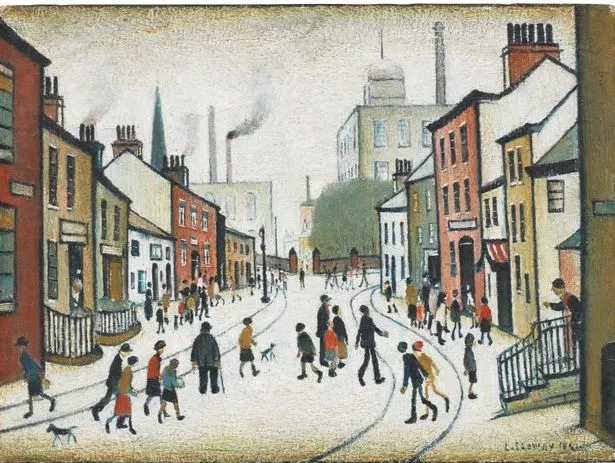
In this painting by Lowry we have lots of people going about their lives. In the bottom right for example is a boy possible being told off and a woman pointing at him from her house steps, perhaps his mum. We can imagine what the boy and the woman are thinking and what is being said. Lives are being lived in this picture. It is interesting, there is meaning, there is lots of something to absorb into here.


But let us ask a bewildering and crazy question, a Twilight Zone question. Behind the woman is the edge of the painting! She can almost reach it if she turns around and leans. What does this woman think of the edge of painting and what lies beyond?

Woah!

Craziness!

This is the same question we face when we try to think of Nothingness. Now we can't deny there is a border around that painting, and if its possible to wonder what the woman is saying to the boy, its possible to wonder what she thinks of the white space around the picture.

This reveals something about context. All the "normal" stories we would create looking at that picture assume that the figures represent people. But they are not really people they are just colourful marks on a page and marks on a page cannot think. Yet despite the fact they are just "dolls" we are able to fill them with life and meaning. This ability to tell stories, to create what are called narratives, is the very essence of the "something". To make real progress we need to be able to separate the "narratives" from what they are about. That is very hard and takes long meditation practice. Separate the name/nama from the form/rupa.

Within the context of the picture we can make up a whole world of stories. Perhaps she is his mum. But step outside the picture and that is clearly just colours on a page. Its the same object but used in a different world, contexts, or as later Wittgenstein would say "language games." The same ball, but in one set of rules it's tennis and you hit the ball, but in another context it is a game of "one knee, two knee" and you catch the ball. Likewise in one set of rules she is talking, and in another she is colours on a page.    


 The whole "something" of what something is can be totally changed by the context, or the rules of the world it is in.

So when I ask her what does she think of the white border around her I am smashing up narratives. I steal the rules from one context where she can talk, and then apply to the other context where she is just colours on a page. These world's exclude one another and cannot mix. They have their own borders. Gilbert Ryle called this kind of thing "category mistakes" and argued that the difference been "body" and "mind" worked the same way.

This blog has got a bit more complicated than I wanted but the pattern still remains. Each context has its boundary that stops it mixing with other boundaries. The colours on the page cannot talk to the boy. The woman cannot speak about the white colours of the border.

Yet they exist. The picture is definitely bounded by the white border of this blog page, and she is definitely pointing at the boy and saying something. These are both things we can discuss and come to an objective conclusion on.

And this means that while the contexts do provide immanent limitations, the woman can never step out of the picture like the girl in the film The Ring, they do somehow fit together into the same world. We have quite happily skipped between being in the picture and being outside the picture and back in again.

Now how is this possible?

This is the Nothing. The ability to be listening to the woman one second, and a split second later wondering what she thinks of the border outside the picture.

The mind is agile, and can be here and there, and in this context, and outside this context instantly.

This is possible because it has no context of its own!

The problem happens when we start to take hold.

Perhaps we decide the boy is being unfairly scolded and we take to disliking the harsh woman. Perhaps that represents experiences of our own and it raises all kinds of emotions. Suddenly we cannot be so free and easy in stepping into the picture and out again. The woman has become something fixed!

The ultimate fixed thing though is not the woman in this picture but it is our self. And this is where ego and mind differ.

Yet we are literally just a painting. We have no more flesh and blood than the woman on the steps of that house!

Woah!

We are a narrative crafted around, not colours on a page, but instead memories, feelings, thoughts, emotions, beliefs, possessions, friends, hopes, fears all the things that surround us.

So this blog has once again got long. But the whole problem of life and death lies in holding onto the narrative and not seeing it exactly like the character painted above so that we can drop in and pull out again from multiple contexts. And to do that requires letting go of each context and not getting stuck in the something, being open to asking a crazy context-busting question like "what is the white around the picture like" that mixes contexts and breaks us out of a particular fixed world and context.

So the first thing we think here is: oh no that is nonsense I need protect myself because unlike the woman I am a real person who if I don't look after myself will die. That is a fixed reality. And that fear of death and the struggle to exist fuel belief in the solid something self, the Ego.

But this is where separating narrative from what they are about is SO important.

The woman who is pointing in the picture is really just colours on a page, but colours on a page cannot point!

The Ego that is scared of death is really just a body, but a body cannot be scared of death!

It is the exact same difference. 

Thursday, 4 April 2024

The end Of Capitalism as a serious economic theory

Preface, Introduction, Preamble

If you ask a proponent of Capitalism the weakness of other economic theories they will say that they do not set price.

It used to be said that if the whole world turned Communist at least one country would need to be left with a free market so that the price of things could be known.

There are counter quips like ‘a man who knows the price of everything and the value of nothing' [Lady Windemere’s Fan, Oscar Wilde]

This expresses the intuitive need for other modes of economy that respect some "intrinsic" value to things that price cannot represent. In Marxism "price" goes by the name of "exchange value" to distinguish it from intrinsic value. That is the "equivalence" that is set during a trade where a number of one commodity are exchanged fairly for another. If that commodity is money you have the monetary value which is what most people mean by price.

While I am about to destroy the notion of price in absolutely no way must the value of the instrument be undervalued (ironically). This is the single most important machine ever invented by man, far exceeding the wheel and the computer.

Despite its simplicity this machine gave us the concept of "equivalence" and from this came another unsurpassed tool, the equation:

=

Everyone knows the rules of algebra that "what we do to one side we must do to the other" but this is just an abstraction of what was learned in Babylonian market places. To keep both sides equal we must do the same to each sides.

And from the also comes the idea of "Justice." The core idea is expressed in the Babylonian Code of Hammurabi "and eye for an eye." Justice means to rebalance wrongs done to people. If someone steals then they must pay back. If someone injures they must be injured. Not until Jesus did this notion of justice change. Jesus teaches "turn the other cheek" and "forgiveness" to mean that equality cannot be measured and we should ignore such ideas. How when you body and mind were given you by God can you be possessive and demand anything of another person who is also God's creation! We are already so enriched by the grace of God that nothing can ever put us in deficit. Indeed Satan's work is just to make us own our bodies and estates so that we can spend our lives feeling the loss as things decay and we need struggle to keep hold, repair them and constantly seek justice. "Look at the birds of the air; they do not sow or reap or store away in barns, and yet your heavenly Father feeds them" [Matthew 6:26]. The point here is just to look again at the world and realise it is all a miracle and we were given it for free. We did nothing to belong to this world and deserve it not one bit. Whatever life we live should be one of complete gratitude for we could just as easily be extinguished and have nothing to even complain about. Science does its best to paste over this unavoidable truth. The world is inanimate resources, and value is made by human hands. And we understand and own where we came from because we have the theory of Evolution which makes it all just a blind machine and of no value. And yet what insane absurdity. How ever we twist it Humankind itself was created by no action from any human at all. How ever great and capable Humans wish to feel they are, know that the Universe made us and is infinitely superior. So as the religious texts across the globe remind us, be humble for the mind and hands that you use to craft things were made by no one and are not yours.

Yes despite this revision of Justice from Equality to Forgiveness by Jesus 2000 years ago the West at least is still stuck with the scale and remains a Pagan country! How ironic given us lauding Jesus and claiming to be Christian.

And the sickness which is Justice and Equality now reflects back on Price and Exchange Value. Jesus famously remarks in Luke 18:25 that "it is easier for a camel to go through the eye of a needle than for a rich man to enter the kingdom of God." He means what he says in Matthew 6:24 that "No one can serve two masters... You cannot serve both God and money." The problem with ownership and the need for equality of trade to feel you have "good value" is that you ignore the fact that everything was given to you in the first place. Even the body and hands and brain that you used to become a successful businessman were all given to you for free. Even the labour and effort that you mustered to achieve your wealth were all given for free. The world of human "value" is what you could call an "emergent property" in modern language, a product of the "game." 

We can see "emergence" from simple rules in Conway's famous Game of Life. 


The whole world of human endeavour is actually an emergent property that comes from the more fundamental rules of reality. Jesus, among many others, is always pointing to the raw simplicity of the world that underpins the games we play. "Money" or Mammon is just a game we play, it has no intrinsic truth. It is this basic intuition that drives other economic insights.

We need only look at slavery to see that the exchange system lacks value. Without outside forces controlling markets then humans will realise their exchange value. As has been seen in the Past humans become commodities with an exchange value. This more than anything challenges our understanding of the world. Surely a human is more than just a tradable commodity? Surely I am worth more than the price bid for me in a slave auction? Most people are already aware that there is something wrong with pricing and that it does not reflect something more fundamental that we might call "value." Robert Pirsig in "Zen and the Art of Motorcycle Maintenance" makes a detailed exploration of what he calls "quality" and how the world first becomes apparent to us in the form of "value" rather than information or data.

Seeing money and economics as just a game we play is only the start of what follows. All of Western Imperialism, Empire building and Globalisation is actually just a vast game we play, and a game that has been spread through endless violence and coercion. A myth exists that Capitalism has spread because it is "better" yet anyone who has not accepted it has been victim of genocide as we see across the New World. There is nothing "intrinsic" about Western Economics, it is spread via education of if that fails the gun. But this is just preface, introduction, and pre-amble.

Where is the Flaw in Pricing

So lets look at the stock market, the ultimate engine of pricing. Indeed the whole justification for the stock market and all the traders working tirelessly there is under the belief that they perform some function in determining pricing.

Let's take a 6 month chart of one of the current success stories: NVIDIA


Typically understanding of pricing take two approaches:

(1) Fundamentals. here we look at the assets and cash offset against liabilities in a company to get its base value and then look at projections of growth to see how desirable it is as an asset in our portfolio. We believe with this fundamental analysis we get an idea of whether the company is valuable or not. However note the circularity. We are using the market value of assets to determine its fundamental value. The rest is speculation on supply and demand.

(2) Charting. Another method of pricing is near Astrology. This is the reading of previous prices to predict future prices. Fundamentalists would argue it is hocus pocus as all people are interested in is hard accounting and economics. Yet who can discount the attraction of seeing a chart like NVIDIA. While it appears to have topped now certainly between January and March the rising chart would have been a compelling reason for investing.

But actually surprisingly these are the same!

The argument is that price only moves according to supply/demand. Fundamentals don’t move price!

Both Fundamentals and Charting set up supply and demand equally. A good end of year report from a company does nothing to price by itself. What happens is that people read it get excited about the health of the company and so buy shares. Supply reduces and demand increases so price increases.

Equally a rising chart like NVIDIA will excite investors and so create demand.

A fake news article spreading misinformation about a company could crash it. Recently Reddit readers collaborated to counter short sellers in GameStop to raise the price.

While fundamentalists will argue these are just blips and markets will always find their "true" value, actually its easy to see that this "fundamentalist belief" is just a part of the price. It is a self fulfilling argument. The moment people stop believing this then prices will deviate from fundamentals.

So we can see that "price" actually has no fundamental basis beyond supply and demand. The whims of the population is all that sets price. If feathers in hats come back into fashion then the price will rise. If people decide a company is "lucky" then the price will rise. There is literally no logic to it.  


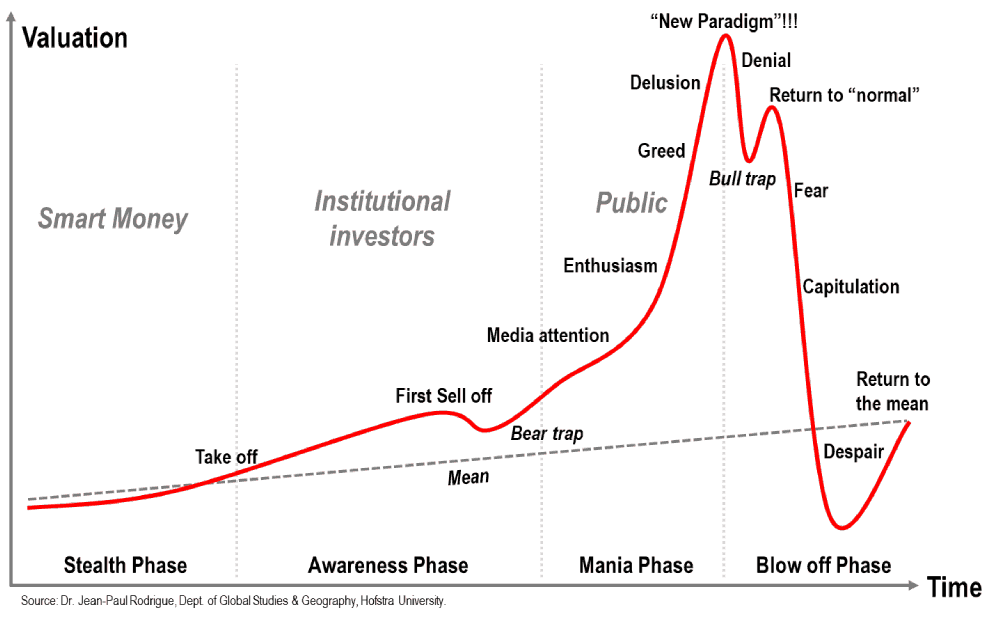
And there are hysteresis and self-fulfilling aspects of price as well. A rising price may attract investors which will all by itself increase the value of the company. This is how bubbles occur.


So we can conclude there is actually no "fundamental" basis to price. Complete rubbish can trade at value, and complete value can fail to trade and there is no problem with this.

Ironically "Fundamentalist" ideas are an admission that there is some "true value" to things, which the price should reflect. But if there is a "true value" that fundamentalists are sure about then does this not open the door to other ways to decide value other than markets like other economic thinkers suggest? If however Markets are the only way to find the "true value" then "true value" and "price" are really the same the "true value" adds nothing to the idea of price.

I imagine the middle ground here is like Democracy. Proponents of Fundamental thinking would say each person can determine the "true value" for themselves, but markets represent a way to sum all this into a single global value. But then they are just being Totalitarian, in that they are saying there is one truth that we all must live by even despite our own individual wishes. The decision to adopt markets is just a Totalitarian decision, that instead of a King deciding for us someone has made the decision for us all to have this machine.

That could be explained by a Nash Equilibrium. So that no one person gets to decide the value of things, we have all implicitly agree to allow markets to make this decision which is not ideal, but its better than having an individual do it.

But that was the point of Democracy. Rather than everyone fighting to rule the world we all agree to cast a vote so one person can be King for a limited time. The great advantage of this system over the Market system is that there is a human making decisions rather than a machine. As we see with Economic Depressions and Inequality the Pricing Machine has huge flaws. And while Democracy has its flaws the idea we can replace the arbiter when things go wrong is a huge advantage over the Totalitarian Machine of markets that we must suffer without choice and depend upon the actions of a small band of Economic Oligarchs tasked with trying to keep the economic machine working.

Anyway pricing does not achieve an arguably sensible result. It is just a result. And it is just dogma whether you use pricing to value things or not.

This opens up the stock market. The Efficient Market hypothesis argues that if any information exists that can be used to predict the price then rational investors will exploit that to arbitrage any profit available. That is if information becomes available that suggest a company is trading at too high a price then shares will be sold or shorted bringing its price down. Or if too low a price then shares will be bought raising the demand and therefore price. As a result a market always works to bring the price to reflect all the available information. But there is circularity here because how do people translate information into price moves? They look at supply and demand. They assume that the discovery of an oil well will add value to a company and so when the information gets out investors will want to buy and the price will rise. But what if a TV documentary about Global Warming frightens the world so much that they abandon investing in oil? The Fundamentalist will hold strong by saying well that is just new information for the markets to process. But this argument can never fail because whatever happens the Fundamentalist can always retrospectively attribute it to some information. It is not a predictive theory, and so Pricing and Efficiency turn out to be just dogmas.

So how do you invest then? Well all you can do is try to predict what other people will do. Given that the Fundamentalist Dogma is so strong you can use fundamentals in that other people will invest based on them. Black-Scholes is a good system for pricing options because it appears to find fixed points. That is a community using Black-Scholes pricing will force the market towards a stable price. If another model existed that if used across the market led to chaotic pricing then it would be dropped. Black-Scholes pricing it turns out does not always lead to equilibrium prices as seen during the 2008 economic collapse as the idea of CDO over pricing spread panic through the markets and liquidity dried up.

Price then becomes just the result of markets and has no intrinsic meaning. We may as well set prices according to a random number generator.

=======

Now there is one problem with the above argument.

Not everything is about stock markets.

If say there was a bubble in the price of Wheat what would happen is farmers would stop producing other crops and start sowing wheat to cash in on the high prices. This would create more supply and so lower the price.

Unlike other commodities where fashion and trend are the dominating factors affecting price, Wheat remains a central part of global diets and this provides a solid anchor to the price. Here you could argue for fundamentals. But it is the prevalence of wheat in our diets that provides the fundamental here. And you do not need a pricing system to find out that we like and need wheat. We have done so for 10,000 years. It is like Christmas you don't need to predict the markets to work out that Christmas is coming and that it is valued.

Proponents of markets argue, sure but the market is the most efficient method. If prices of wheat are too low then farmers will stop producing it, and vice versa to ensure a perfect supply to match demand. But I imagine that demand for this does not change very much, there are not sudden trends in wheat consumption like there are in NVIDIA GPUs and chips. Any economy can delivery wheat.

And that last statement "Any economy can delivery wheat" needs more analysis. Capitalism is failing in the West as people are going hungry right now, as they did during the Great Depression also. But Proponents of Capitalism will point to food shortages in China under Mao and Russia under Stalin.

To be continued...

US displaying its Imperialist credentials... yet again

Wanted to know the pattern of UN votes over Venezuela and then got into seeing if ChatGPT could see the obvious pattern of Imperialism here....